Do 2x6 vs 2x4 exterior walls need a vapor barrier? The stud size does not decide it. Your climate zone does. Under the IRC, frame walls in the colder zones (5 through 8, plus Marine 4 along the Pacific Northwest coast) need a Class I or Class II vapor retarder on the interior side. A 2x6 wall follows the same rule as a 2x4 wall. In the hot and mixed zones of the South, most walls need no interior vapor retarder at all, and plastic sheeting there can do real harm. Stud size matters once you add continuous foam outside the sheathing: a 2x6 wall needs a thicker layer of foam than a 2x4 wall before you can drop the interior retarder.
The classic mistake is a builder in Georgia or Texas who staples 6-mil poly behind the drywall "because that's how my dad did it in Ohio." All summer the air conditioning keeps the drywall cool while humid outdoor air pushes moisture inward. The poly turns into a cold, wet surface inside the wall. Below, the five common choices go head to head, criterion by criterion.
The five options at a glance
| Criterion | 6-mil poly sheeting | Kraft-faced batts | Smart (variable-perm) membrane | Vapor-retarder primer | Latex paint + exterior foam |
|---|---|---|---|---|---|
| IRC class | Class I (0.1 perm or less) | Class II (about 1 perm) | Class II when dry, opens up when humid | Class II (check the label) | Class III paint, with foam doing the work |
| Rough installed cost, 2025, per sq ft of wall | $0.15–0.40 | $0.05–0.15 over unfaced batts | $0.50–1.20 | $0.15–0.40 (often replaces a regular primer coat) | $1.50–3.50 for R-5 to R-15 of foam, plus trim and window details |
| Ability of the wall to dry inward | None | Low | Good in summer | Low to moderate | Good |
| Best climate zones | 6–8 with no AC load, or code-driven only | 4C, 5, 6 | 4C through 7, mixed humid with AC | 4C, 5 on simple jobs | All zones, with the foam thickness per zone |
| Life span | Life of the wall if not punctured | Life of the wall | Life of the wall | Until the next full repaint over a different primer | Life of the wall |
| Speed and season | Fast, any season | No extra step | Slower, taped seams, dry weather helps tape | One coat during painting | Slowest, done before siding, needs dry days |
| Crew skill | Low | Low | Medium, airtight detailing | Low | High, window flashing and fastening |
| Typical mistake | Used in a hot, humid, AC house | Tabs stapled loose or facing torn | Taped poorly, treated like poly | Painter swaps in standard primer | Foam too thin for a 2x6 cavity |
Do 2x6 and 2x4 exterior walls need a vapor barrier in your climate zone?
The IRC sorts materials by how much vapor they pass, measured in perms. Class I is 0.1 perm or less (polyethylene, foil facings). Class II is above 0.1 up to 1 perm (kraft paper, many vapor-retarder primers). Class III is above 1 up to 10 perms (ordinary latex paint on drywall). In zones 5 to 8 and Marine 4, a frame wall needs Class I or II on the warm-in-winter side. Recent editions have narrowed where a true Class I retarder may be used in the hot zones. Your city or county may be on an older edition or have local amendments, so check before you order materials.
The 2x6 question shows up with exterior foam. The code lets you use only Class III latex paint inside when there is enough continuous insulation outside to keep the sheathing warm. A 2x6 cavity holds more insulation, so the sheathing runs colder and needs more foam. In the 2018 IRC table, Zone 5 asked for R-5 over a 2x4 wall but R-7.5 over a 2x6. Zone 7 asked for R-10 versus R-15. Later editions reorganized these tables, so take the numbers as a rule of thumb and confirm the current figures with your building department or energy rater.
Verdict: in the North, a Class I or II retarder is required unless you add enough exterior foam. In the South, skip it, and avoid poly.
Cost
Kraft-faced batts are the cheapest way to meet the rule, because the retarder is already on the insulation. A typical 2,500 sq ft two-story home has roughly 2,200 to 2,800 sq ft of exterior wall. On that house, poly adds a few hundred dollars. A smart membrane adds roughly $1,500 to $3,000, and continuous exterior foam can run $4,000 to $9,000 or more once trim and window extensions are counted. The foam also raises the effective R-value of the whole wall, so part of that cost comes back on the energy bill.
Verdict: kraft facing wins on price. Foam is the expensive option, but it is the only one that also adds insulation.
Moisture safety and thermal performance
A wall gets wet sooner or later, from a flashing slip, a humid summer or a leaky window. What matters is whether it can dry. Poly blocks drying to the inside in every season. That is fine in a Minnesota winter and risky in a house that runs AC from May to October. Kraft paper becomes more permeable as it gets humid, so it is more forgiving. Smart membranes take this further: tight in a dry winter, open in a humid summer. That makes them the best interior choice in mixed climates and for coastal homes such as this four-story shingle-style house with a tall tower, where wind-driven rain is a fact of life. Exterior foam keeps the sheathing above the dew point, which is the most robust fix for condensation. It also cuts thermal bridging through the studs.
Verdict: exterior foam is the safest and warmest, and the smart membrane is the best interior-only option.



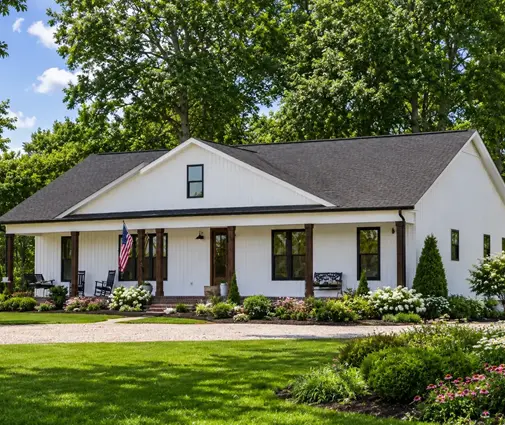
In the hot-humid Gulf and Southeast, the plans above show where poly does not belong. A Low Country modern farmhouse with four bedrooms or a big Acadian home with six bedrooms and deep porches will run air conditioning most of the year. For them, latex paint on drywall plus a well-detailed housewrap and a vented rainscreen behind the siding is the sensible wall. There is no interior vapor retarder at all.
Durability and life span
Every option lasts as long as the wall if it is installed and left intact. The weak points come later. Electricians and plumbers cut poly and membranes. Kraft tabs get pulled off to fit around boxes. A homeowner who repaints a room ten years later over a fresh standard primer quietly erases a vapor-retarder primer. Foam outside the sheathing is out of reach of later trades and does not depend on paint.
Verdict: exterior foam is the hardest to damage, and vapor-retarder primer is the easiest to lose.
Speed and season of the works
Kraft-faced batts add no step at all, and poly takes a crew an afternoon. A smart membrane needs taped seams and sealed penetrations, which takes longer and works best on a dry day. Exterior foam is the slowest. It goes on before the siding, needs careful window and door bucks, and stretches the schedule on homes with lots of corners, like a Modern Tudor with steep gables. The more breaks there are in the facade, the more foam cuts and flashing details the crew has to make.
Verdict: kraft and poly are fastest, and foam is slowest, especially on complex elevations.
Crew skill
Any framing or insulation crew can handle kraft batts and poly. Smart membranes ask for an airtightness mindset: taping, gasketing boxes, and not tearing the sheet. Exterior foam asks the most. The crew must fasten the cladding through the foam into studs, flash windows to the right drainage plane, and get the trim depths right. If your builder has never done it, pay for a detail review from a local engineer or drafter when the stock plan is adapted.
Verdict: kraft and poly suit any crew, and foam needs an experienced builder and clear details on the drawings.
Typical mistakes
- Poly in an air-conditioned house in zones 1 to 3. It is the most common and most costly error.
- Two vapor retarders on one wall, such as poly inside plus foil-faced foam outside. Moisture that gets in cannot get out in either direction.
- Foam that is too thin for a 2x6 wall, for example the 2x4 figure used on a thicker cavity. The sheathing then stays cold enough for condensation.
- Treating a vapor retarder as an air barrier. Far more moisture moves with leaking air than by diffusion. Seal top plates, rim joists and penetrations first.
- Kraft facing on the wrong side or batts compressed behind wiring, which also cuts the R-value.
Verdict: most failures come from air leaks and wrong-side retarders, not from picking the "wrong" product.


Who should choose what
- Northern builders on a budget (zones 5–6): kraft-faced batts in 2x6 walls, with careful air sealing. This suits most farmhouse and colonial plans, including homes from the basement collection such as an English-style home built over a full basement. Insulate the basement walls by their own rules.
- Very cold zones (7–8): exterior foam thick enough for a 2x6 cavity, or poly and kraft where the code and your rater allow it. A compact two-bedroom cabin is a cheap place to do the foam right, since there is little wall area.
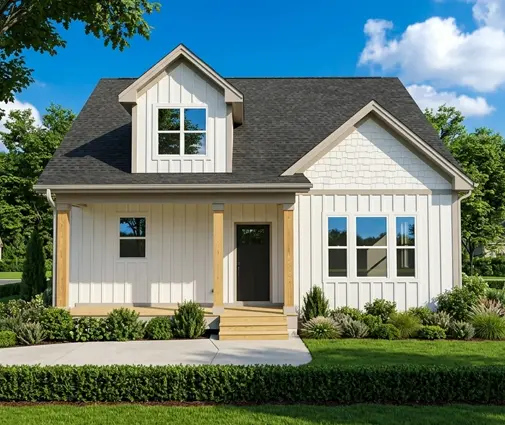
- Mixed climates and the Pacific Northwest (zone 4, Marine 4): a smart membrane, or kraft with a vented rainscreen. It is a good fit for a single-story Scandinavian-style home or a two-story cottage with four bedrooms.
- Hot-humid South (zones 1–3): no interior vapor retarder. Use latex paint, a good housewrap and a rainscreen. Most farmhouse plans for Southern lots fall here.
- Anyone chasing low energy bills: continuous exterior foam in any zone, sized for 2x6 framing, with the interior retarder picked to match. Confirm it with the local building department before the permit set is drawn.