Are solar panels worth it in California? For a new home, yes, but not in the way they were five years ago. Under NEM 3.0, the power you send back to the grid earns only a few cents per kWh much of the year. Power you use yourself saves 35 to 50 cents. So solar pays when the system is sized to cover your own consumption, the roof is designed to hold it, and a battery shifts daytime output into the evening. Very high utility rates keep payback reasonable, often around 8 to 12 years. That holds in California and even more so in Hawaii. The steps below walk through the decisions in the order you will face them while choosing a plan and getting it permitted.
Step 1: Are solar panels worth it in California for your house? Start with rates and usage
Before you talk to an installer, gather two numbers: the rate you will pay per kWh and how much electricity the house will use. In 2025, residential rates from the big investor-owned utilities in California commonly ran from about $0.35 to over $0.50 per kWh, depending on the utility, the time-of-use period and the tier. Municipal utilities are often much cheaper, and there the case for extra panels is weaker. An all-electric 2,000 to 2,500 sq ft home with a heat pump, induction cooking and an EV charger typically uses 8,000 to 12,000 kWh a year.
Time: an afternoon with the utility's rate pages and the plan's square footage. Cost: nothing.
Step 2: Understand what the California energy code already requires
Most new single-family homes in California must include a solar system under the state energy code (Title 24, Part 6). That has been true since the 2019 edition took effect in 2020. The required size is calculated from the conditioned floor area and the climate zone. It is meant to offset roughly the home's yearly electricity use for the code's assumed loads, not your EV or a hot tub. For a typical 2,000 to 2,500 sq ft home, it often lands in the 3 to 4 kW range. Recent editions also require new homes to be "battery ready," with panel space and wiring for future storage. The code is updated every three years, so ask your energy consultant which edition applies to your permit date and what exact system size it gives your plan.
The practical result is that the question in California is not "solar or no solar." It is whether to stop at the code minimum or go further.
Time: the Title 24 energy report usually takes one to two weeks once plans are drawn. Cost: often $300 to $1,000 for the report in 2025.
Step 3: Cut the load before you buy panels
Every kWh you do not use is worth the full retail rate. A kWh you export is worth a fraction of that. Spending on the house itself is therefore the cheapest "solar" there is.
- Insulation: 2x6 walls with full cavity insulation, plus continuous exterior insulation in hot inland zones, slow heat gain on long summer afternoons.
- Windows: low-solar-gain glazing on west and south faces, and good overhangs.
- Airtightness: careful sealing and a blower-door test cut the hot air pulled in through gaps.
- Heat pump: a ducted or ductless heat pump for heating and cooling, and a heat pump water heater, use a fraction of the energy of resistance heat.
- Ventilation with heat recovery: once the house is tight, an HRV or ERV brings in fresh air while keeping most of the heating or cooling.
Builders who push this to the passive house level design for very low heating and cooling demand. Even a house that stops short of certification can shrink the solar system it needs.
Time: decided during design. Cost: often $5,000 to $20,000 above code-minimum construction for a mid-size home, depending on how far you go.
Step 4: Choose a roof that actually holds the array
This is the step most buyers skip and later regret. Fire code access pathways along ridges and edges, vents, chimneys, dormers and valleys all eat into usable area. A small, chopped-up hip roof can struggle to fit even the mandatory system, let alone a larger one. Two roof forms make placement easy:
- Single-slope roofs give one large, unbroken plane. If you turn the low side to the south, nearly the whole roof can face the sun at a good angle. Browse single-slope roof house plans with this in mind.
- Low-slope and flat roofs let panels sit on tilted racks facing whatever direction works best, with no shading between rows if they are spaced correctly. See flat roof plans.
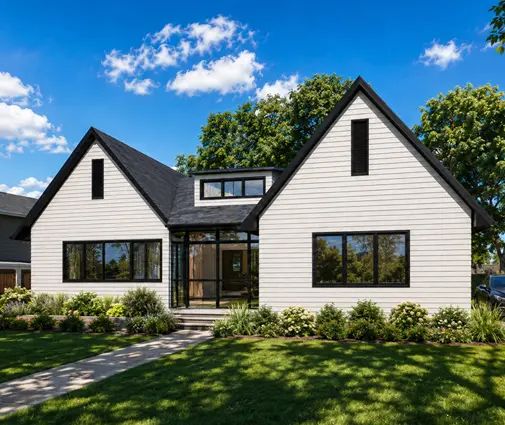
Long, simple footprints help too. The modern one-story layout of this three-bedroom plan of 2168 sq ft keeps the roof clean and easy to reach for maintenance. The compact ranch in this 1707 sq ft one-level plan shows how a modest footprint can still offer a broad roof face. Ask your drafter to orient the main roof plane within about 30 degrees of due south. West-facing panels are also valuable under time-of-use rates, because they produce more in the late afternoon.


Step 5: Size the array for self-use, not for export
Under the old net metering, people sized arrays to zero out the annual bill and let the grid act as a free battery. Under NEM 3.0, which applies to systems interconnected since April 2023, that logic fails. The midday surplus earns little, while your evening use is billed at peak rates. Without storage, a typical home uses only 30 to 50% of its solar output directly.
A sensible approach: start from the code minimum and add capacity only for loads you will really run while the sun is up. Examples are an EV charged at home during the day, a pool pump, or pre-cooling the house in the afternoon. In 2025, installed prices in California ran roughly $2.50 to $4.00 per watt. They tend to sit at the lower end when the system is part of new construction.
Time: a design meeting with the installer. Cost: about $2,500 to $4,000 per extra kW.
Step 6: Decide whether a battery pays
A battery is what turns cheap midday exports into expensive evening kWh you no longer have to buy. Upsizing beyond the code minimum without one rarely pays. With one, it often does. A single battery of around 10 to 15 kWh, installed, commonly cost $10,000 to $16,000 in 2025. Batteries typically carry a warranty of about 10 years. Budget for possible replacement within a 20-year horizon.
Also check incentives before you commit. The federal homeowner tax credit for residential solar and batteries ended for systems placed in service after 2025. State programs and utility offers change often, so confirm what applies today with your installer and utility. Because new homes must be battery ready, adding storage after move-in is possible. Installing it during construction is usually cheaper.
Step 7: Are solar panels worth it in Hawaii? Plan for self-supply
Hawaii has the highest electricity rates in the country. In 2025, many Oahu customers paid around $0.40 to $0.45 per kWh, and neighbor islands often paid more. At those prices, every kWh you produce and use yourself is valuable. Export compensation, however, is limited, and some options allow little or no export at all. The answer for Hawaii is the same as for California, only stronger: solar is worth it when the system is paired with a battery and sized to the household's own use. Many Hawaii homes in mild coastal areas also need little cooling. Their load is smaller, so the array can be smaller. Hawaii has also long required solar water heating on most new single-family homes, with some exceptions. Ask your county building department what applies to your lot.
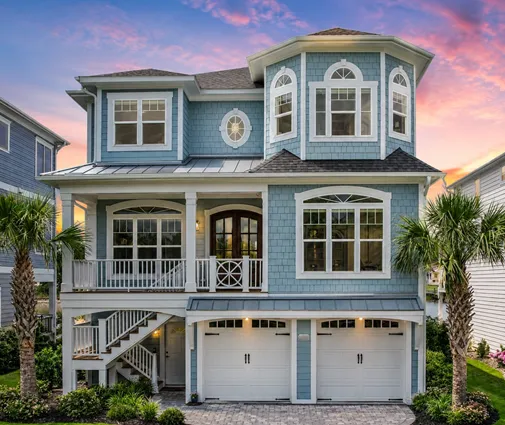
Elevated, multi-level plans common on sloped island lots need roof area planned early. The modern lines of this four-level contemporary design and this Scandinavian-influenced three-story plan are good starting points to discuss panel layout with a local designer.


Step 8: Run the numbers and lock them into the permit set
The table below assumes an all-electric 2,200 sq ft home in an inland California climate zone. It uses 10,000 kWh a year at an average $0.40 per kWh (2025 rates), and export credits averaging about $0.05 to $0.08 per kWh. Savings ignore future rate increases, which historically would shorten payback. Treat all figures as ranges.
| Scenario | Yearly electricity cost | Extra cost to build | Savings over 10 years | Savings over 20 years | Payback |
|---|---|---|---|---|---|
| No solar (reference only, not allowed for most new CA homes) | $3,600–$4,400 | $0 | $0 | $0 | n/a |
| Code-minimum array, about 3.5 kW, no battery | $2,700–$3,300 | $9,000–$13,000 | $9,000–$13,000 | $18,000–$26,000 | 8–12 years |
| Upsized array, about 7 kW, no battery | $2,200–$2,800 | $18,000–$26,000 | $13,000–$18,000 | $26,000–$36,000 | 13–18 years |
| Upsized array, about 7 kW, plus one battery | $700–$1,300 | $30,000–$40,000 | $28,000–$34,000 | $50,000–$62,000* | 10–13 years |
*Includes a likely battery replacement in years 11–15. In Hawaii, with higher rates and limited export, the gap between "no battery" and "with battery" is usually wider. A battery pairing often reaches payback in 8 to 12 years even at higher island installation prices.
The key lesson is in the middle row: upsizing without storage is the weakest option. When the decision is made, make sure the array size, roof layout, battery location and main panel capacity all appear in the permit drawings. A garage wall works well for the battery. In a plan without an attached garage, such as this single-level ranch of 2565 sq ft, choose a protected exterior wall or utility room instead.
Timeline at a glance
| Step | When | Typical duration | Typical cost (2025) |
|---|---|---|---|
| Rates and usage estimate | Before choosing a plan | 1 day | $0 |
| Code requirements and energy report | Plan adaptation | 1–2 weeks | $300–$1,000 |
| Envelope and heat pump choices | Design | 2–4 weeks | $5,000–$20,000 extra |
| Roof form and orientation | Plan selection | 1–2 weeks | Usually no extra cost |
| Array sizing | Before permit submittal | 1 week | $2,500–$4,000 per added kW |
| Battery decision | Before permit submittal | 1 week | $10,000–$16,000 |
| Permit, install, utility approval | Construction and finish | 4–12 weeks | Permit and interconnection fees vary |
The roof is the one choice you cannot easily change later. If you want room for a larger array and a battery down the road, start by looking at plans with a single-slope roof and pick one whose main plane can face the sun on your lot.