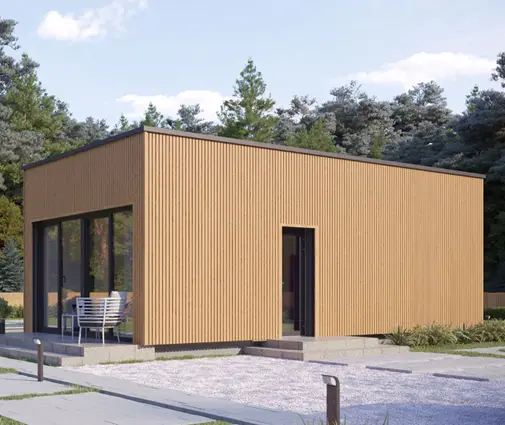
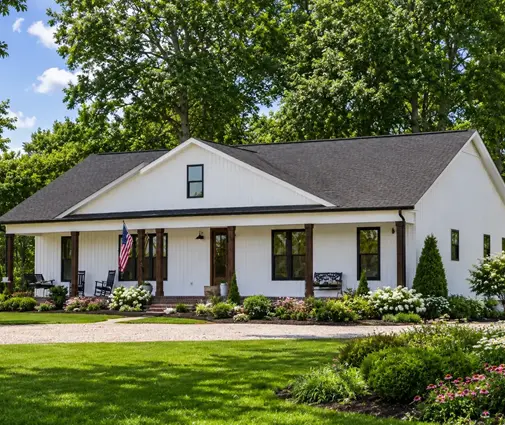
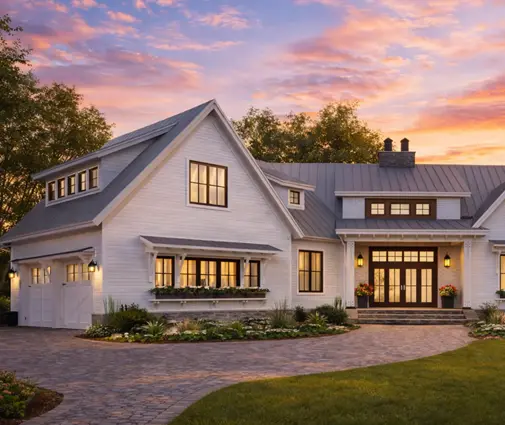
On a single-story house, the roof can cover more ground than the floor. A 2,000 sq ft ranch with an attached two-car garage, a covered porch and generous overhangs can easily carry 3,000 sq ft of roof surface or more, depending on pitch. On a ranch, that roof is also most of what people see from the street. So the choice of what goes on top of it, not the shape of the roof but the covering itself, is one of the biggest lines in your budget.
In the United States the default answer is asphalt shingles. Drive through a new subdivision in Germany or Poland and you will see clay and concrete tile almost everywhere. In Latvia and Romania, profiled sheet metal that imitates tile dominates new construction. Standing seam metal shows up on modern designs on both sides of the Atlantic. Each of these countries settled on a different covering for its own reasons, and those reasons say a lot about which covering fits your own lot, climate and budget.
The roof coverings at a glance
The costs below are rough installed ranges for 2025 on a simple roof. They cover the covering, underlayment and labor, but not the framing, tear-off or complex flashing. European prices are converted to dollars per square foot at 2025 exchange rates. Read them as orders of magnitude, not as quotes.
| Country | Typical covering on new homes | Installed cost, per sq ft (2025) | Realistic lifespan | Weight, lb per sq ft | Solar mounting |
|---|---|---|---|---|---|
| United States | Architectural asphalt shingles | about $4.50–$7 | 20–30 years | 3–4.5 | Easy, roof penetrations |
| Germany | Clay tile, some concrete tile | about $7–$13 | 50+ years (underlayment less) | 8–12 | Routine, tile hooks |
| Poland | Ceramic or concrete tile; metal tile on budget builds | about $4–$8 for clay tile, $2–$4 for metal tile | 30–50+ years for clay, 30–40 for metal | 1–12 | Routine |
| Latvia | Metal tile (coated steel) | about $2.50–$4.50 | 30–40 years | 1–1.5 | Easy, special brackets |
| Romania | Metal tile (coated steel) | about $2–$4 | 30–40 years | 1–1.5 | Easy, special brackets |
| Anywhere, modern designs | Standing seam steel or aluminum | about $10–$18 in the US | 40–70 years | 1–1.5 | Best, clamps with no holes |
The European prices look low partly because labor costs there are lower. In the US, a concrete tile roof typically runs about $9–$15 per sq ft installed and clay tile $15–$30 or more. Exposed-fastener metal panels and stamped metal shingles fall somewhere between asphalt and standing seam.
Upfront cost
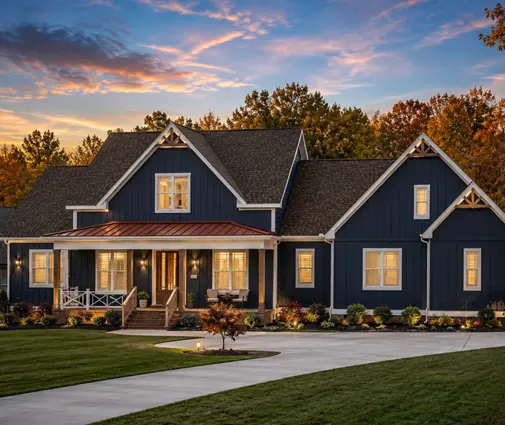
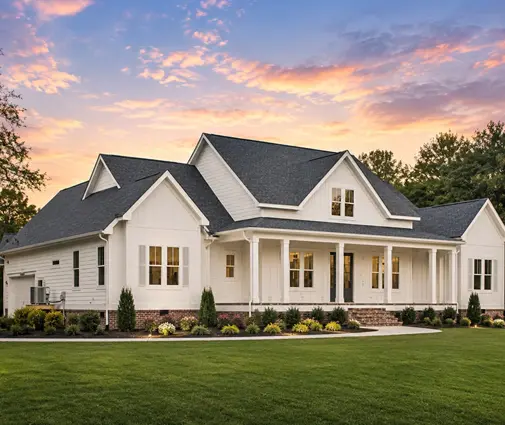
Take a plan like this 1,993 sq ft modern farmhouse ranch with three bedrooms and a two-car garage and assume about 3,000 sq ft of roof. Shingles at $5.50 come to around $16,500. Standing seam at $14 comes to about $42,000. Concrete tile lands in between, but it may also need heavier framing. Metal tile, the Romanian and Baltic favorite, is far cheaper in those markets because the panels go on fast and labor costs less. In the US, a comparable stamped metal product does not keep that price advantage.
Verdict: asphalt shingles win on day-one cost in the US, by a wide margin.
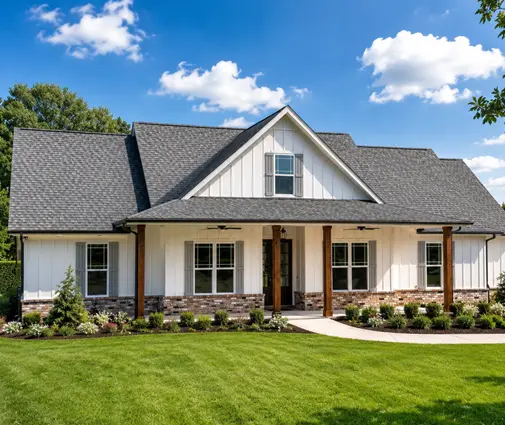
Lifespan and cost per year
Shingle warranties often say 30 or 50 years, but in hot Southern climates a reroof after 18–25 years is common. In Germany and Poland, owners expect clay tile to last for generations, though the membrane under it and the flashings need attention long before the tiles do. Coated steel metal tile in Romania and Latvia lasts about as long as its paint and zinc coating, and cheap thin-gauge products are where the complaints come from. Standing seam with a quality finish can outlast two shingle roofs.
Verdict: divide the price by the years. Standing seam and tile often beat shingles on cost per year, but only if you stay in the house long enough to collect.
Snow load and weight
This is where the European habit does not transfer directly to an American house. Clay or concrete tile weighs roughly three times as much as shingles. German and Polish homes are designed around that weight from the start, with heavy rafters and masonry walls. A stock US plan drawn for shingles on 2x6 walls and engineered trusses cannot simply switch to tile. The truss manufacturer or a local engineer has to rerun the design for dead load plus your county's ground snow load. In snow country, metal sheds snow quickly. That keeps the load down and limits ice dams, but you will want snow guards above entries and the driveway. A plan like this 4,571 sq ft mountain Craftsman with four bedrooms and a basement is the kind of house where that conversation matters.
Verdict: metal is the lightest choice and sheds snow best. Tile needs to be in the structural design from day one, not swapped in later.
Hail and wind
Hail is mostly an American problem in this comparison. From Texas to Colorado and the Plains, Class 4 impact-rated shingles (UL 2218) have become a common upgrade, and some insurers in hail-prone states offer a premium discount for them. Ask your agent before you choose. Metal rarely leaks after hail but can dent, so read your policy for cosmetic-damage exclusions. Clay tile can crack under large stones.
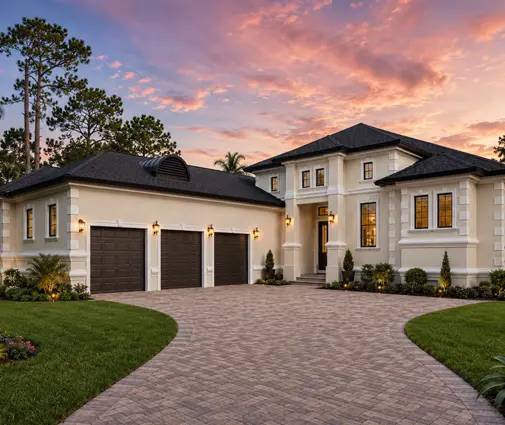
For wind, German roofers clip tiles with storm clamps as standard practice. In US coastal zones the code itself does the work: high-wind shingle ratings, enhanced nailing, sealed roof decks, and in Florida tile that is mechanically fastened or foam-set. If you are building a house like this 3,061 sq ft Florida-style Mediterranean with four bedrooms and a three-car garage, look at the IBHS FORTIFIED Roof standard, which some states and insurers recognize.
Verdict: in hail country, choose impact-rated shingles or metal. On the coast, standing seam or properly fastened tile is the stronger long-term choice.
Rain noise
The "tin roof" reputation comes from metal laid over open battens on an uninsulated structure. That is how many inexpensive Romanian and Baltic roofs are built. A US metal roof installed over solid plywood or OSB sheathing with underlayment and an insulated attic is not much louder than shingles. Tile is the quietest of all.
Verdict: noise is a question of installation, not of the material. On a solid deck, metal is fine.
Rules on color and material
In Germany, the local development plan (Bebauungsplan) often prescribes roof pitch and color, typically red, brown or anthracite, and sometimes rules out glossy glazed tile. Poland's local zoning plans and Romania's urban planning documents commonly do the same, and Latvian municipalities set their own rules. In the US, the IRC and your county mostly care about performance, not looks. The color rules come from your HOA. Many covenants list approved shingle colors, restrict metal roofing or require architectural review. Several states limit how far an HOA can restrict solar panels, but the details vary, so check your state's rules and your CC&Rs before you buy a lot.
Verdict: Americans have more freedom from the government but often less from the HOA. Read the covenants first.
Solar readiness
Single-story homes have a lot of roof, which makes them good candidates for solar. Standing seam is the best base for panels because clamps grip the seams with no holes in the roof. Shingles are the cheapest to mount on, but there is a hidden cost: when the shingles wear out in 20-odd years, the panels have to come off and go back on, often a four-figure bill. Tile mounting is routine in Germany, but in the US it takes more labor and broken tiles are common. Low-slope designs such as this 1,862 sq ft mid-century modern with three bedrooms or this 3,765 sq ft California-style modern with four bedrooms pair naturally with metal. On a hip roof, smaller facets leave less room for panels than a simple gable.
Verdict: if solar is in your plans, standing seam saves money over the life of the house.
Who should choose what
- Tight budget, starter or resale-focused home: architectural shingles, impact-rated if you build in hail country. A compact plan like this 1,292 sq ft three-bedroom bungalow ranch keeps the roof small as well.
- Long-term family home with solar planned: standing seam, at least over the main south- or west-facing planes. Many owners combine metal accents with shingles, which suits a 2,951 sq ft modern farmhouse ranch with a three-car garage.
- Heavy snow region: metal with snow guards, framing engineered for your local ground snow load.
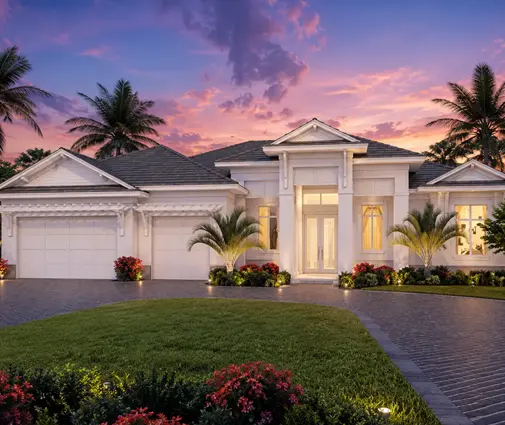
- Hot, coastal or Mediterranean-style build: concrete or clay tile, but only with framing designed for its weight from the start and fastening that meets your wind zone.
- Anyone inspired by European metal tile: compare quotes carefully. Its low cost in Romania or Latvia comes from local labor and products. In the US, standing seam is often the better buy.
Whatever you choose, decide before the plan is adapted for your lot. The covering affects the truss design, the roof pitch and the engineering your permit needs. Browse single-story house plans or ranch house plans, then confirm the roof loads and local requirements with your engineer, drafter and building department.