"It's only 500 square feet, so it doesn't need a permit." Most county building departments hear this sentence every spring, and it is almost always wrong. In the US, the size of a cabin rarely decides whether you need a permit. What decides it is whether people will sleep there. Other countries draw this line differently, and seeing how they do it helps you spot the questions to ask before you buy land at the lake.
Below are seven lessons from four places where weekend houses are part of everyday life: Canadian cottage country, Poland, Germany and Lithuania. Each one ends with what it means for a small cabin in the United States.
1. The US has no "small house" shortcut for a dwelling
Poland is the clearest contrast. A one-story recreational building of up to 35 m² (about 375 sq ft) can go up after a simple notification to the local office instead of a full building permit, with limits on how many such buildings fit on one plot. A second, larger threshold lets owners build a small house of about 70 m² of footprint (around 750 sq ft) for their own use under a simplified procedure. Poland has revised these rules several times, so the details change.
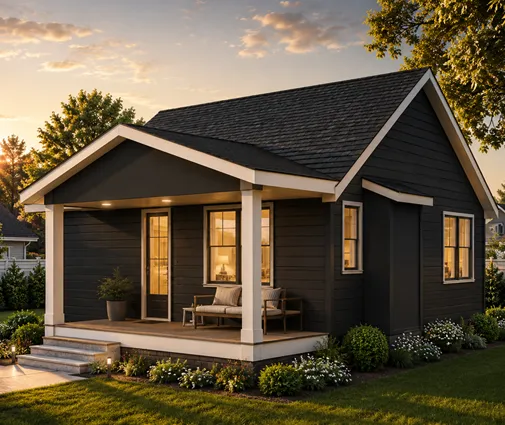
American codes don't work that way. Many counties exempt small accessory structures, often in the 120 to 200 sq ft range. Once a building has a bed, a bathroom and a kitchen, though, it is a dwelling under the International Residential Code, whatever its size. A 373 sq ft design like this one-bedroom tiny cabin still needs plans, inspections and usually a septic approval. Your cabin will need those too. The good news is that most states have adopted tiny-house provisions in the IRC appendix. They relax some rules for homes of 400 sq ft or less, including ladder access to sleeping lofts. Ask your county whether it has adopted them.


2. Zoning matters more than square footage
Germany handles getaway homes through land-use planning. Municipalities designate special zones for weekend houses (Wochenendhausgebiete) and for vacation rentals (Ferienhausgebiete). Each zone plan can cap the size of the house and the way it is used. Outside built-up areas and planned zones, building a new house of any size is very hard.
US counties don't use those labels, but the logic is familiar. Rural, agricultural, shoreline and recreational zones each set their own minimum lot size, setbacks from the water, and rules on how many dwellings a parcel may hold. Before you fall for a view, read the zoning map and any HOA or lake association covenants. Some lake communities limit the footprint or the height, and some require a minimum size, which surprises buyers of compact plans.
3. "Can I live there all year?" has a legal answer
In Germany, sleeping in a weekend house is fine. Registering it as your permanent residence often is not, and some municipalities enforce this. Polish recreational buildings raise the same question, because they are permitted as recreation, not housing. In Ontario, many cottages sit on seasonal roads that the township does not plow, which settles year-round use in practice if not in law.
American counties use similar tools. Some zones or subdivision plats allow seasonal occupancy only. Some private roads come with no winter maintenance. Lenders and appraisers also treat a seasonal cabin differently from a primary residence. If retirement at the lake is part of the plan, check those three things first. Then pick a plan that already works as a full-time home, such as this 750 sq ft lake cabin with two full baths.
4. Farmland and forest are protected almost everywhere
In Lithuania, the sodyba, a rural homestead with a house, a sauna and a garden, is the classic weekend retreat. Buyers soon find that building a new home on agricultural or forest land usually means a change of land use or meeting special conditions. Buying an existing homestead with a recorded building is often the easier route. Poland requires a land-use change for farmland and limits building on forest land.
The American version is quieter but real. Agricultural zones may require 5, 10, 20 acres or more per dwelling. Land in timber or farm tax programs can lose its tax break, or owe back taxes, once you build a house on it. A cheap wooded parcel can be the most expensive one once you count these costs. Ask the county planning office what the land is zoned for before you make an offer.
5. Seasonal and year-round cabins are different buildings
Germans and Lithuanians often start with a light summer house and upgrade it later. Canadians in cottage country know the cost of that path well. A three-season cottage on piers, with thin walls and shallow plumbing, can't simply be insulated for January. The floor, the pipes and the foundation all have to change.
In the northern US and the mountain West, decide on year-round use from day one. Plan for frost-protected footings or a crawlspace, 2x6 walls, and plumbing kept inside the heated envelope. In the South, a slab or raised piers and good ventilation matter more than insulation thickness. Wind and seismic zones add their own requirements. A tall, compact form packs a lot of insulated space under one roof. This 537 sq ft two-story cabin with one bedroom keeps the footprint small, and this 689 sq ft lake house adds a half bath for guests.


6. Off-grid water and power are normal, not exotic
Across rural Lithuania and Latvia, a well, a septic system and a wood-fired sauna are standard at a country retreat. Many Canadian cottages rely on lake water, holding tanks or composting toilets, under provincial or local sewage rules.
In the US, the health department, not the building department, usually controls the well and the septic system. A perc test can decide where the cabin goes, or whether it fits on the lot at all. In 2025, typical ranges were roughly:
- A drilled well: $10,000 to $30,000, depending on depth.
- A conventional septic system: $8,000 to $25,000. Engineered systems on difficult soils cost more.
- Off-grid solar with batteries sized for a small cabin: $20,000 to $50,000.
Get local quotes before you budget. These costs are often higher than buyers expect compared with the price of the land.
7. Budget for 450 to 850 sq ft, then add the site
A 40 to 80 m² house is about 430 to 860 sq ft, and in Europe this is the sweet spot for weekend houses. Poland's thresholds fall right inside it, and the typical German Ferienhaus is no bigger. Prefab and kit cabins are popular there because a smaller crew can build them on a remote plot.
In the US in 2025, a finished small cabin built by a contractor typically ran about $175 to $350 per sq ft before land and utilities. Remote access, steep lots and high-cost regions push it higher. Small homes cost more per square foot because the kitchen, the bath and the mechanical systems cost about the same at any size. So a 600 sq ft cabin often ends up between $110,000 and $230,000 for the building alone. You can save money with simple forms, such as a 455 sq ft A-frame where the roof is also the walls. A compact layout like this 537 sq ft Scandinavian-style cabin with two bedrooms or a 574 sq ft cottage under one simple gable keeps the plumbing in one zone. You can browse more tiny house plans or compare the larger 800 to 1,000 sq ft designs if guests will visit often.
What it all means for your cabin
Europe often gives small recreational buildings a lighter procedure but tighter rules on where they go and who may live in them. The US rarely offers a size-based shortcut. Instead, the deciding factors are the zoning, the septic approval and whether the cabin is a legal dwelling. Settle those questions first, with the county planning office, the health department and, where needed, a local engineer. Then choose a stock plan that fits the lot, the climate and the way you will really use the place. The best plan will still work in fifteen years, whether as a weekend escape or as your full-time home.