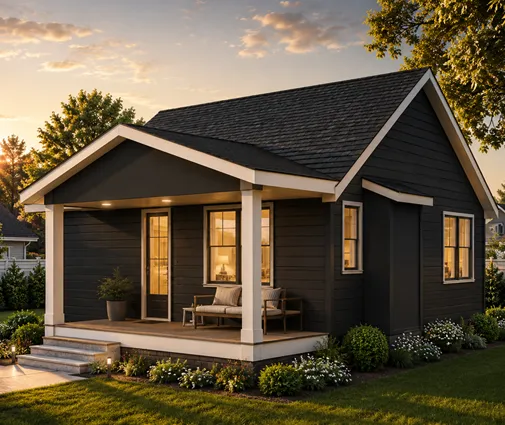
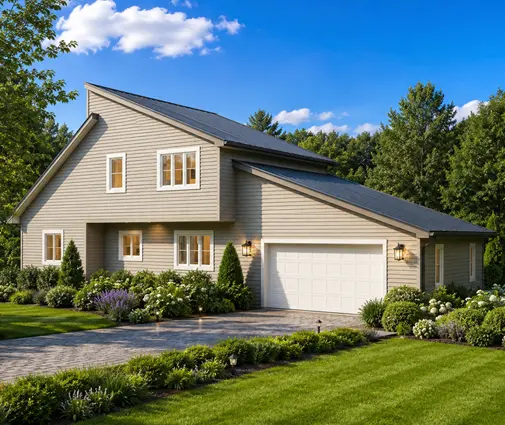
Ask a builder in Germany or Poland about a backyard pool and you may hear that a small one needs no permit at all. Ask the same question in most American counties and the answer is a permit, an inspection, a fence and often an HOA review. Neither system is better or worse. They reflect different priorities, and comparing them helps you plan a pool, hot tub or natural pond properly from the day you choose your house plan.
Below are the most common myths American families bring to the pool conversation, checked against how the US, Germany, Poland and Lithuania handle the same question. Prices are typical 2025 ranges in USD. Rules change by state, county and city, so confirm details with your local building department before you sign anything.
Myth 1: It's my backyard, so a small pool doesn't need a permit
Fact: In the US, nearly every jurisdiction requires a building permit for an in-ground pool. Many also require one for an above-ground pool or hot tub, typically once the water is deeper than about 24 inches, the depth where pool codes usually start to apply. Electrical work for pumps, lights and heaters needs its own permit and inspection. Europe often works differently. Poland exempts small private pools below a set surface area from both a permit and a notification. Most German states exempt private pools below a set water volume, and in several the cutoff is about 100 cubic meters. Romania generally expects a construction authorization for an in-ground pool. The American approach puts more upfront paperwork on the owner, but your mortgage lender, appraiser and future buyer will all expect the pool to have been permitted.
Myth 2: Fence rules are just red tape
Fact: US pool barrier rules come from the International Swimming Pool and Spa Code and the residential code. They are among the most strictly enforced items in a final inspection. The common baseline is a barrier at least 48 inches high, with no climbable gaps and with self-closing, self-latching gates. Local codes often add alarms on house doors that open directly to the pool area. German and Polish rules focus more on whether the structure needs approval than on fencing a private yard, and many European backyard pools sit behind a hedge or the property fence. If you build in the US, put the barrier in the site plan from the start. It affects where the patio doors go, how the gate swings and whether the house wall can count as part of the enclosure.
Myth 3: Once the county approves, the HOA can't object
Fact: An HOA is a separate layer, and it has no real equivalent in Germany, Poland or Lithuania. The covenants can set rules on fence material and height, screening, equipment noise, pool location and even whether above-ground pools are allowed at all. Most HOAs want architectural review approval before you file for the permit, not after. Read the covenants before you buy the lot. A no-above-ground rule or a required rear setback can decide whether your pool plan works at all.
Myth 4: Fiberglass is always the budget option
Fact: Fiberglass usually costs less to own, but it does not always cost less to install. Delivery to tight lots, crane fees and shell size limits can push the price close to concrete. Typical 2025 US installed costs look like this:
| Type | Typical installed cost (2025, USD) | What to know |
|---|---|---|
| In-ground concrete (gunite/shotcrete) | $55,000 to $120,000+ | Any shape or size; replastering every 10 to 15 years |
| In-ground fiberglass | $45,000 to $90,000 | Fast install, smooth surface, limited by shell sizes |
| In-ground vinyl liner | $35,000 to $70,000 | Lower upfront cost; liner replacement every 7 to 12 years |
| Above-ground | $3,000 to $15,000 | Cheapest option; often restricted by HOAs |
| Natural swimming pool | $60,000 to $150,000+ | Few US builders; regeneration zone needs extra space |
These figures do not include fencing, decking, landscaping or the electrical service upgrade, which together can add 20 to 40 percent. In Germany and Poland, prefabricated steel-wall and polypropylene pools are popular mid-range choices. In the US, the market splits mostly between concrete, fiberglass and vinyl.
Myth 5: The real cost is the build
Fact: Expect roughly $1,500 to $4,000 a year for chemicals, electricity for the pump, opening and closing, and minor repairs. Hiring a weekly service, heating the water or living in a long season pushes the total higher. A heat pump pool heater typically costs $3,500 to $7,000 installed. It is the most efficient way to extend the season, and it works best when the air stays above roughly 50°F. Pair it with a solar cover to cut heat loss overnight. A variable-speed pump is required for new pools in many states and pays for itself quickly. European owners in colder climates tend to accept a shorter season instead of heating, which is also an option in the northern US.
Myth 6: A natural pond is the cheap, chemical-free alternative
Fact: Natural swimming pools are common in Germany and Austria and are usually more expensive, not less. They need a planted regeneration zone roughly as large as the swimming area, so the total footprint can double. In Lithuania and Latvia, many rural homes have a simpler sauna pond, a dug pond used for a cold plunge after the sauna. In the US, most jurisdictions treat any water deeper than 24 inches meant for swimming as a pool. That means the same permit and barrier rules apply. If you want one, look for a designer with natural pool experience and talk to the building department early.
Myth 7: A hot tub is just a small pool, so the rules are the same
Fact: Hot tubs are often treated more lightly. In the Baltics, the wood-fired kubilas next to the sauna is so common that many families choose it instead of a pool. It is cheap to run and usable all year. In the US, a portable spa ($5,000 to $15,000) usually needs only an electrical permit for its dedicated GFCI-protected circuit. Many codes accept a lockable safety cover in place of a fence. Running costs are around $25 to $60 a month. For a northern lot where a pool would sit idle for seven months, a hot tub on a covered patio is often the smarter investment.
Myth 8: The pool goes wherever there's room left
Fact: Place the pool before you finalize the house position. Check these points:
- Setbacks and easements. Pools often have their own setback from property lines, and you cannot build over utility easements or septic fields.
- Sun. Afternoon sun on the water and morning shade on the terrace suit most families. In hot southern states, a covered lanai matters more.
- Sightlines. Parents should be able to see the water from the kitchen and the main living area.
- Equipment location. Pumps and heaters should be close to the pool but away from bedroom windows and the neighbor's patio.
L-shaped and courtyard layouts make this easier, because the wings of the house frame the pool and can serve as part of the barrier. Browse L-shaped house plans or courtyard plans if a pool is a priority. The coastal Mediterranean plan with a three-car garage shows the kind of indoor-outdoor layout that suits Florida and Gulf Coast lots, where a screened pool enclosure is common.
Myth 9: The house plan doesn't need to change for a pool
Fact: The best pool homes are planned from the inside out. A bathroom with an exterior door saves the living room floors from wet feet. Plans with extra baths give you room to do this. The contemporary single-story design with five and a half baths and the three-bedroom New American plan both have more bathrooms than bedrooms, so one can open to the patio. A mudroom near the back door handles towels and pool toys. If the garage sits close to the rear yard, it can hold chemicals and the heat pump's electrical panel. That works well in the modern farmhouse ranch with a three-car garage. For a large lot, the sprawling Craftsman Shingle home of 4304 sq ft has the footprint to wrap a terrace around the water. Add an outdoor shower and a covered area for an outdoor kitchen, and the backyard becomes a second living room.

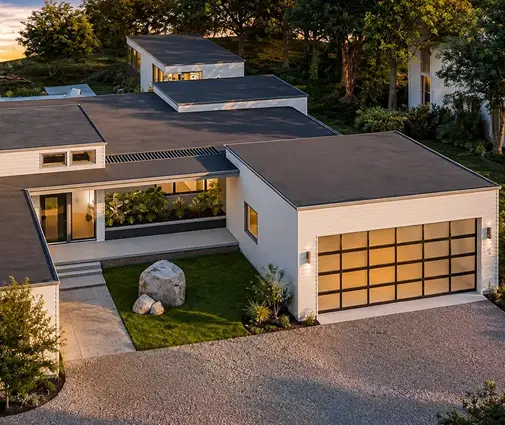
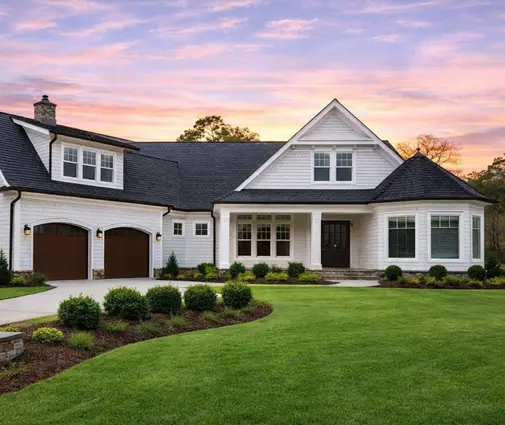
Families who want a pool on a modest budget can still plan ahead. The Low Country ranch with three full baths keeps the footprint compact and leaves yard space for a future pool. Mark the pool zone, the barrier line and a conduit run to the equipment pad in the drawings now, even if the pool comes years later.


What it means for your build
Compared with Germany, Poland or Lithuania, a US pool involves more approvals: a permit, a barrier, often an HOA review and separate electrical inspections. In return, you get a clear, inspected result that lenders and buyers trust. Decide early between a pool, a hot tub or both. Budget the yearly running costs along with the build. Choose a house plan whose back door, bathroom and garage already work with the water. Before you commit, ask your local building department and your HOA for the current pool rules on your specific lot.