A 500-gallon propane tank holds about 400 gallons. Tanks are filled to roughly 80 percent to leave room for the liquid to expand, so every size on a supplier's price sheet is about a fifth smaller in real life. It is a small detail, but it explains why so many rural owners pick a tank that is too small and end up scheduling extra deliveries in January.
If your lot is beyond the reach of a natural gas main, propane is the usual way to get a gas range, a gas fireplace, a tankless water heater or a standby generator. It can also heat the whole house. The real question is whether it should. This breakdown covers what each piece costs, how to size the tank to the appliances in your plan, where the tank can legally go, and how propane heating compares with a heat pump.
What propane costs to bring to a new house
The ranges below are typical installed prices in 2025 for a new single-family home. Rural markets vary a lot, and supplier pricing changes with the season, so get at least two local quotes before you budget.
| Cost item | Typical range (2025, USD) | Notes |
|---|---|---|
| 250-gallon tank, owned, above ground | $700 – $1,500 | Cooking, water heating, a fireplace |
| 500-gallon tank, owned, above ground | $1,500 – $3,500 | The most common size for whole-house heat |
| 1,000-gallon tank, owned, above ground | $2,500 – $5,000 | Large homes, cold climates, generators |
| Extra cost to bury the tank | $1,000 – $3,500 | Excavation, bedding, anode protection; rock adds more |
| Tank lease | $0 – $250 per year | Often waived with a minimum annual purchase |
| Set, regulators, line to the house | $500 – $2,500 | Depends on trench length and soil |
| Gas piping inside the house | $1,000 – $4,000 | More appliances and longer runs cost more |
| Propane tankless water heater, installed | $1,500 – $3,500 | Needs venting and gas line sizing |
| Standby generator, 20–26 kW, installed | $10,000 – $20,000 | Transfer switch and pad included |
| Fuel | about $2.25 – $3.75 per gallon | Regional; prepay and summer fill are usually cheaper |
For a typical rural build with a 500-gallon owned tank and gas for heat, hot water and the range, the setup comes to roughly $4,000 to $10,000 before the generator.
Sizing the tank to your house plan
Start with the appliances, not the square footage. Annual use varies widely, but the figures below are reasonable for planning, assuming a family of three or four:
- Range or cooktop: about 30 to 60 gallons a year
- Water heater: about 150 to 300 gallons a year
- Gas fireplace: roughly half a gallon to a gallon per hour of use
- Furnace: anywhere from 300 gallons in a mild climate to 1,000 or more in the northern states
- Standby generator: roughly 2 to 3.5 gallons per hour at a heavy load, so a three-day outage can burn 150 to 250 gallons
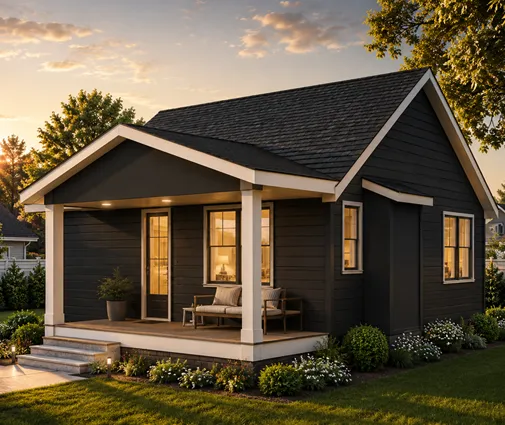
A small cabin with a range, a water heater and a stove-style fireplace runs comfortably on a 250-gallon tank. The 750 sq ft two-bedroom lake cabin or the 713 sq ft cottage with two bedrooms are good examples: their heating load is small enough that a mini-split heat pump can do the heating, and propane covers the rest.
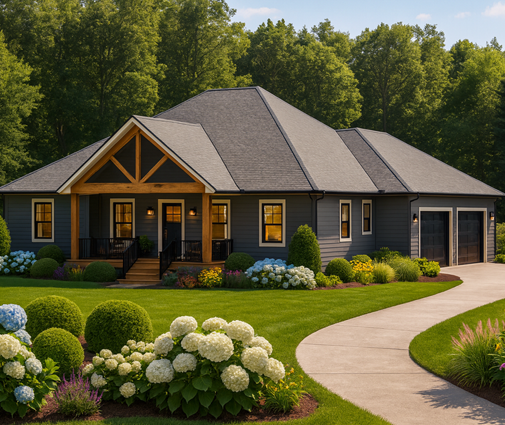
Step up to whole-house propane heat, and a 500-gallon tank is the usual minimum. A one-story home around 2,000 sq ft, like the 1,972 sq ft three-bedroom Craftsman with a two-car garage, fits that size in most of the country. In a cold climate, plan on two or three fills per winter.
Go to 1,000 gallons when the house is large, the winters are long, or a generator is in the plan. A sprawling single-level home such as the 4,038 sq ft farmhouse ranch with a three-car garage and shop or the 4,571 sq ft mountain Craftsman with a basement can easily use 1,000 gallons or more of propane a year once heat, hot water and backup power are combined. A bigger tank also lets you buy more of your fuel in summer, when prices are usually lower.

Where the tank can go: setbacks
Placement is governed by NFPA 58, the national propane code, as adopted by your state, plus the requirements of your supplier and your local fire official. The commonly cited distances for residential tanks are:
- Above-ground tanks up to 500 gallons: at least 10 feet from the house and from the property line
- Above-ground tanks over 500 gallons (including 1,000 gallons): at least 25 feet from the house and from the property line
- Buried tanks: generally 10 feet from the house and the property line, regardless of size up to 2,000 gallons
- Relief valve and fill connection: kept away from windows, doors, crawlspace vents, air intakes of direct-vent appliances and sources of ignition, such as an AC condenser or a dryer vent; 10 feet is a common figure
Treat these as a starting point, not a final answer. Confirm the exact numbers with your supplier and the county before the site plan is drawn. Two practical points matter just as much: the delivery truck needs to reach within hose length of the fill valve, usually 100 feet or so, and the 25-foot rule for a 1,000-gallon tank can be hard to meet on a narrow lot. On many lots, that rule is the reason owners choose to bury the larger tank.
Buried or above-ground
An above-ground tank is cheaper, easier to inspect and simple to replace. It is also a large white cylinder in your yard, which some HOAs and many owners do not want next to a new farmhouse-style home.
A buried tank leaves only a dome lid showing and allows the shorter 10-foot setback for big tanks. You pay for it in excavation, a sand bed, and sacrificial anodes that protect the steel from corrosion and should be checked periodically. Rocky ground, a high water table or frost-heave concerns can push the cost to the top of the range or beyond. If you plan to bury a tank, decide before grading so the excavator digs the tank pit and the trench to the house in one trip.
Leasing or owning the tank
Leasing is the default with many suppliers. The upfront cost is low or zero, and the supplier handles maintenance and safety checks. The catch is that only the company that owns the tank can fill it. You cannot shop for a cheaper price per gallon, and many contracts include minimum purchases, removal fees or pickup charges if you switch.
Owning costs more on day one, but you can call any supplier, lock in a prepaid price, and fill in summer. Across rural markets, the difference in price per gallon between a captive lease customer and an owner who shops around is often large enough that, for a house heated with propane, an owned 500-gallon tank pays for itself in a few seasons. For a house that only uses propane for cooking and a fireplace, leasing can make sense. Read the lease terms closely either way.
Heating costs: propane, heat pump or dual fuel
This decides whether propane belongs on the lot at all. The figures below are an illustration for a well-insulated 2,000 sq ft house, using 2025 prices of $2.75 per gallon of propane and $0.17 per kWh of electricity, a 95 percent efficient propane furnace, and a modern cold-climate heat pump. Your rates and climate will move these numbers, so run them again with your own utility bill.
| Climate | Propane furnace | Heat pump | Dual fuel |
|---|---|---|---|
| Mild (Southeast, Pacific Northwest lowlands) | $700 – $1,100 | $400 – $650 | $400 – $700 |
| Mixed (Mid-Atlantic, Ozarks, lower Midwest) | $1,100 – $1,600 | $600 – $1,000 | $650 – $1,050 |
| Cold (upper Midwest, Northern New England, mountains) | $1,700 – $2,600 | $1,100 – $1,800 | $1,200 – $1,800 |
At typical prices, a heat pump costs less to run almost everywhere. Propane wins on two other counts. It delivers hot air on the coldest nights without the heat pump losing capacity, and it keeps working when the power fails, as long as you have a generator. A dual-fuel system pairs a heat pump with a propane furnace. The heat pump runs most of the year, and the furnace takes over below a set outdoor temperature. In cold climates with expensive electricity, it is often the most comfortable compromise.
Homes with a full basement in the North are where this choice comes up most often, because the furnace and the tank line both have an easy route in. The 1,777 sq ft three-bedroom farmhouse with a basement and the 1,764 sq ft Craftsman with a basement and a two-car garage are typical examples. More options are collected in the house plans with a basement.


How to save
- Buy the tank if propane is your main heat. Being free to shop around is worth more than the lease savings.
- Fill in summer and ask about prepay or budget plans. Off-season prices are usually lower.
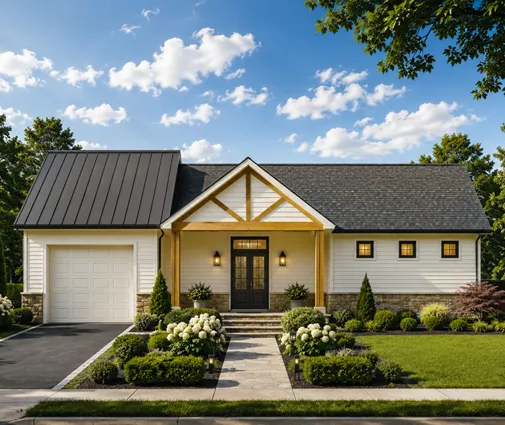
- Keep gas appliances close together in the layout. A plan with the kitchen, laundry and mechanical room near each other, like the 1,993 sq ft modern farmhouse ranch, shortens piping runs.
- Put the money in the envelope first. Better insulation and air sealing in a 2x6 wall cut gallons every winter for the life of the house.
- Size the generator to the essentials rather than the whole house, which keeps both the unit and the fuel use down.
- Consider skipping propane heat. In mild climates, a heat pump plus an electric heat-pump water heater may leave propane only for the range, or remove the need for it entirely.
In short
- A tank's usable capacity is about 80 percent of its rated size.
- 250 gallons covers cooking, hot water and a fireplace; 500 gallons is the usual size for whole-house heat; 1,000 gallons suits large homes, cold climates and generators.
- Above-ground tanks over 500 gallons generally need 25 feet from the house and the property line; buried tanks generally need 10 feet. Confirm with your supplier and county.
- Expect roughly $4,000 to $10,000 for a typical propane setup in 2025, not counting a generator.
- Owning the tank usually beats leasing when propane heats the house.
- A heat pump is usually cheaper to run; propane or dual fuel earns its place in cold climates and when backup power matters.