A common way this goes wrong: the framing crew is ahead of schedule in March, so the family lists the old house in April. It sells in nine days. Then the trusses arrive three weeks late, the electrical inspection fails once, and the county takes a month to issue the certificate of occupancy. By August they are paying rent on a short-term apartment, storing furniture across town, and driving the kids to a school district they no longer live in.
Building a new home while you still own your current one means managing an overlap that can last anywhere from a few weeks to most of a year. No single financing tool is right for everyone. Each option trades money, stress or flexibility for one of the others. Here are eight ways to plan that overlap so the sale and the build land close together.
1. Start with the build schedule, not the listing date
Everything depends on how long construction really takes, so pin that down first. In 2025 and 2026, a single-family home built from a stock plan commonly took about 7 to 12 months from permit to move-in. Permit review alone ran anywhere from a few weeks in rural counties to three months or more in busy cities. Ask your builder for a written schedule with milestones: foundation, dried-in, rough inspections, drywall, final inspection, certificate of occupancy. Then ask how their last three houses compared with their original estimates. That answer is usually more honest than the schedule itself.
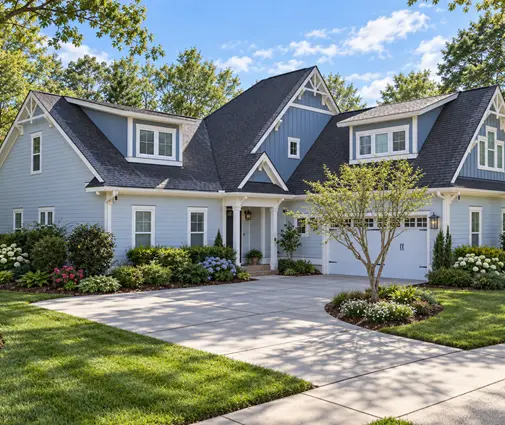
The plan you choose shapes the timeline as well. A compact two-story like this 3-bedroom Craftsman of 2058 sq ft with a 2-car garage has a simple footprint and roof, so it usually moves faster than a large custom design. A home with a full basement, which is common in the North and Midwest, adds excavation and foundation weeks that are exposed to weather. Settle the plan and the modifications before you break ground. Mid-build change orders are among the most common reasons a schedule slips.

2. Sell first and rent in between
This is the lowest-risk option on paper. You sell the old home, put the equity in the bank, and rent until the new house is finished. You know exactly what you have to spend, you never carry two housing payments, and you can negotiate as a buyer without pressure. Your construction lender will also be happier, because your debt-to-income ratio no longer includes the old mortgage.
The costs are real, though. You pay to move twice. You may pay for storage. And in many markets a 6- to 12-month lease is hard to find, so you end up with an expensive furnished rental or a month-to-month premium. If the build runs long, your rent runs long too. This option works best when you have strong equity, a flexible family situation, and a rental market with short-term choices near your job and schools.
3. Carry two mortgages for a while
If your income and savings can handle it, you keep the current home until the new one is done, move once, and then list. Many families like this option most, because the old house is empty, clean and easy to stage when it goes on the market.
The problem is qualifying. During construction you will often be paying your existing mortgage plus interest on a construction loan, and lenders count both when they look at your debt-to-income ratio. Run the numbers for the worst case: both payments, property taxes, insurance and utilities on two houses, for at least three months longer than the builder's estimate. If that number makes you nervous, choose a different option, or pick a smaller plan that lowers the construction loan.
4. Use a bridge loan for the down payment
A bridge loan is a short-term loan secured by your current home. It lets you use that home's equity before it sells. It usually runs 6 to 12 months and is paid off when the old house closes. With a bridge loan you can put the equity into the land purchase or the construction loan down payment without selling first.
Bridge loans cost more than ordinary mortgages. In recent years their rates have typically been noticeably above standard 30-year rates, and origination fees often fall in the range of 1% to 3% of the loan amount. Not every lender offers them, and the terms vary a lot, so get quotes from local banks and credit unions as well as national lenders. Before you sign, ask what happens if the house has not sold when the term ends. An extension clause matters more than a slightly lower rate.
5. Open a HELOC before you list
A home equity line of credit can do much the same job as a bridge loan, usually at a lower cost. You draw what you need for the lot or the down payment, pay interest only on the amount you draw, and pay off the line when the old house sells.
Timing is everything here. Most lenders will not open a HELOC on a home that is already listed for sale, so you need to apply months before you plan to list, ideally before you even buy the lot. Many HELOCs also have variable rates. If rates rise while you wait for the new house, the cost of carrying the line rises with them. Ask about any early-closure fees too, since you plan to pay off the line within a year.
6. Negotiate a rent-back with your buyer
A rent-back, also called a seller leaseback, lets you close the sale and then stay in the house as a tenant for an agreed period. You get your equity at closing, you move only once, and your children can finish the school year in the same place. Buyers in competitive markets often accept a rent-back to win the deal. The daily rent is often set close to the buyer's own monthly cost of owning the house.
A rent-back has firm limits. Buyers using owner-occupied financing generally have to move in within a set period, so many rent-backs are capped at about 60 days. Some lenders allow less. A rent-back covers the last stretch of a build, not the whole build. Have your agent put the deposit, the daily rate, who pays utilities and insurance, and the penalty for staying past the end date into a written agreement. If the new house is not ready on that date, you will need a backup plan.

7. Build a buffer for delays into every option
Construction delays rarely come from one big disaster. They pile up from small things: a rainy month during excavation, a backordered window package, a failed framing inspection, a utility company that takes weeks to set a meter. In hurricane-prone areas of the Gulf and Atlantic coasts, storm season can stop work for days. In cold climates, frozen ground can push back foundation and grading work.
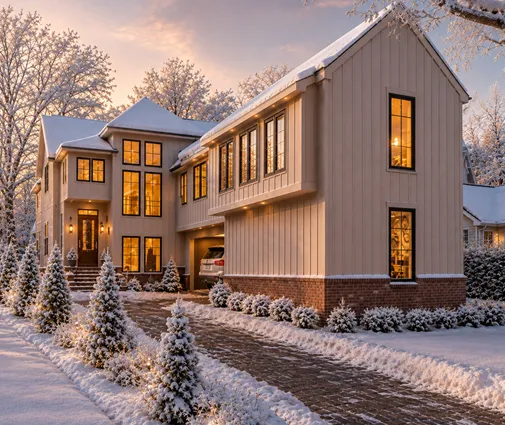
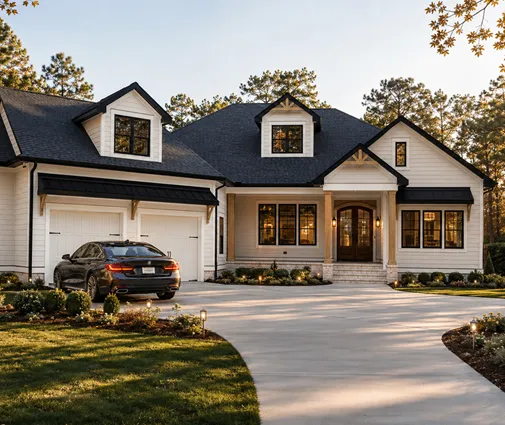
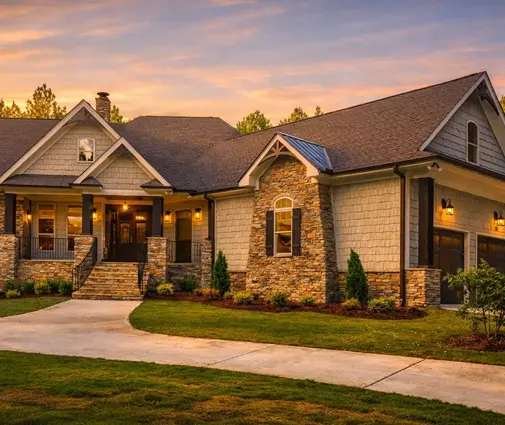
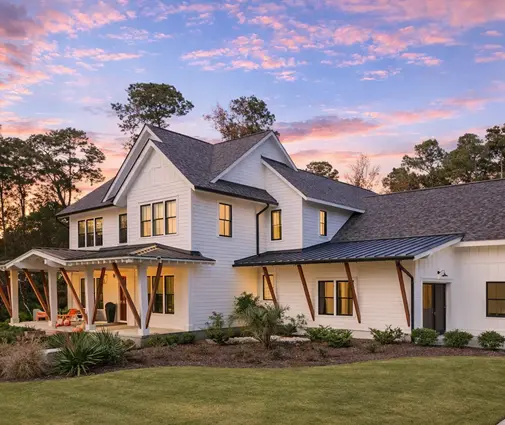
Delays hurt each option in a different way. If you sold first, you pay more rent. If you carry two mortgages, you pay more on both. A bridge loan can reach the end of its term, and a rent-back can expire while your new home still lacks a certificate of occupancy. A bigger, more complex plan, such as this 5-bedroom, three-story Modern Farmhouse of 4705 sq ft, has more trades and more inspections, and so more places to slip. A one-level design like this 3-bedroom Ranch of 2489 sq ft with a basement and a 3-car garage is simpler to frame and roof, though the basement still adds foundation time. Whichever option you pick, plan for at least two to three months of cushion beyond the builder's date. Browsing single-story house plans is a sensible place to start if a shorter, simpler build appeals to you.
8. Time the listing to construction milestones
Do not list because of a date on the calendar. List because of where the build stands. A practical rule for many families: list when the new house is dried in, meaning the roof, windows and exterior doors are on, and the rough-in inspections have passed. At that point most of the weather risk is behind you. The remaining work happens indoors and is easier to predict. In many markets, about 30 to 60 days on the market plus 30 to 45 days to close then lines up roughly with drywall, trim, flooring and final inspection.
Adjust for your local market. Where homes sell in a weekend, wait until drywall is up and negotiate a longer closing or a rent-back. Where homes sit for months, you can list earlier. Watch the season, too. Spring listings sell faster in most of the country, so a build that finishes in late summer often pairs well with a spring listing. Keep your agent and your builder in touch. A quick call at each milestone costs nothing and can save you a month of rent.
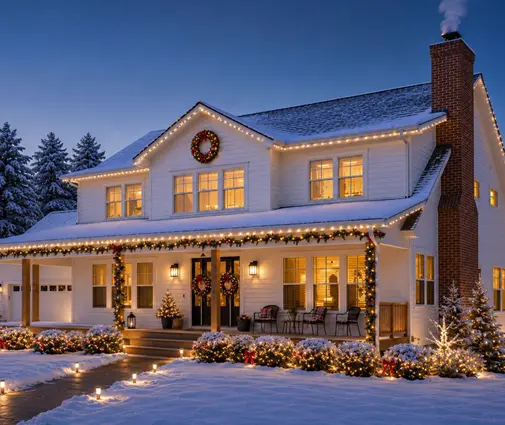
If you are still choosing the house itself, a plan with flexible space buys you options later. This 3-bedroom Modern Farmhouse of 2905 sq ft, this 4-bedroom Farmhouse of 2750 sq ft with a 3-car garage and other farmhouse house plans are popular with families who want room to grow. A 4-bedroom, single-story Craftsman of 3237 sq ft is a good fit for owners planning to stay through retirement.
Putting it together
Most families end up combining these options. For example, they open a HELOC early for the lot, carry both homes through the riskiest stage of construction, list once the house is dried in, and negotiate a short rent-back to close the final gap. Before you commit, talk with a lender about how each option affects your construction loan, and with a tax advisor about the sale of your current home. Then ask your builder one more time how long the house will really take, and add a few months to whatever they say.