R-60. That is the attic insulation the 2021 International Energy Conservation Code (IECC) calls for in most of the country, from Kentucky to Minnesota. A generation ago R-30 was considered generous. US energy rules have moved fast, and they are now close to what builders in parts of Europe and Canada have been doing for years.
Comparing codes is not just a curiosity. Many of the ideas showing up in US codes now, such as tighter envelopes, continuous exterior insulation and balanced ventilation, became normal abroad first. Seeing where Canada, Germany, Poland and Lithuania already are tells you where your state is likely heading. It also tells you how to choose a house plan that will still pass inspection a few code cycles from now.
1. The US has no single energy code, and the others mostly do
In the US, the IECC and the energy chapter of the IRC are model codes. Each state, and sometimes each city or county, decides which edition to adopt and how to amend it. In 2025 some states were enforcing the 2021 or 2024 IECC. Others were still on 2015 or older editions, and a few rural counties enforce almost nothing. California writes its own Title 24, and Washington and Massachusetts have their own stretch codes. Your permit office is the only reliable source for what applies to your lot.
The countries we are comparing are more uniform. Germany has one federal law, the Gebäudeenergiegesetz (GEG). Poland applies one national technical regulation, known as WT 2021, everywhere. Lithuania requires energy class A++ for all new buildings. Canada sits in between, because its national code is a model like the IECC. Provinces adopt it in their own way, and British Columbia adds a tiered Energy Step Code that municipalities can push higher.
2. Wall insulation: US 2x6 walls are close, but thinner on the outside
Under the 2021 IECC, a wood-frame wall in climate zones 4 through 8 needs roughly R-20 cavity insulation plus R-5 of continuous exterior insulation, or R-13 plus R-10. A standard 2x6 wall with batts and a layer of foam or mineral wool board on the sheathing meets that. In the South (zones 1 to 3), plain R-13 to R-20 cavity insulation is still enough in most cases.
Abroad, rules are usually written as a maximum U-value, which is the inverse of R. Poland's limit for walls of 0.20 W/m²K works out to about R-28 in US terms. Germany's typical new-build walls are in a similar range, and KfW-funded homes go higher. Cold Canadian provinces commonly build 2x6 walls with exterior insulation to land in the mid-20s, and higher steps of the BC code go further. The US wall is not far behind. The real difference is that exterior insulation is routine there and still optional in large parts of the US.
3. Roofs and attics: the US is already in the same league
For ceilings, the gap almost disappears. The 2021 IECC asks for R-49 in zones 2 and 3 and R-60 in zones 4 through 8. Poland's roof limit of 0.15 W/m²K is about R-38. German and Lithuanian roofs on efficient homes typically fall in the R-40 to R-60 range. A US attic built to the current code is as well insulated as most European roofs.
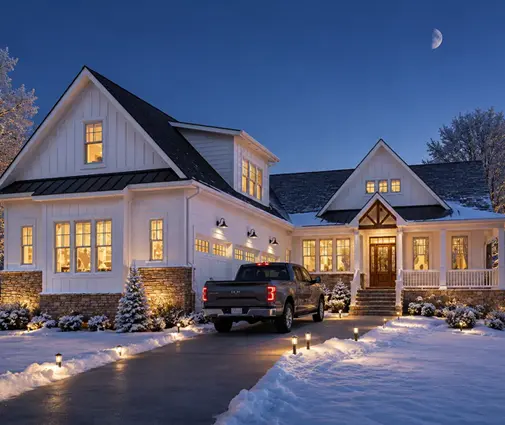
The catch is space. R-60 of blown cellulose or fiberglass needs roughly 16 to 20 inches of depth over the ceiling. A plan with a simple gable roof and a flat attic floor, like this four-bedroom cottage farmhouse of 1945 sq ft on two stories, makes that easy. Vaulted ceilings, low-slope sections and dormers need rafter-depth or spray-foam solutions, which cost more per square foot of roof.


4. Airtightness and ventilation: where Europe and Canada lead
The 2021 IECC requires a blower-door test and sets a maximum of about 3 air changes per hour at 50 pascals (ACH50) in most of the country, with a looser limit in the hottest zones. A house that tight needs mechanical ventilation, and the IRC requires a whole-house system. In most US homes this is an exhaust fan on a timer. An HRV or ERV is required by code only in the coldest zones, 7 and 8.
In Canada, an HRV is standard equipment in new houses across much of the country. In Lithuania, class A++ is very hard to reach without a heat recovery unit, so nearly every new home has one. Germany and Poland do not formally mandate one. Their energy limits make "recuperation", as Poles call it, the default choice, because you cannot hit the numbers with windows and exhaust fans alone. For a US buyer in zones 5 and 6, an ERV or HRV is optional today and a smart upgrade. It is also likely to become required within a few code cycles.
5. Heat pumps: a market choice in the US, close to a rule elsewhere
No US model code requires a heat pump. Gas furnaces remain legal in most places, and the choice depends on fuel prices and climate. Some jurisdictions, including Washington State's energy code and a number of cities, now favor or require all-electric new homes. Cold-climate heat pumps have also become a mainstream option even in the upper Midwest.
Germany went further. Since 2024 the GEG requires new heating systems in new buildings in new subdivisions to run on at least 65 percent renewable energy, which in practice means a heat pump. Poland's limit on primary energy for single-family homes, 70 kWh per square meter per year, points almost every builder toward a heat pump. Lithuania's A++ class does the same. When you compare equipment, remember that European homes mostly use air-to-water heat pumps with radiant floors. US homes use ducted air-source systems, so the plan needs room for ductwork rather than manifolds.
6. Subsidies: Europe pays builders to go further
Germany's KfW bank offers low-interest loans for new homes that reach Efficiency House 40, a standard well beyond the legal minimum. The loan amount is higher if the home is also certified as sustainable. Poland has run grants for heat pumps in new houses under the "Moje Ciepło" program. Lithuania and other Baltic states fund heat pumps and solar panels through national environmental agencies. All of these programs change often, so treat them as examples rather than current offers.
In the US, the picture has narrowed. Federal tax credits for heat pumps, efficient equipment and builder-certified efficient new homes were largely wound down in 2025 and 2026 under the federal budget law passed in July 2025. What remains in 2026 is mostly local: utility rebates for heat pumps and HRVs, some state programs and energy-efficient mortgage products. Ask your utility and your lender before you finalize equipment choices, because a rebate can change which system makes sense.
7. What to look for in a house plan so it passes without a redesign
Whatever your state adopts next, the homes that handle stricter codes cheaply share the same features. European builders learned these through decades of tight rules, and they translate directly to a stock plan adapted by a local engineer or drafter.
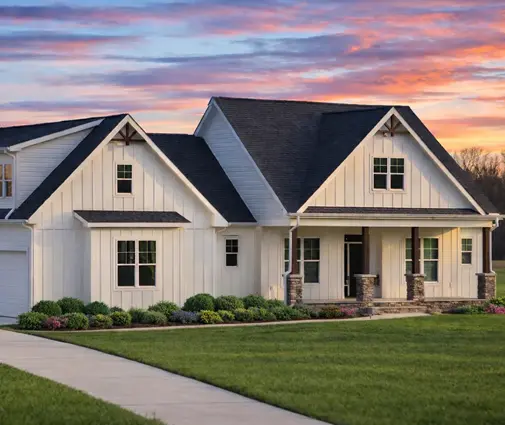
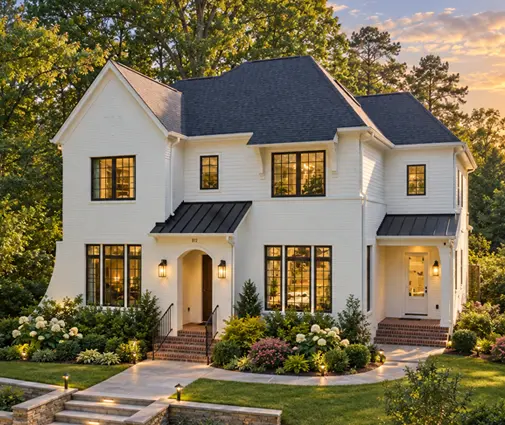
- A compact shape. Every jog, bump-out and inside corner adds wall area and a thermal bridge to detail. A simple two-story box with a gable roof, like this three-bedroom Modern Farmhouse of 2665 sq ft, has far less envelope per square foot than a sprawling single story. The 2-story plans are worth browsing with that in mind.
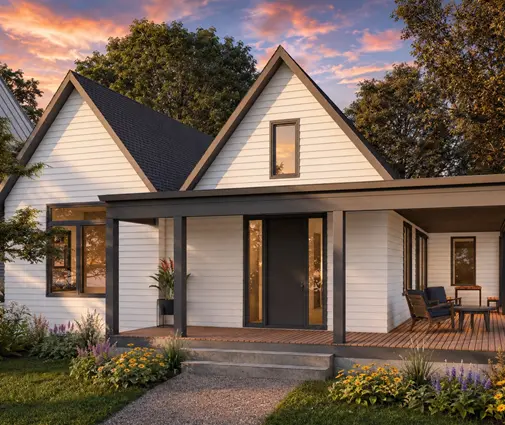
- Few thermal bridges. Watch for cantilevered floors, rooms over an unheated garage and large window walls. This two-bedroom farmhouse of 1928 sq ft with a 2-car garage keeps the living space compact. A bonus room over the garage, by contrast, needs careful floor insulation and air sealing.
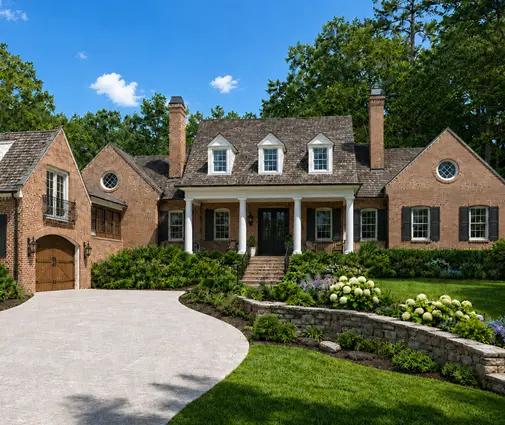
- Room for the mechanical equipment. An HRV or ERV, a heat pump air handler and a heat pump water heater need a conditioned space with access for filters and service. A basement solves this in the North, as in this four-bedroom Colonial-style home of 4907 sq ft with a basement. On slab foundations in the South, look for a utility room or a large mudroom closet. See the basement plans if you build in a cold zone.
- Ducts inside the envelope. Larger plans with simple stacked floors, like this four-bedroom Craftsman of 3251 sq ft on two stories or this five-bedroom Colonial of 4400 sq ft on three stories, make it easier to run ducts through chases. You avoid pushing them into a hot or cold attic.
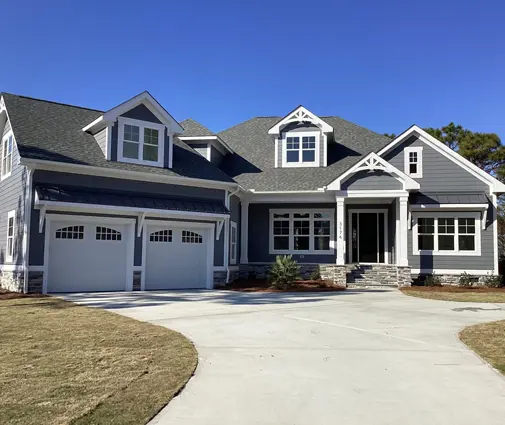
One more point applies to coastal lots. In hurricane zones, impact-rated windows and continuous sheathing are already required. They make an airtight envelope easier to achieve, so plans built for those conditions, like this four-bedroom coastal home of 2120 sq ft on three stories, often start from a good baseline.
The takeaway for building in the US
American energy rules are no longer far behind Canada and northern Europe on insulation. The differences are in airtightness, heat recovery ventilation and how strongly heat pumps are pushed. Those differences are shrinking with every IECC edition. Choose a compact plan with room for a ventilation unit and a proper mechanical space, and plan for exterior insulation in zones 4 and up. With those in place, meeting your local code is a matter of details rather than a costly redesign. Before you buy, confirm the adopted code edition and climate zone with your building department. Have your engineer or energy rater check the plan against it.