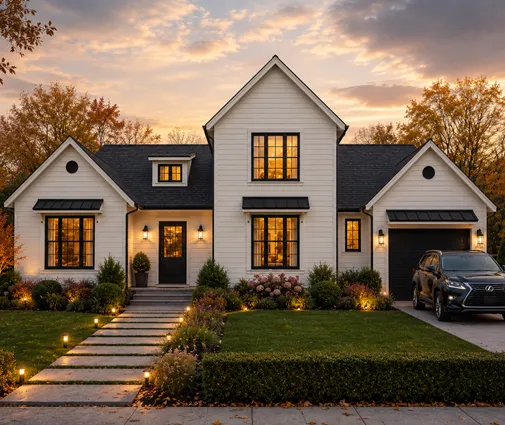
On paper, a spec house that sells for $420,000 and costs $357,000 for the lot, the build and the soft costs leaves $63,000, a tidy 15%. Then come the interest, the commission, the closing costs and a few slow months on the market, and that number can fall to almost nothing. Building one house on one lot and selling it on the open market is a good way to start as a small builder or investor. It only works if you choose the plan, the loan and the budget with the exit in mind from day one.
This checklist follows the order in which the decisions actually happen. The figures are illustrations based on typical 2025–2026 conditions. Your own numbers depend on your county, your lender and your trades, so run every one of them locally.
Stage 1: Read the local market before you buy anything
- Comps: ask a local agent for every new-construction sale within a mile or two from the last 6 to 12 months. Note the square footage, the bed and bath count, the garage and the price per square foot.
- Days on market: check how long those homes took to sell and whether the sellers paid concessions. A thin, slow market is a warning sign no plan can fix.
- Price ceiling: find the highest price any house on similar lots has reached. Buyers and appraisers rarely go far past it.
- Lot constraints: confirm the zoning, the setbacks, any HOA design rules, and whether you need a septic system, a well or a sewer tap. Also check the soil and whether the site sits in a flood zone.
- Buyer profile: work out who is buying in the area: young families, move-up buyers or downsizers. Each group wants a different layout.
Spend more time here than feels necessary. An experienced agent who sells new homes in that school district will tell you in an hour what buyers complain about and what they pay extra for. A spec house is a product built for a buyer you have not met yet, and this research is the only way to meet that buyer early.
Stage 2: Choose a plan buyers and appraisers reward
- Median size: aim at the middle of what sells in the area, which is often somewhere in the 1,500 to 2,000 sq ft range. Do not build the biggest house on the street.
- Bed and bath count: 3 to 4 bedrooms with 2 to 2.5 baths is the safe core in most U.S. suburbs. A third full bath rarely appraises for what it costs.
- Garage: a 2-car garage is the baseline buyers expect. A one-car garage can cost you showings where everyone else has two.
- Simple footprint: a rectangle with a straightforward roof keeps framing, roofing and foundation costs predictable.
- Style fit: match the street and the HOA. That usually means Modern Farmhouse, Craftsman or Ranch, not an experiment.
- Foundation: use what your region expects, such as slab on grade in much of the South or a basement where buyers count on one.
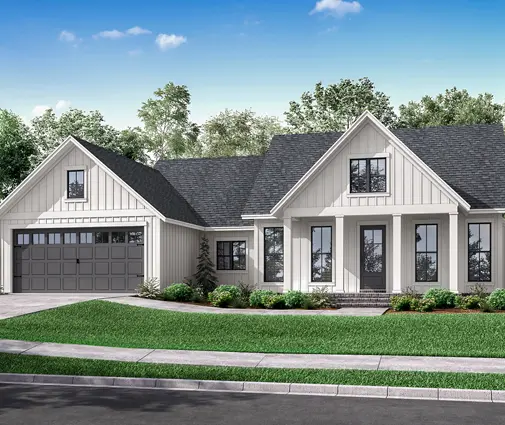
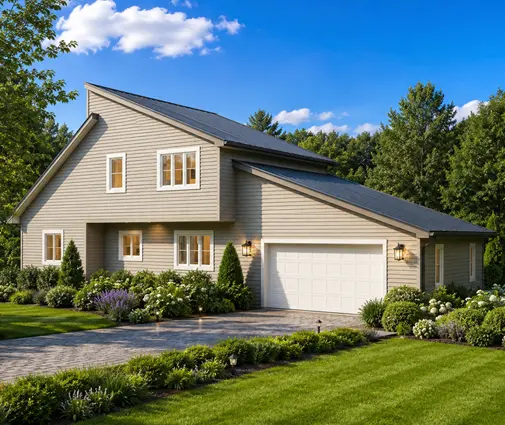
Stock plans suit spec building well, because they are proven layouts that a local drafter or engineer can adapt to your lot and code. For a broad buyer pool, single-level homes are hard to beat. This modern farmhouse ranch with a half bath for guests keeps everything on one floor. If your comps run closer to 2,000 sq ft, this modern ranch layout just under 2,000 sq ft adds room without crossing into a higher price band. On narrower lots, where buyers accept stairs, a two-story contemporary with three bedrooms upstairs keeps the footprint small. Where families need four bedrooms, this Southern farmhouse with four bedrooms on two levels fits the brief. In basement markets, a Craftsman ranch over a full basement gives buyers the lower level they expect. Most first specs land in the 3-bedroom category for good reason.

Stage 3: Line up the spec construction loan
- Loan-to-cost: many lenders fund roughly 75–85% of the total cost. You cover the rest, often with equity in a lot you already own.
- Appraised value: the lender orders an "as-completed" appraisal from your plans and specs. If it comes in low, the loan shrinks.
- Experience: first-time borrowers may face a lower loan amount, a higher rate or a requirement to partner with a licensed builder.
- Draw schedule: funds are released in stages after inspections. Plan your cash for paying subs before each draw arrives.
- Rate and term: expect interest-only payments, a rate usually several points above a typical mortgage, origination fees around 1–2%, and a term of 12 to 18 months.
- Guarantees and reserves: a personal guarantee, a contingency line and proof of cash reserves are common.
Talk to local community banks and credit unions first. They know the submarket and often lend to small builders that national lenders will not touch. Bring a package: the plan set, a detailed line-item budget, signed bids from your major trades, your comps and a schedule. A lender who sees that you have already done Stage 1 and Stage 2 properly will treat you as a builder, not a gambler.
Stage 4: Build the full budget, not just the construction cost
- Land: purchase price, closing costs, survey and any clearing or demolition.
- Soft costs: the plan and its local adaptation, engineering, permits, impact and tap fees, and builder's risk insurance.
- Hard costs: foundation through final finishes, driveway, landscaping and utility connections. Add a contingency of 5–10%.
- Carrying costs: loan interest, property taxes, insurance and utilities for the whole build and the sale period.
- Selling costs: realtor commissions of about 5–6%, plus seller closing costs and the concessions buyers ask for, often another 1–3%.
Carrying and selling costs are the lines beginners leave out, and together they can eat more than half of the expected profit. Estimate the build schedule honestly, then add time for the sale. In most markets that means 30 to 90 days on market, plus 30 to 45 days to close.
Stage 5: Stress-test the profit with a slow sale
- Example sale price: $420,000.
- Lot, soft and hard costs: $357,000, which leaves a gross margin of $63,000 (15%).
- Interest, fees, taxes and insurance: about $16,000 over a 7-month project at an assumed 8.5% rate.
- Commission at 5.5% plus 2% seller closing costs: about $31,500.
- Net profit on schedule: about $15,500, under 4% of the price.
- Three extra unsold months: roughly $2,000 a month of interest on a fully drawn loan, plus taxes, insurance, utilities and lawn care. That is about $9,000 more, leaving around $6,500.
- Price cut: a single $10,000 reduction to finally sell turns the project into a loss.
Run this test before you buy the lot, not after framing. If a three-month delay and a modest price cut would wipe you out, the deal is too thin. You can fix it by finding cheaper land, choosing a simpler plan or picking a size that sells faster. You can also walk away. Many seasoned builders want to see a healthy net margin left after a slow-sale scenario before they commit.
The most common mistakes
- Overbuilding for the street with finishes and square footage the appraiser will not count.
- Skipping carrying costs and calling the gross margin "profit".
- Personal taste in colors, layout or style instead of what local buyers buy.
- No contingency for weather, inspection delays or price increases from trades.
- Listing late instead of marketing the house from the drywall stage with a good agent.