A common way to lose a building permit is to do nothing for a while. A family gets their permit approved in spring and then the builder's schedule slips. Or the construction loan draw comes in late, or the framing crew leaves for a bigger job. By the time anyone calls for the next inspection, the permit has been dead for weeks. A permit is not a permanent right to build. In most U.S. jurisdictions it has a clock on it, and that clock does not care why your project stopped.
This guide explains how permit expiration works under the International Residential Code (IRC) and the local amendments most cities and counties add. It covers how to ask for an extension before the deadline, what renewal usually costs, and the question that worries owners most: whether an expired permit sends your house plans back for review under a newer code.
How Permit Expiration Works Under the IRC
Most states and local governments adopt the IRC for one- and two-family homes, and its administrative chapter sets the default rules. Recent editions use a 180-day framework. Your jurisdiction may have changed the numbers, so treat this as the starting point, not the final word.
The start-of-work clock
Under the model code, a permit becomes invalid if the authorized work doesn't start within 180 days after the permit is issued. "Start" usually means real work on the site, such as excavation, footings or a foundation inspection. Clearing a few trees often doesn't count. If you pull a permit early to lock in fees or a code edition, you still need to break ground within that window.
The suspension clock
The second rule catches more people. Once work has started, the permit also becomes invalid if the work is suspended or abandoned for 180 days. The model code doesn't define "suspended" in detail. Many building departments use a simple test: if no inspection has passed in the last 180 days, the job is treated as abandoned. A failed inspection or a cancelled one may not reset the clock. Only an approved inspection does.
The application clock
There is a third clock that people tend to forget. A permit application that sits unpursued can also be treated as abandoned, often 180 days after filing in the model code. If you submit plans and then go quiet while you rework the budget, you may have to start the submission over.
What Counts as Activity: Common Local Variations
The IRC is a model code. Your city or county adopts it with amendments, and permit time limits are among the most frequently edited sections. Some jurisdictions extend the window to a year. Others cap the total life of a residential permit at a fixed number of years, no matter how many inspections pass. Many define activity strictly by inspection results.
| Rule | IRC model default | What local amendments often do |
|---|---|---|
| Work must start after issuance | Within 180 days | Keep 180 days, or extend to 1 year |
| Allowed gap in work | 180 days of suspension | Measure it as 180 days without a passed inspection |
| Extensions | One or more, up to 180 days each, requested in writing with justifiable cause | Limit the number of extensions, charge a fee, or require a request before expiration |
| Maximum permit life | Not set in the model code | Some set a hard limit, for example 2 to 3 years for a new home |
| Abandoned application | 180 days after filing if not pursued | Shorter or longer windows, sometimes with a single extension |
Look up the exact rule in your jurisdiction's adopted code or permit handbook, and ask the permit counter how they track activity. Find out whether a passed rough plumbing inspection keeps the whole permit alive, or whether trade permits run on their own clocks. In many places the electrical, mechanical and plumbing permits are separate, and each one can expire on its own.
Why Builds Stall, and Where the Clock Bites
Expiration rarely happens to a project that is moving. It happens in the gaps, and the gaps tend to follow a few patterns.
- The builder leaves. A general contractor goes out of business, walks off the job, or is fired. The permit is often in the contractor's name, and a new contractor may need to file a change of contractor before any inspection can be scheduled. That paperwork can take weeks.
- The money runs short. Construction loans pay in draws tied to progress. If an appraisal comes in low or costs rise past the budget, work stops until financing is sorted out. Six months goes by fast while you renegotiate with a lender.
- Weather and seasons. In the North and Midwest, a basement poured in late fall may sit through winter. In hurricane country, storm season and material shortages can push schedules back.
- Owner-builders. Families acting as their own general contractor often work in stages: shell one year, interior the next. That rhythm can collide with the inspection clock.
Bigger and more complex homes stay under construction longer, so they have more chances to stall. A sprawling French Country design like this 6,811 sq ft four-bedroom luxury plan with a 3-car garage may take well over a year to finish. A compact one-story Craftsman with 3 bedrooms and 1972 sq ft can move from slab to final in far less time. A simple footprint doesn't guarantee a fast permit, but it gives you fewer phases where work can stop.



How to Request a Permit Extension
The model code lets the building official grant extensions in writing, for periods of up to 180 days each, when the owner shows justifiable cause. The key word is before. Many departments will only extend a permit that is still active. Once it lapses, you are into renewal or reissue, which usually costs more.
- Check your dates. Find the issue date and the date of your last passed inspection in the online permit portal. Mark the 180-day point on your calendar, then set a reminder about 30 days earlier.
- Put the request in writing. Most jurisdictions have a form or accept a letter or email. Include the permit number, the address, the current stage of work and the date you expect it to resume.
- State the cause clearly. Reasons such as a contractor default, a lender delay, a medical emergency, material backorders or a weather shutdown are commonly accepted. Attach supporting documents if you have them.
- Pay any fee. Some places grant the first extension free and charge for more. Others charge a flat administrative fee, often from tens of dollars to a few hundred dollars as of 2025.
- Get the approval in writing. Keep it with your permit card and send a copy to your lender and builder.
Another option is to schedule a legitimate inspection. If any phase of work is truly ready, a passed inspection can reset the clock without an extension request. Don't call for an inspection on work that isn't ready, though. A failed inspection may not count, and it can cost a re-inspection fee.
What It Costs to Renew an Expired Permit
When a permit has expired, departments generally handle it in one of three ways.
- Reinstatement or renewal. If the lapse is recent and the plans haven't changed, many jurisdictions let you renew for a fraction of the original permit fee. A common local formula charges about half the original fee if you renew within a year of expiration. Some charge less, some charge the full amount.
- Reissue for the remaining work. Some departments calculate a new fee based only on the value of the work still left to do.
- A brand-new permit. After a long lapse, often more than a year, you may have to apply from scratch, with full plan review fees and any impact or utility fees that have gone up in the meantime.
For a new single-family home, permit and plan review fees in 2025 often run from a few thousand dollars to more than $10,000, depending on the jurisdiction and the valuation of the house. A half-fee renewal is still real money. A full reissue can also bring back plan review time, which delays the restart.
The fee is often not the largest cost. Framing and sheathing left open for months can absorb moisture, and an inspector may ask an engineer to evaluate it, or require you to replace damaged materials. Builder's risk insurance may lapse along with the permit. Your HOA's architectural approval may also have its own expiration date. Check all three when you restart.
Will an Expired Permit Trigger Review Under a Newer Code?
This is the risk that can change your house, not just your budget. Codes are updated on a cycle, and states and localities adopt new IRC and energy code (IECC) editions on their own schedules. Your permit is generally reviewed under the code in effect when you applied. As long as the permit stays valid, you keep building to that edition.
If the permit expires and the department requires a new application, many jurisdictions apply the code in effect on the date of the new application. That can mean:
- Energy code changes. Higher insulation values, tighter air-sealing and blower-door targets, different window performance requirements, or new mechanical ventilation rules. For a house that is already framed, adding wall insulation depth can be awkward and expensive.
- Structural and wind updates. In hurricane and seismic zones, updated design requirements may affect connections, bracing or openings.
- Fire and safety items. Smoke and CO alarm placement, egress details, or sprinkler requirements where they have been adopted locally.
Some departments let a renewal within a short window keep the original code edition, as long as the plans don't change. Others look at it case by case. If your permit is close to expiring and you know a new code edition takes effect soon, ask the building department directly which edition would apply to a renewal. Get the answer in writing.
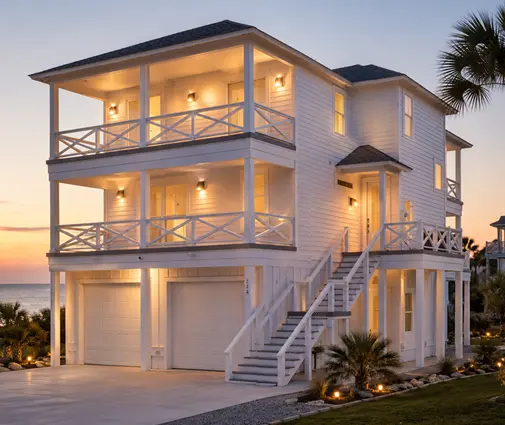
Regional differences matter here. An elevated coastal home such as this four-bedroom Beach-style plan of 2342 sq ft or a three-story Low Country farmhouse with 1980 sq ft and a 2-car garage is designed around wind and flood requirements that tend to change between code editions. A Midwest family building a two-story Farmhouse with 4 bedrooms and a full basement is more likely to feel energy code changes in foundation insulation and wall assemblies. If you're comparing options, the house plans with basements and beach house plans collections show how differently these homes are built.

How to Keep Your Permit Alive
Before you start and during the build, a few habits protect you more than any extension request.
- Ask for the jurisdiction's exact expiration rule when you pick up the permit, and write both 180-day deadlines on the permit card.
- Make sure your construction contract assigns responsibility for scheduling inspections and tracking permit status.
- Find out whose name the permit is in, and how to transfer it if the contractor changes.
- Build some cushion into the budget, so a cost overrun doesn't stop work right when the clock is tightest.
- If you're phasing the work, plan the phases so each one ends with an inspection.
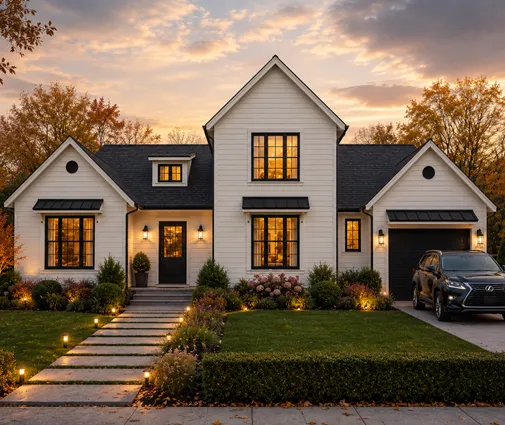
The plan you choose also affects how fast you can finish. A one-story house plan such as this 2951 sq ft Modern Farmhouse ranch with 3 bedrooms and a 3-car garage avoids second-floor framing and the delays that come with it. Whatever you build, have a local drafter or engineer adapt the stock plan to your jurisdiction's current code before you submit. That makes plan review faster and leaves less to argue about if you ever have to renew.
FAQ
Does a failed inspection keep my permit active?
Often it does not. Many building departments count only passed inspections as evidence that work is progressing. Ask your department how it defines activity.
Can I get more than one extension?
The IRC model language allows one or more extensions of up to 180 days each, at the building official's discretion. Many jurisdictions limit the number or require stronger justification each time.
If my permit expires, do I lose the inspections I already passed?
Usually the approved work stays approved, but an inspector may re-check exposed work that has been sitting, especially framing and sheathing exposed to weather. If a new code edition applies, any work not yet done must meet it.
Who is responsible if my contractor let the permit expire?
That depends on your contract and on whose name is on the permit. As the owner, you still carry the practical consequences, so watch the dates yourself and talk to a construction attorney if the contract is unclear.