The drywall is up, the cabinets are ordered, and the budget finally looks safe. Then the builder sends the last change order: gutters, a garage door upgrade, the driveway, a patio, the light fixtures by the front door. None of these items is expensive on its own, but together they often add $20,000 to $40,000 to a typical American single-family home. Below are the questions owners ask most often at this stage, with 2026 price ranges. Prices vary a lot by region, so treat them as a starting point and get local quotes.
Which exterior items usually end up missing from the budget?
The usual suspects are gutters and downspouts, underground drain lines, garage doors and openers, concrete flatwork (driveway, garage apron, front walk, patio), exterior light fixtures, hose bibs and house numbers. They are installed at the very end of the build, after the loan draws are mostly spent, which is why they feel like a surprise.
Many of them are carried as allowances in a builder contract or left out entirely in a "house only" bid. If you are buying a stock plan and pricing it with several builders, ask each one to list these items line by line so the bids can actually be compared.
How much do seamless gutters cost on a new house in 2026?
Seamless 5-inch aluminum K-style gutters typically run about $9 to $15 per linear foot installed in 2026, downspouts included; 6-inch gutters cost roughly 15 to 25 percent more, and copper or half-round profiles can cost several times as much. A house with 200 feet of eaves usually lands between $1,800 and $3,500.
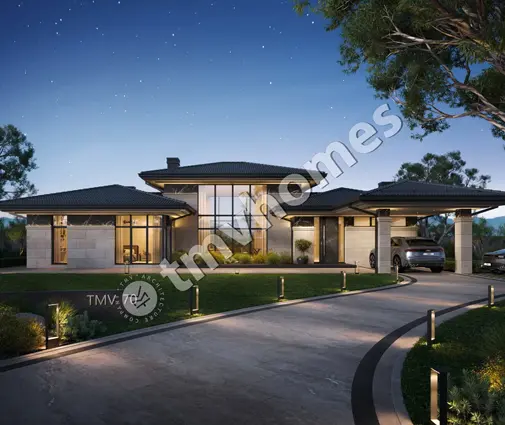
The number that matters is the roof perimeter, not the square footage. A sprawling one-story home like this 3,730 sq ft modern single-story plan with 4 bedrooms has far more eave length than a compact two-story home of the same size. Gutter guards add roughly $6 to $12 per foot, which can double the line item.
Do I need underground downspout drains?
On most lots, yes: buried drain lines that carry roof water 10 or more feet from the foundation are one of the cheapest ways to protect a basement or crawlspace. Expect about $15 to $40 per foot of trenched solid pipe with pop-up emitters, or roughly $1,000 to $3,000 for a whole house.
They matter most in the North and Midwest where basements are common, and on clay soils anywhere. Have them installed before final grading and sod, because digging through a finished lawn costs more and looks worse.
What does an insulated garage door and opener cost?
An insulated steel 16 by 7 foot double door costs roughly $1,800 to $4,500 installed in 2026, and a single 9 by 7 door about $1,100 to $2,800. A belt-drive opener with Wi-Fi and battery backup adds about $500 to $900 per door installed.
Carriage-style overlays, windows, wood-look finishes and taller 8-foot doors push prices up quickly, and Modern Farmhouse and Craftsman fronts often call for exactly those details. In coastal hurricane zones, wind-rated doors are generally required and cost more; check with your building department. A plan with a 3-car garage usually means one double and one single door, or three singles, and three openers.
How much will the driveway, garage apron and sidewalk cost?
Plain broom-finished concrete runs roughly $8 to $14 per square foot in 2026, so a 20 by 40 foot two-car driveway of 800 sq ft costs about $6,400 to $11,200. A 4-foot-wide front walk of 40 feet adds another $1,300 to $2,300.
The garage apron, the thicker slab right in front of the doors, is often specified at 5 or 6 inches with rebar, and the curb cut or approach at the street may have to follow city standards. Long setbacks, sloped lots and side-entry garages that need a turnaround all add square footage fast.
What does a patio add?
A basic 12 by 16 foot concrete patio costs about $1,500 to $2,700 in 2026, while stamped or colored concrete runs about $15 to $25 per square foot and pavers about $15 to $30. A larger 400 sq ft entertaining patio can easily reach $6,000 to $10,000.
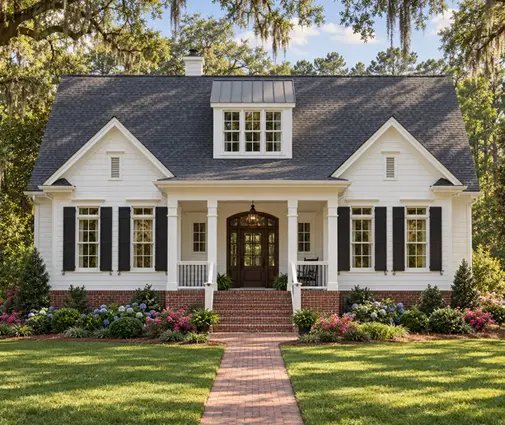
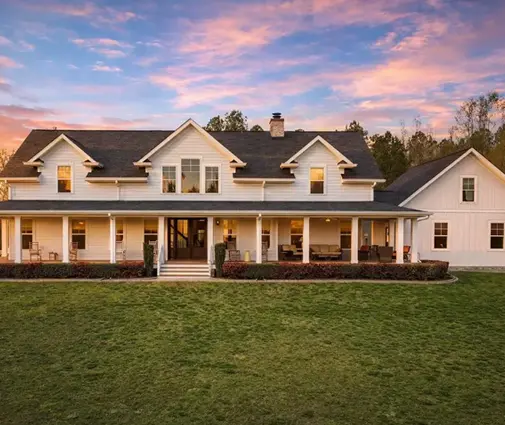
Check what the plan already includes. Many plans show a covered rear porch whose slab is part of the foundation pour, and anything beyond that roofline is extra flatwork. This 3,363 sq ft Low Country farmhouse with a 3-car garage is a good example of a design where generous porches carry much of the outdoor living.
How much should I budget for exterior lighting?
Plan on roughly $1,500 to $4,500 for the fixtures themselves on a typical home, plus the electrician's labor if extra boxes or circuits are added. Wall lanterns cost about $75 to $400 each, and a house can easily need 8 to 14 of them: front door, garage, rear doors, porch ceilings and side entries.
Recessed soffit lights, a motion-sensor floodlight and landscape lighting are separate. Low-voltage landscape lighting typically runs $2,500 to $6,000 installed. Mark all exterior box locations during the electrical walkthrough before insulation, because moving them later means opening siding.
How many hose bibs do I need, and what do they cost?
Most homes need at least two, one at the front and one at the back, and larger homes benefit from one per side or one in the garage. A frost-free sillcock costs about $200 to $450 each installed during rough plumbing, more if added after the walls are closed.
In cold climates, frost-free bibs are a must; in the South, standard bibs are common but backflow protection may still be required. A bib near the patio and another near the garage apron saves dragging a hose around the house for years.
Are house numbers really a line item?
Yes, though a small one: expect $50 to $300 for numbers, or $300 to $800 for a lighted address plaque or a mailbox post. The IRC requires address identification that is visible from the street, commonly with numbers at least 4 inches tall, and some jurisdictions add their own rules.
The final inspection can be delayed if the address is missing, so do not leave this to move-in day. Confirm the local requirement with your building department.
Which of these items do builders leave out of a base bid?
Gutters, downspout drains, patios, landscape lighting and anything beyond the minimum driveway are the items most often excluded or under-allowed. Garage doors and openers are usually included but at a basic, non-insulated or single-opener grade, and exterior light fixtures are often a low allowance of a few hundred dollars.
- Gutters: frequently "by owner" or excluded entirely.
- Concrete: often priced for a fixed square footage, with overages billed separately.
- Garage doors: base model, uninsulated, sometimes without openers.
- Light fixtures: an allowance that buys builder-grade lanterns.
- Hose bibs: usually two, regardless of house size.
Read the specification sheet, not just the price, and ask for written allowances for each item.
How does the house plan itself change the total?
Three features of the plan drive most of the exterior finish cost: garage count, porch size and roof perimeter. Every garage bay adds a door, often an opener, and roughly 200 to 300 sq ft of driveway and apron. A one-story layout means more eaves for gutters, and a wide front porch means more ceiling lights and often a longer walk.
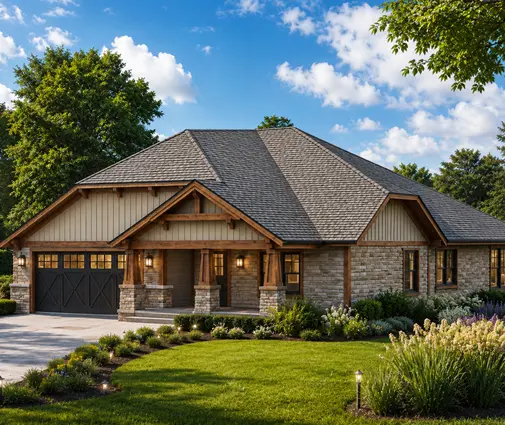
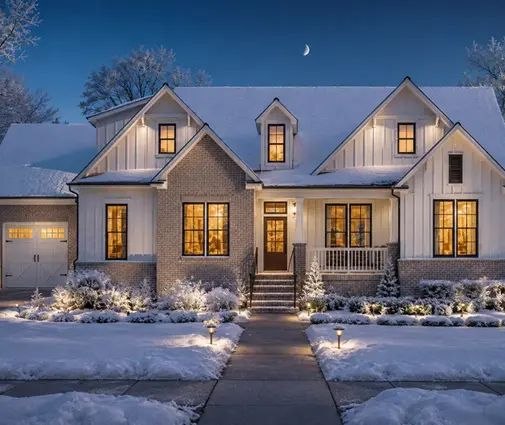
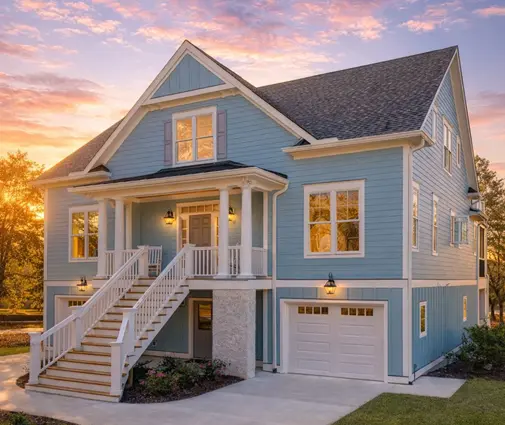
Compare a compact 2,007 sq ft one-story Craftsman with a 2-car garage to a 3,800 sq ft Modern Farmhouse with a 3-car garage: the larger home can easily need twice the concrete and an extra door and opener. Coastal homes raised on pilings, like this 2,408 sq ft coastal plan with a 4-car garage, add wind-rated doors and long exterior stairs to the list.

Homes with a wraparound porch look wonderful, but expect more ceiling fixtures, more gutter runs and more steps to pour.

How do I keep these costs under control?
Put a number on every item before you sign, and keep a contingency of 10 to 15 percent of the exterior finish budget. A realistic total for a 2,400 to 3,000 sq ft home with a 2-car garage in 2026 is roughly $18,000 to $30,000; with a 3-car garage and a large patio, $25,000 to $45,000 is common.
| Item | 2-car home, 2026 | 3-car home, 2026 |
|---|---|---|
| Gutters and downspouts | $1,800 to $3,500 | $2,500 to $4,500 |
| Downspout drains | $1,000 to $2,500 | $1,500 to $3,000 |
| Garage doors and openers | $2,300 to $5,400 | $3,900 to $8,000 |
| Driveway, apron and walk | $7,500 to $13,500 | $10,000 to $18,000 |
| Patio | $1,500 to $6,000 | $3,000 to $10,000 |
| Exterior lighting | $1,500 to $4,500 | $2,500 to $6,000 |
| Hose bibs and house numbers | $450 to $1,200 | $650 to $1,800 |
If the total does not fit, phase the items that can wait: a patio and landscape lighting can come a year later, while gutters, drains and the driveway should be done before you move in. When you choose a plan, look at the garage count and roofline with the same care you give the kitchen, because they decide a good part of the last bill.