It is a mild evening in late April near Charleston. The thermostat reads 75°F, the new heat pump has barely run all day, and yet the sheets feel damp and the hardwood floors have started to cup at the edges. The house is new, sealed, well insulated and passed its blower door test with room to spare. So why does it feel like a swamp?
Humidity is the most misunderstood part of comfort in the Southeast. Builders, owners and even some HVAC contractors still work from rules of thumb that made sense in leaky houses of the 1980s. Below are the myths that come up most often, and what is actually true when you are building a tight home in Florida, along the Gulf Coast or in the Carolinas.
Myth 1: A tight house is automatically a dry house
Fact: Air sealing keeps humid outdoor air from leaking in, which helps, but it does not remove the moisture already being produced inside. A family of four adds a lot of water vapor every day through breathing, showers, cooking and laundry. A tight house also needs fresh air on purpose: under the IRC, a dwelling that tests below 5 air changes per hour at 50 pascals must have whole-house mechanical ventilation, and in the Southeast that outdoor air arrives warm and wet for much of the year. Meanwhile, better insulation and low-e windows cut the heat gain, so the air conditioner runs far less. Less runtime means less moisture pulled out of the air. The tighter and more efficient the house, the more the humidity problem shifts from "keep it out" to "take it out."
Myth 2: A bigger air conditioner removes more humidity
Fact: An oversized system cools the air quickly, satisfies the thermostat in a few minutes and shuts off before the indoor coil has been cold long enough to condense much water. Worse, some of the water sitting on the coil evaporates back into the house when the fan keeps running after the compressor stops, especially if the thermostat fan is set to "On" instead of "Auto." The result is the classic cold-and-clammy feeling. The fix starts on paper: insist on a room-by-room Manual J load calculation and Manual S equipment selection for your actual plan, orientation and window specs, not a "one ton per 500 square feet" guess. A well-built 2,000 sq ft home in the Southeast today often needs noticeably less capacity than the house it replaced.
Myth 3: A variable-speed heat pump solves humidity on its own
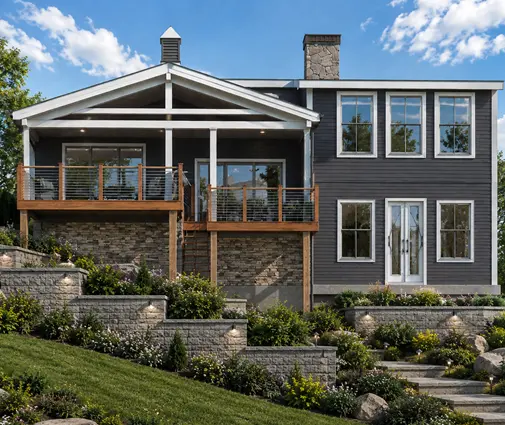
Fact: Sometimes it does, and that is the good news. A variable-speed (inverter) heat pump can run for long stretches at low capacity with reduced airflow, which keeps the coil colder and wetter and removes far more moisture than a single-stage unit cycling on and off. Many models also have a dehumidification mode that slows the blower further when humidity rises. In a modest one-story house with a compact duct system, a properly sized variable-speed system is often enough. A simple 1,292 sq ft three-bedroom ranch or a 2,112 sq ft modern ranch with four bedrooms is the kind of home where the heat pump alone usually keeps summer humidity in check.
The limit is the shoulder season. On a 72°F day with fog and drizzle there is almost no cooling load, so even a variable-speed unit will barely run, and the humidity climbs. Any air conditioner dehumidifies only as a side effect of cooling. When there is nothing to cool, the drying stops.
Myth 4: Whole-house dehumidifiers are only for basements up North
Fact: In the humid Southeast a ducted whole-house dehumidifier is often the most effective tool in a tight house, precisely because it dries the air without overcooling it. It is most likely to pay off when one or more of these apply:
- The house is very tight and has high-performance windows, so the cooling load is small for much of the year.
- You live within a few miles of the coast, where dew points stay high for long periods in spring and fall.
- The plan is large or tall, with several stories and many bathrooms, so internal moisture and ventilation air add up.
- The home has a sealed, encapsulated crawl space or a conditioned attic that also needs drying.
- Someone in the household has allergies or asthma, where dust mites and mold matter.
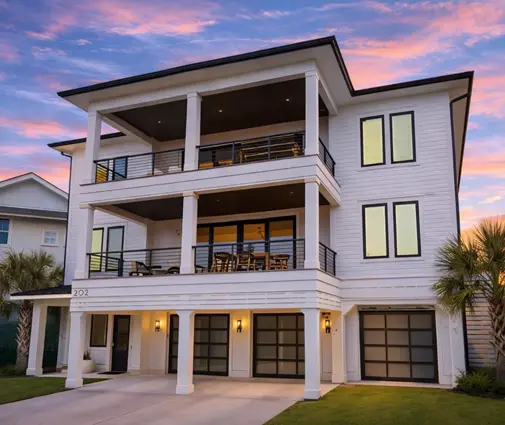
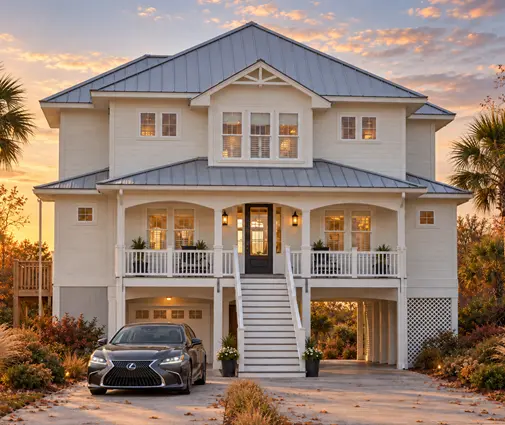
Elevated coastal homes on pilings tend to tick several of those boxes at once. A five-bedroom beach house on four levels with 3,464 sq ft or a 4,294 sq ft coastal Craftsman with six bedrooms has lots of glass, lots of bathrooms and constant marine air, which is exactly where a dedicated dehumidifier makes sense. More homes of this type are in the beach house plans collection.
Myth 5: Lower humidity is always better
Fact: There is a sweet spot. Most building scientists and the EPA point to keeping indoor relative humidity below 60 percent, and in a Southeast summer a target of roughly 45 to 55 percent works well for comfort, for wood floors and cabinets, and for keeping dust mites and mold at bay. Pushing the air down to 30 percent wastes energy and can dry out skin, sinuses and trim. Set the dehumidistat around 50 percent, watch a cheap hygrometer in a few rooms for a season, and adjust from there.
Myth 6: An ERV will dry the house
Fact: An energy recovery ventilator is a good choice for ventilation in a hot, humid climate, because it transfers some of the moisture from the incoming fresh air to the outgoing stale air. That means it brings in less humidity than a simple exhaust fan or a supply duct would. But it cannot remove moisture that is already inside. Think of an ERV as reducing the load, and the heat pump or dehumidifier as removing it. In a tight coastal home you will often see all three working together.
Myth 7: The dehumidifier can go wherever there is space
Fact: Location matters as much as the unit itself. A whole-house dehumidifier should sit inside the conditioned envelope: a mechanical closet, a utility room, a sealed and conditioned attic or an encapsulated crawl space. Putting it in a vented attic or an unconditioned garage wastes energy and invites condensation trouble. It also needs a reliable condensate drain (gravity if possible, a pump if not), a dedicated circuit, and short duct runs to the return side of the air handler or its own supply. On elevated coastal homes in flood zones, keep the equipment above the design flood elevation, which usually means inside the living levels rather than under the house.
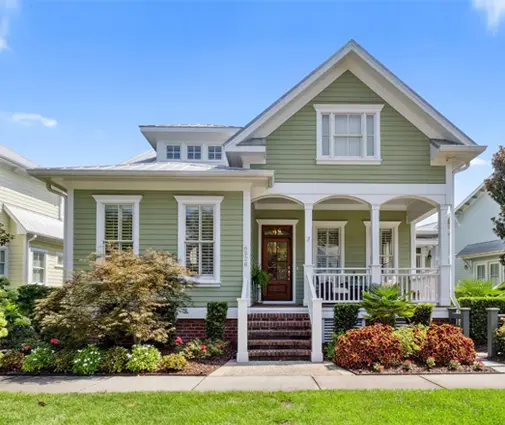
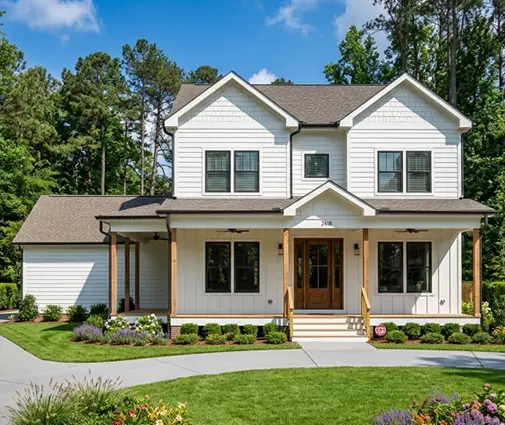
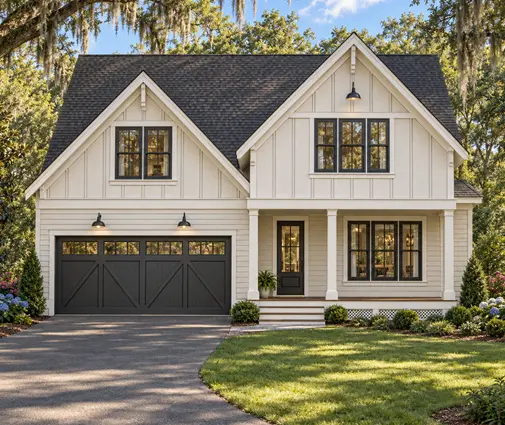
Plan this early. A small mechanical room next to the air handler, about 4 by 5 feet with a floor drain or a pan, is far easier to draw into a plan than to carve out later. A two-story Low Country home such as this 1,916 sq ft four-bedroom design or a Modern Farmhouse with 2,551 sq ft and four bedrooms usually has a laundry or a hall closet where a local drafter can tuck the unit in while the plan is being adapted for your lot and code. Popular farmhouse plans adapt well to this as long as the mechanical space is decided before framing.

Myth 8: A dehumidifier will blow up the electric bill
Fact: The numbers are modest. A typical ducted unit rated around 70 to 120 pints per day draws roughly 500 to 1,000 watts while running, and in a tight house it may run only a few hours a day during the humid months. With residential electricity in much of the Southeast at roughly 13 to 17 cents per kWh in 2025, that usually works out to something like $60 to $250 a year, depending on the climate, the house and how low you set it. Installed cost for the unit, ducting, drain and controls generally ran about $2,000 to $4,500 in 2025. The unit does add a little heat to the house, but because you are no longer overcooling to fight the clamminess, many owners can raise the thermostat a couple of degrees and recover part of the cost.
Compare that with the price of replacing cupped flooring, treating mold behind a vanity or simply living in a house that never feels comfortable, and the math is usually easy. Check current electric rates with your utility and ask your HVAC contractor for a quote based on your actual plan.
What this means for your new home
In the humid Southeast, humidity control belongs on the plan, not on the punch list. Ask for a Manual J calculation, choose a right-sized variable-speed heat pump, set the fan to Auto, plan a ventilation strategy that suits a tight house, and reserve a spot for a whole-house dehumidifier even if you install it later. Codes, flood rules and local amendments vary by county, so confirm the details with your building department and a local HVAC designer. Get those pieces right and the house will feel the way it should: cool, dry and comfortable, even on a foggy October afternoon.