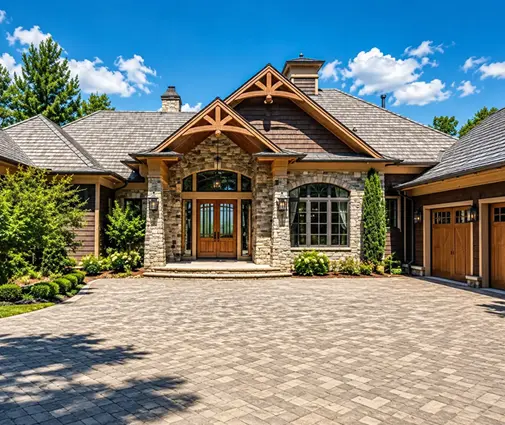
A common mistake goes like this: someone building a 1,300 sq ft ranch reads that ductless mini-splits are the cheapest, most efficient way to heat and cool, so they put one big head in the living room. The first winter, the great room is perfect and the back bedrooms are 8 degrees colder with the doors closed. The equipment was not the problem. The match between the system and the floor plan was.
Small, well-insulated new houses need very little heating and cooling. Many homes under 1,600 sq ft built to current energy code need only 1.5 to 2.5 tons of capacity, and sometimes less. That changes the math. The question is less "which system is most efficient" and more "how do I get that small amount of heat and cooling into every room, quietly, for a reasonable price." There are three realistic answers: ductless wall-mounted heads, a ducted mini-split, and a conventional central heat pump.
What each option costs in 2026
The ranges below are typical installed prices for a new one-story house in 2026, including equipment, line sets, labor and startup. Prices vary a lot by region and by how busy local contractors are, so treat these as a starting point for bids, not a quote.
| Cost item | Typical range (USD, 2026) | Notes |
|---|---|---|
| Single-zone ductless mini-split (1 head) | $3,500 – $6,000 | Works for one open space; rarely enough alone for a house with closed bedrooms |
| Multi-zone ductless (3–4 heads, 1 outdoor unit) | $11,000 – $20,000 | Each added head adds roughly $2,000 – $4,000 |
| Ducted mini-split (slim air handler, short duct runs) | $8,000 – $14,000 | Air handler in a closet, soffit or attic; ducts included |
| Central heat pump, 2–2.5 tons, with new ductwork | $10,000 – $17,000 | Ductwork alone often $3,000 – $6,000 in new construction |
| Cold-climate model premium | +$1,000 – $3,500 | For units rated to keep high output well below freezing |
| Dedicated electrical circuit and disconnect | $300 – $1,200 | Less if planned with the panel from the start |
| Manual J load calculation and Manual S equipment selection | $150 – $500 | Often included by better contractors; many jurisdictions require it |
| Fresh-air ventilation (ERV or balanced fans) | $1,500 – $4,000 | Needed in tight houses whichever system you pick |
Two things stand out. First, a fully ductless house with a head in every bedroom is often the most expensive choice, not the cheapest. Second, the gap between a ducted mini-split and a small central heat pump is narrower than most people expect.
Ductless wall heads: cheap for one room, pricey for five
Wall-mounted heads shine in open, compact houses. In a 713 sq ft cottage like this two-bedroom bungalow plan, one head in the living area plus a small one in the larger bedroom can carry the whole house in a mild or moderate climate. The same logic works for a tiny home or a guest cottage.
The trouble starts with closed bedrooms. A head only conditions the air it can reach. With doors shut at night, a bedroom off a hallway may drift several degrees from the thermostat setting, especially on exterior corners. The fix is a head per bedroom, and that is where the cost climbs past $15,000. Each head also needs a condensate path and a line set run through the wall, which limits where it can go.
Appearance matters too. A white plastic cassette above a bed is fine for some owners and a deal-breaker for others. Indoor heads are quiet, typically quieter than a ducted air handler, but the filters on each one need regular cleaning, and in a house with four heads that becomes a real chore.


Ducted mini-splits: the middle path most small houses should price first
A ducted mini-split uses the same inverter outdoor unit as the ductless kind, but feeds a compact air handler that pushes air through short ducts to every room. You get even temperatures in closed bedrooms, one filter, nothing on the walls, and the efficient variable-speed compressor of a mini-split.
These systems like short duct runs and low static pressure. That makes a compact one-story layout ideal. Take a 1,292 sq ft three-bedroom farmhouse ranch: with the air handler in a hall closet or a dropped soffit near the center, every bedroom is within a short run, and one 1.5 to 2 ton unit can usually serve the house. A plan like this 1,248 sq ft four-bedroom bungalow is an even stronger case. Four small bedrooms in about 1,250 sq ft would need four or five ductless heads, while one ducted unit handles them easily.
The catch is design. Ducts must be sized by the contractor, not guessed, and the air handler needs a spot with service access and a condensate drain. Settle this before framing. If the drafter adapting your stock plan adds a small mechanical closet and a soffit path for the trunk, the install gets cheaper and quieter.
Central heat pump: familiar, easy to service, slightly bigger budget
A conventional split heat pump with a standard air handler is what most builders and HVAC crews install every week. Parts and service are easy to find in almost any county, and appraisers and lenders know exactly what they are looking at. For a house around 1,500 to 1,600 sq ft with a more spread-out layout, it is a solid choice.
The common problem in small houses is oversizing. A crew used to older homes may put a 3 ton unit on a house that needs 1.5 tons. An oversized single-stage unit short-cycles, leaves humidity in the air in summer, and feels drafty. Insist on a Manual J calculation, and ask for a variable-speed or at least two-stage unit. In a plan like this 1,569 sq ft three-bedroom, three-bath bungalow, where bedrooms sit at different ends, a properly sized central system or a larger ducted mini-split will beat a scatter of wall heads.
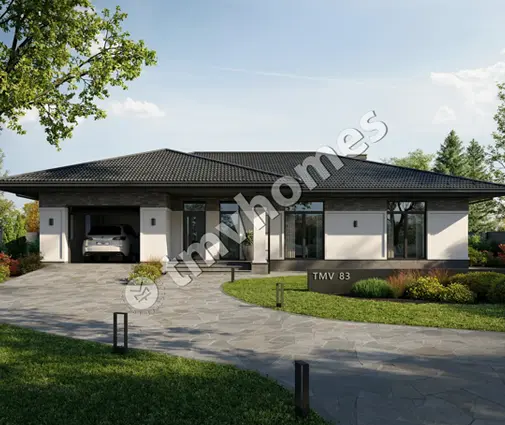


How the floor plan decides
Look at your plan before you look at equipment brochures.
- Open great room, one or two bedrooms: ductless heads are often cheapest and simplest. This 982 sq ft one-bedroom modern farmhouse could be served by two heads.
- Three or four closed bedrooms off a hallway: go ducted. The hallway itself gives you a natural soffit path.
- Vaulted ceilings and big glass: heat stratifies and solar gain swings the load. A design like this 1,615 sq ft mid-century modern home needs careful head or register placement; a load calculation room by room is essential.
- Slab on grade with no attic space for ducts: common in the South and on many one-story plans. Plan ducts in a dropped ceiling or conditioned chase rather than a hot, vented attic, or lean toward ductless.
If you are still choosing a plan, browsing homes between 1,000 and 1,500 sq ft with this in mind helps: a compact rectangle with bedrooms clustered on one side is the easiest and cheapest shape to heat and cool. Open-concept layouts reduce the number of zones you need.
Cold climates
Modern cold-climate heat pumps, both mini-split and central, keep useful output well below 0°F, something older units could not do. In the northern states and the mountains, ask for models listed on a recognized cold-climate heat pump list and check their capacity at 5°F, not only at 47°F. Expect to pay the premium in the table. Some owners in very cold areas still keep a backup: electric resistance strips in the air handler or a small wood or gas stove. Your local code and your lender may have a view on primary heat, so ask early.
How to save without regretting it
- Shrink the load first. Better air sealing, good windows and insulation can drop a small house from 2.5 to 1.5 tons. That is often $1,500 to $3,000 less in equipment.
- Keep ducts inside the conditioned space. It costs little at the drafting stage and avoids losing a big share of output in a hot attic.
- Get three bids that show the Manual J result. If the tonnage differs by a ton between bids, ask why.
- Look for utility and state rebates. Many electric utilities and cooperatives pay rebates for qualifying heat pumps, often a few hundred to a few thousand dollars, sometimes more for cold-climate units. Some states run their own heat pump or new-construction efficiency programs. The federal tax credit that covered heat pumps in existing homes ended after 2025, and other federal incentives have changed, so check the current rules with your utility, your state energy office and the DSIRE database before you sign. Rebates often require an approved contractor and pre-approval, so apply before installation.
- Do not skip ventilation to save money. A tight house with a mini-split and no fresh air will feel stuffy. Budget for it.
The short version
- Under about 900 sq ft and mostly open: one or two ductless heads, roughly $4,000 to $9,000.
- 1,000 to 1,600 sq ft with closed bedrooms: a ducted mini-split, roughly $8,000 to $14,000, is usually the best value.
- Spread-out plan or a crew you trust with conventional equipment: a right-sized variable-speed central heat pump, roughly $10,000 to $17,000.
- Cold climate: add $1,000 to $3,500 for a cold-climate model and check output at 5°F.
- Always: Manual J sizing, ducts inside the house, ventilation in the budget, and rebates confirmed before installation.