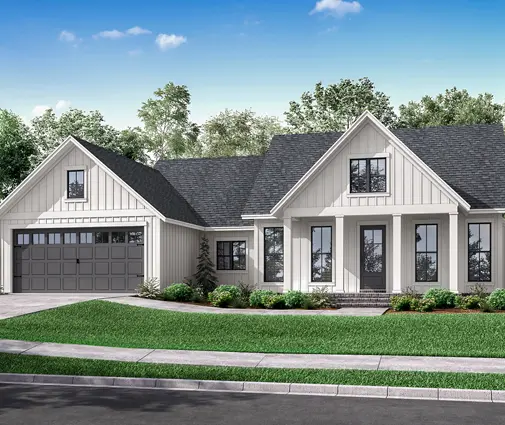
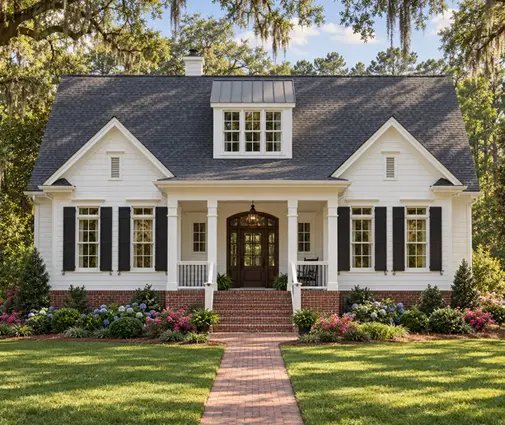
Sixty-seven thousand dollars. That is roughly what a builder's overhead and profit adds to a mid-range 2,200 sq ft home in 2025–2026, and it is the number that tempts people to run the job themselves. So how much can you save by being your own general contractor? On paper, the whole builder margin, typically 10–25% of the price. In practice, once you pay what trades charge one-time customers, lose supplier discounts, carry the loan longer and fix a few mistakes, most owners keep somewhere between nothing and about 12% of the builder's price. On the house below, that comes to around $18,000–$50,000, and the high end needs real effort.
The numbers below exclude land, plans, permit and impact fees, and utility tap charges. You pay those either way. Use them as a planning frame, not a quote. Labor and material prices swing a lot between a rural county in the Midwest and a coastal metro, so get local bids before you rely on any figure.
One 2,200 sq ft budget, priced twice
The test house is a mid-range, two-story, 2x6-framed home on a slab with ordinary finishes. That is the size most families end up with when they browse the 2,000 to 2,500 square foot range. The first column shows what each item typically runs nationally. The second shows the builder's cost inside their contract price. The third shows what the same work costs an owner who hires the trades directly.
| Cost item | Typical range, 2025–2026 | Builder-run | Owner-run |
|---|---|---|---|
| Site prep, excavation, utility runs | $15,000–$45,000 | $25,000 | $25,000 |
| Foundation (slab; a basement costs more) | $20,000–$60,000 | $30,000 | $31,500 |
| Framing, lumber and labor | $55,000–$95,000 | $70,000 | $74,000 |
| Roofing | $12,000–$30,000 | $18,000 | $19,000 |
| Windows and exterior doors | $15,000–$40,000 | $22,000 | $23,000 |
| Siding, exterior trim, gutters | $18,000–$45,000 | $25,000 | $26,500 |
| Plumbing rough-in and finish | $15,000–$30,000 | $22,000 | $23,500 |
| Electrical | $15,000–$28,000 | $20,000 | $21,500 |
| HVAC | $14,000–$30,000 | $20,000 | $21,000 |
| Insulation and drywall | $22,000–$40,000 | $30,000 | $31,500 |
| Interior doors, trim, paint | $20,000–$45,000 | $30,000 | $31,500 |
| Cabinets and countertops | $22,000–$50,000 | $30,000 | $31,000 |
| Flooring | $12,000–$30,000 | $18,000 | $19,000 |
| Fixtures, lighting, appliances | $12,000–$30,000 | $15,000 | $15,500 |
| Construction subtotal | $375,000 | $393,500 | |
| Builder overhead and profit | 10–25% | $67,500 | $0 |
| Extra loan interest (about 5 more months) | $4,000–$12,000 | $0 | $7,000 |
| Extra rent or mortgage during the longer build | $6,000–$15,000 | $0 | $9,000 |
| Builder's risk and liability coverage | $1,500–$4,000 | included | $2,500 |
| Rework, re-inspections, wrong orders | 2–5% of construction | absorbed | $12,000 |
| Total | $442,500 | $424,000 |
The owner comes out about $18,500 ahead, a little over 4%. The builder's $67,500 shrank by more than two thirds before it reached the owner's pocket. The sections below explain why.
What builder overhead and profit actually pays for
The builder's overhead and profit is not pure margin. Part of it covers a superintendent who visits the site daily, an office that orders materials and tracks invoices, a truck, general liability and builder's risk insurance, warranty callbacks, and the slack that absorbs a framing crew no-show. Profit for a custom or semi-custom builder usually sits in the high single digits, and the rest is the cost of running the job. When you act as your own GC, the profit is what you save. The running costs move onto your calendar and your bank account.
Where an owner-builder pays more
Trades price you as a one-time customer
An electrician who wires twenty houses a year for one builder sharpens the pencil for that builder. Your job is one house, with an unknown schedule and a client who may call at 9 p.m. Expect bids roughly 3–10% higher, and expect your job to slip behind repeat work when the trade gets busy. In the table that premium adds up to about $18,500 across the trades.
Lumber yards and supply houses
Builders get contractor pricing, delivery terms and credit lines built on years of volume. Many yards will open a homeowner account, but the discount is thinner, often a few percent, and a framing package is large enough for that difference to matter. Builders also get returns accepted and short-shipped items replaced without a fight. You may not.
Time is a line item too
A competent builder finishes a house this size in roughly 7 to 10 months. First-time owner-builders commonly need 11 to 15, because every trade handoff waits on a phone call they make between other obligations. A construction loan charges interest on the drawn balance. At 2025–2026 construction loan rates in the high single digits, five extra months on an average balance around $200,000 costs about $7,000. If you rent while you build, add those months of rent too.
The cost of mistakes
Mistakes are the most variable item. Common ones include drywall hung before the HVAC inspection passes, window rough openings framed to the wrong schedule, a slab poured without the plumbing sleeve for an island sink, and tile ordered from two different dye lots. Each one is a few hundred to a few thousand dollars, and they rarely come alone. Budgeting 2–5% of construction for rework is realistic for a first project. Owners who skip that allowance are the ones who end up paying more than a builder would have charged.
How much do you save being your own general contractor? It depends on the house
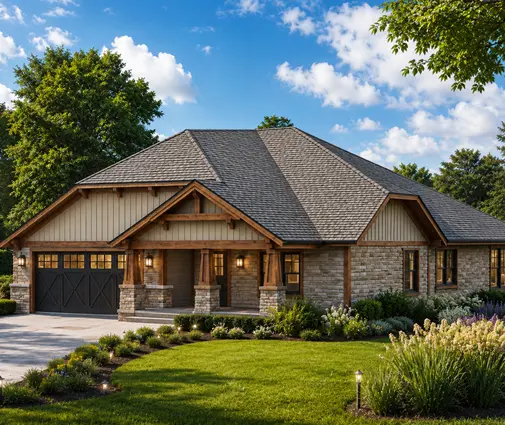
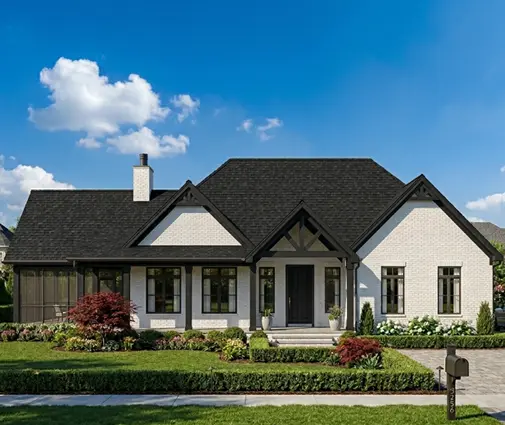
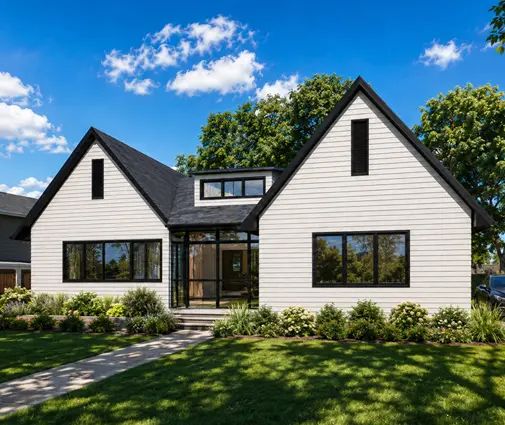
The design moves the answer more than most people expect. A single-level house with a simple roof and one wet wall is forgiving. Fewer trades overlap, scaffolding is minimal, and inspections follow a predictable order. The Craftsman one-story at 2,007 sq ft and the 2,250 sq ft modern ranch with everything on one floor are the kind of layouts where owner-managers tend to land near the top of the savings range. The clean-lined single-level plan of 2,168 sq ft is in the same group. Browsing one-story plans is a sensible first filter if you plan to run the job yourself.
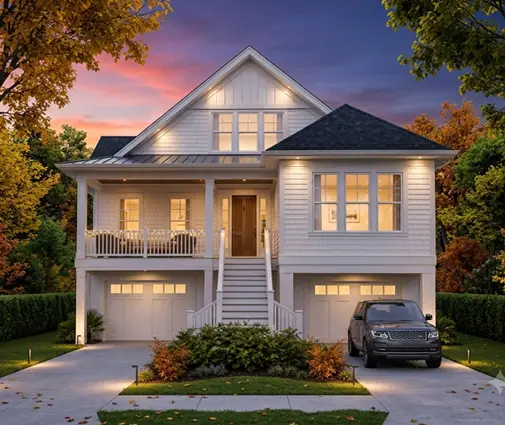
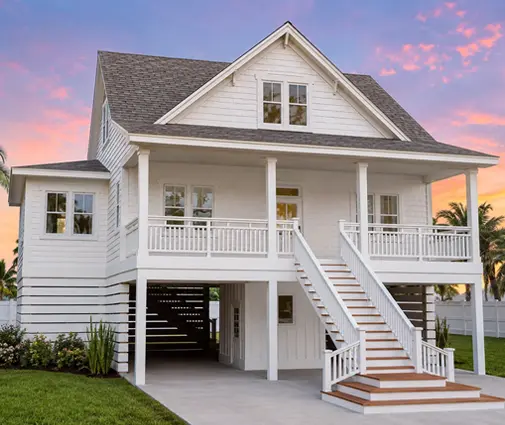
Raised coastal homes are another matter. The four-level 2,361 sq ft coastal design and the 2,412 sq ft beach house spread over four stories involve piling or elevated foundations, wind-rated connections and engineering requirements. In hurricane zones, inspections are stricter and the sequencing is tight. One missed hold-down can stop the job for weeks. A full basement adds excavation, waterproofing and drainage choices that are expensive to get wrong, as on the 2,489 sq ft ranch set over a basement. On houses like these, a 0–5% net saving is a fair expectation for a first-timer.

The line items that still produce real savings
Can you save money being your own general contractor? Yes, if you pick your battles. Owners who come out well usually do most of the following:
- Buy finishes directly. Cabinets, flooring, lighting and plumbing fixtures are where builders often add a markup on top of their margin. They are also easy to price-shop. Savings of $5,000–$15,000 are common here.
- Hire labor-only framing. Buy the lumber package yourself from a yard that gives you a firm quote, and pay a framing crew for labor only. This works only if someone checks the takeoff against the plans.
- Put in sweat equity where skill matters little. Painting, site cleanup, insulation in some jurisdictions, landscaping and closet shelving can be worth $8,000–$20,000 of labor on a house this size. Leave electrical, plumbing and gas to licensed trades.
- Get three bids and a written scope. A vague scope lets a sub change the price later. A line-by-line scope protects the price you bid against.
- Pay for an hour of expertise. A construction consultant or experienced builder walking the site at key stages costs a few thousand dollars and can prevent the mistakes in the rework row.
Stack those on the worked example and the net saving moves from about $18,500 toward $40,000–$50,000. That is roughly 9–12% of the builder's price, the upper limit most owners realistically reach.
Check these before you decide
Being your own general contractor brings costs beyond the spreadsheet. Many lenders will not finance an owner-builder construction loan, or they require documented experience and a larger down payment. Ask early. Some states and counties have owner-builder rules, such as an affidavit, limits on selling soon after completion, or requirements about who can pull trade permits. Confirm the current rules with your building department. An appraisal is also based on market value, not on what you spent, so a cheaper build does not mean a higher appraisal.
Summary
- A builder's overhead and profit on a 2,200 sq ft home runs roughly 10–25%, about $45,000–$90,000 at 2025–2026 prices.
- Higher trade bids, thinner supply discounts, extra loan months, insurance and rework usually take back two thirds or more of it.
- The typical net saving is about $18,000–$50,000, or 0–12% of the builder's price, and depends heavily on your time and discipline.
- Simple single-level designs favor owner-builders. Elevated coastal homes and basements shrink the margin.
- Most of the remaining savings come from buying finishes directly, labor-only framing and sweat equity on low-risk tasks.
If the numbers still work for you, start with a design that is easy to build. You can compare layouts in the 2,000–2,500 sq ft house plans and price the simplest one that fits your family.