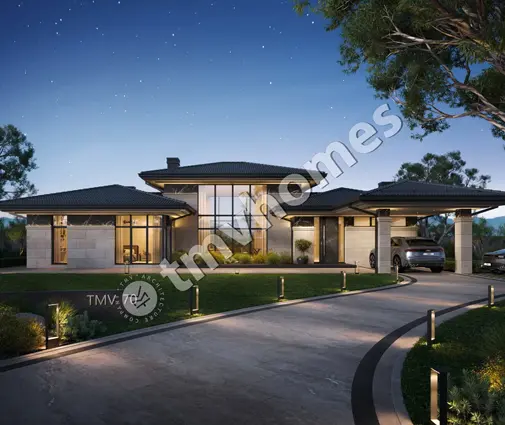
You are in the sales office of a new subdivision, looking at the plat map on the wall. Most lots are marked with a base price. A dozen are flagged with a premium: +$15,000 for the one at the end of the cul-de-sac, +$35,000 for the walkout backing onto the creek, +$50,000 for the big pie-shaped lot facing the greenbelt. The salesperson says those lots "always go first." That may be true. Whether they are worth it for your family depends on what the premium buys, on what the lot will cost you after the premium, and on what the next buyer and their appraiser will pay for it.
A lot premium is the developer's or production builder's markup over the base lot price, added because the lot has something the others do not: less traffic, a view, privacy, or a slope that allows a daylight lower level. The premium is rarely the whole cost. Some premium lots need a different foundation, a different plan, a longer driveway or a deck you would not otherwise build.
What premium lots cost in 2026
The ranges below are typical for new subdivisions in 2026. They vary a lot by region, by price point of the community and by builder, so treat them as a starting point and get real quotes for your lot.
| Cost item | Typical range (2026, USD) | When it applies |
|---|---|---|
| Cul-de-sac lot premium | $5,000 – $25,000 | Lots at the end of a dead-end street |
| Greenbelt or open space lot premium | $10,000 – $50,000+ | Lots backing onto a park, preserve, pond, golf course or trees |
| Walkout lot premium | $15,000 – $60,000 | Sloped lots that allow a daylight or walkout lower level |
| Walkout foundation upgrade over a standard basement or slab | $15,000 – $50,000 | Taller rear walls, extra concrete, waterproofing, rear doors and windows |
| Rear deck off an elevated main floor | $15,000 – $50,000 | Walkout lots, where the main floor sits 8 to 10 feet above grade |
| Retaining walls and extra grading | $5,000 – $40,000 | Steep walkouts, pie lots with grade changes |
| Finishing the lower level | $30 – $75 per sq ft | Optional, but it is how a walkout pays back |
| Longer driveway (concrete) | $8 – $15 per sq ft | Deep cul-de-sac lots and flag lots |
| Longer utility runs | $2,000 – $10,000 | Houses set far back from the street |
| Plan changes by a local drafter or engineer | $1,500 – $6,000 | Fitting a stock plan to a pie-shaped or sloped lot |
Add those lines together and a "$35,000 walkout" can easily become an $80,000 to $120,000 decision. That is not a reason to avoid it, but it is the number to compare with resale value, not the premium alone.
Walkout lots: the biggest premium, and the biggest hidden bill
A walkout is the premium that most often pays back, especially in the Midwest, the Mid-Atlantic, the Southeast hills and anywhere basements are standard. A full-height lower level with doors to the backyard can become bedrooms, a family room or an in-law suite at a fraction of the cost of the same space above grade.
The catch is everything around it. The rear foundation walls run a full story tall, so they need more concrete, more reinforcement and often an engineered design. The lower level needs serious waterproofing and drainage. Because the main floor ends up high above the backyard, a back door with no deck is useless, and many HOAs and builders require one. Steeper lots need retaining walls along the sides.
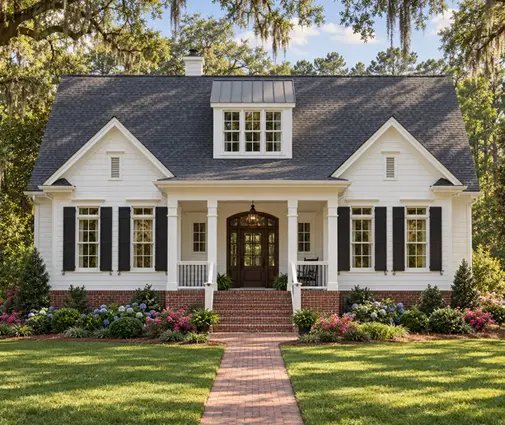
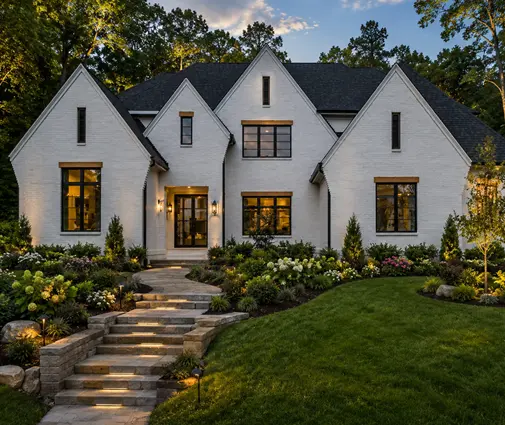
Choose a plan that is designed for the slope rather than forcing a slab plan onto it. The two-story Southern farmhouse with 4 bedrooms and a basement, 4,539 sq ft shows how a basement level can sit under a large main floor, and the 6-bedroom Modern Tudor with a basement and 3-car garage, 6,450 sq ft shows the scale where a finished walkout makes the most sense. More options are in the sloped lot plans and house plans with a basement.
On appraisal, keep one point in mind: appraisers generally report below-grade space separately from above-grade living area, even when the lower level has full windows and a door to the yard. A finished walkout adds value, but usually less per square foot than the floors above. Ask your appraiser or agent how walkouts are treated in recent local sales before you pay for one.
Greenbelt lots: pay for what is permanent
Backing onto trees, a pond or a nature preserve is the premium buyers feel the most at resale, as long as the open space stays open. Before paying, ask the sales office for the recorded plat and look at what the land behind the lot actually is: dedicated open space owned by the HOA or the city, a drainage easement, or simply a parcel that has not been developed yet. "Future phase" land is not a greenbelt.
Hidden costs here are smaller but real. HOAs often require open or low fencing along common areas, which means less privacy than you might expect. Trails behind the lot bring foot traffic. Lots along drainage areas can sit in or near a flood zone, which can mean flood insurance; check the FEMA flood map for the lot and ask your insurer for a quote early.
Because the view is the point, the plan should face it. The three-story Modern Farmhouse with 4 bedrooms, 2,649 sq ft keeps the main living spaces at the back, where a kitchen and great room can open to the trees.
Cul-de-sac lots: quiet street, awkward shape
Families with young kids like cul-de-sacs for the low traffic, and in many markets these lots do sell faster. The resale bump is often modest, though, and it depends mostly on the shape of the lot.
Most cul-de-sac lots are pie-shaped: narrow at the street, wide at the back. Setbacks are measured from the front lot line, so at the front building line the lot can be only 40 to 60 feet wide, even if the backyard is huge. A wide one-story plan or a 3-car side-entry garage may simply not fit where the house has to sit. The one-story Modern Farmhouse with 4 bedrooms and a 2-car garage, 2,742 sq ft is a typical ranch footprint that needs width at the front and may have to be pushed back or reworked on a pie lot. A narrower and taller house, like the 4-bedroom farmhouse of 1,707 sq ft on three stories, fits the front of a pie lot easily but leaves much of the wide backyard you paid for unused.
Pushing the house back means a longer driveway and longer utility lines. A driveway that grows from 30 to 70 feet long and 20 feet wide adds about 800 sq ft of concrete, roughly $6,400 to $12,000 at 2026 prices.

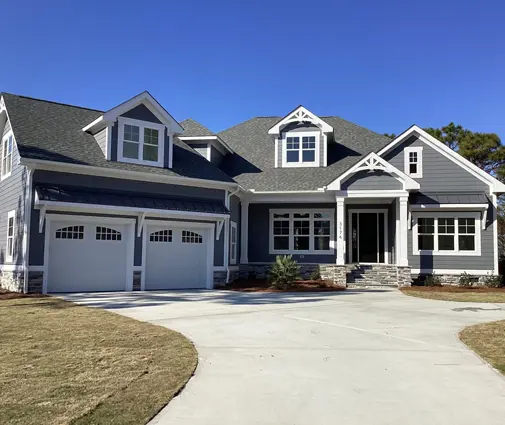
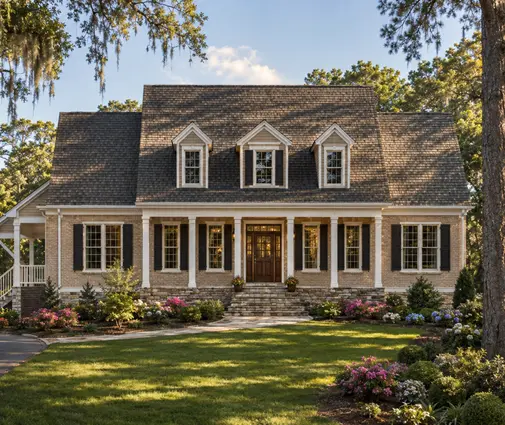
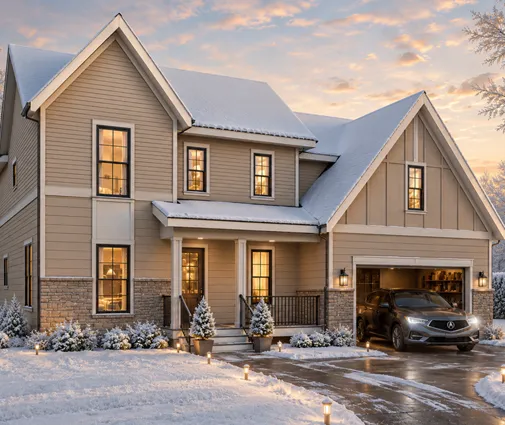
A mid-size plan with a moderate width often works best. The two-story Modern Craftsman with 4 bedrooms, 3,251 sq ft and the two-story Southern Colonial with 4 bedrooms and a 3-car garage, 3,215 sq ft are examples of sizes that a drafter can usually adapt to a pie lot by angling the garage or stacking rooms instead of spreading them out.
Which premiums come back at resale
- Walkouts usually come back best where basements are expected and the lower level is finished, and least where buyers are used to slab homes.
- Greenbelts come back when the open space is permanent and visible from the main living areas; much less when the "view" is a retention pond or a utility easement.
- Cul-de-sacs help the house sell faster in family neighborhoods, but appraisers often find little difference in comparable sales, so a large premium is hard to recover.
Remember that a mortgage is based on the appraised value. If the appraisal does not support the premium, you cover the gap in cash at closing. Ask the builder for recent sales of similar premium lots in the same community.
How to negotiate or skip the premium
- Ask for the plat and the topo survey before you sign, and check setbacks, easements and the width at the building line.
- Get the full cost: the builder's price for the walkout foundation, the deck, retaining walls and the driveway, in writing.
- Choose the plan with the lot, not after it. A plan that fits the lot avoids redesign fees.
- Negotiate at the right time: premiums are often softer late in a phase, on standing inventory, or for lots that have been on the map for months.
- Trade the premium for upgrades if the builder will not cut the price; a covered deck or a finished lower level may be easier to get than a discount.
- Check the rules with the HOA, the county and the city for fences, decks and retaining walls before you count on them.
- Walk away if the premium only buys a shape that your plan cannot use.
In short
- Lot premiums in 2026 typically run from $5,000 to $60,000, but the total cost of a premium lot can be two to three times that.
- Walkouts carry the biggest hidden costs and often the best payback, if the lower level gets finished.
- Greenbelt lots are worth it only when the open space is permanent.
- Cul-de-sac lots sell well, but their pie shape can force a different plan and a longer driveway.
- Pick the plan and the lot together, and confirm the details with the builder, the HOA and your local building department.