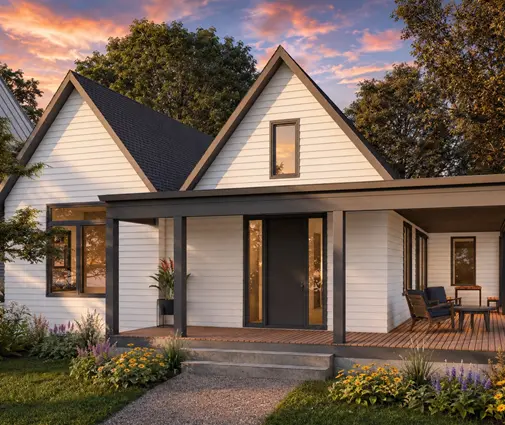
On most new builds, the water heater is chosen at the last minute. The builder asks "gas or electric?", someone says "tankless, it's endless hot water," and the decision is made. By then the plan has already decided much of the outcome: where the mechanical space sits, whether there is an exterior wall for a vent, and how many feet of pipe stand between the heater and the primary shower.
The three options most American families compare are a heat pump water heater (HPWH), a tankless gas unit, and a standard electric tank. Each can be the right choice. Each also comes with myths that cost money. Below are the ones we hear most often, with the facts behind them as of 2026. Check current codes with your city or county building department and current incentives with your utility before you commit.
Myth 1: Tankless gas is always the cheapest to run and never runs out
Fact: A tankless unit heats water only when you open a tap, so you do not pay to keep a tank warm. Supply is not unlimited, though. What it gives you is unlimited duration at a limited flow rate. In the North, incoming groundwater in winter can be close to 40°F. Raising that water to 120°F takes far more burner capacity than it does in Florida or Texas. A whole-house unit near the residential maximum of about 199,000 BTU/h might deliver 8 to 10 gallons per minute in the South and noticeably less in Minnesota. Operating cost depends heavily on your local gas rate. In 2025–2026, a typical family spent roughly $250–$450 a year on a condensing tankless unit. A heat pump unit on average electricity rates usually costs less than that.
Myth 2: A heat pump water heater won't work in a cold climate
Fact: What matters is the air around the unit, not the climate outside. A heat pump water heater pulls heat from the surrounding air, so placement decides how well it performs.
- Basement in the North or Midwest: often the best spot of all. The air stays around 55–65°F year-round, and the unit dehumidifies the space as a bonus. If you are building in snow country, a plan from our house plans with a basement gives the mechanical room an easy home. Our 4-bedroom Craftsman farmhouse with a basement and six bathrooms is one example.
- Unheated garage in the North: a weak choice. Many units drop to electric resistance backup when the air falls below about 35–45°F (check the spec sheet), and in a January garage that happens often.
- Garage in the South: excellent. A hot garage is free energy for the heat pump, and the cool exhaust air is a small bonus.
- Conditioned utility closet: workable anywhere if the closet has enough air. The unit takes a little heat from the house in winter and gives a little cooling back in summer, which is a net plus in hot climates.
Myth 3: The federal tax credit will pay for a heat pump water heater in your new house
Fact: The federal Energy Efficient Home Improvement Credit (25C) offered up to $2,000 for a qualifying heat pump water heater. However, it was written for improvements to an existing home, not new construction, and it was ended for equipment placed in service after December 31, 2025. Builder-side credits for efficient new homes have also been cut back. Federal law has changed several times since 2022, so confirm the current status with a tax professional. What usually remains are utility rebates. Many electric utilities still pay a few hundred dollars, sometimes $1,000 or more, for a heat pump unit. A few state programs also apply to new construction. Search your utility's website before you sign the plumbing contract, because some rebates require pre-approval or a listed model.
Myth 4: An electric tank is the cheapest option
Fact: An electric tank is the cheapest option on the day you install it. Over the life of the unit, it is usually the most expensive. Typical 2025–2026 numbers for a family of four:
| Type | Installed cost, new construction | Typical yearly energy cost |
|---|---|---|
| Electric tank, 50 gal | $1,000–$2,000 | $450–$700 |
| Heat pump, 50–65 gal | $2,500–$5,000 | $150–$300 |
| Tankless gas, condensing | $3,000–$6,000 | $250–$450 |
The yearly ranges move a lot with your local rates, so plug in your own utility prices. In a new house, the extra cost of a heat pump is smaller than in a retrofit. The 240-volt circuit, the condensate drain and the closet size are drawn in from the start rather than added later. A heat pump unit often pays back its premium in 5 to 10 years, sooner with a rebate.
Myth 5: You can put the water heater anywhere
Fact: Each type has its own requirements, and they belong on the plan before permit drawings go in.
- Tankless gas needs a vent. Condensing units usually use PVC through a sidewall or the roof, with required clearances from windows, doors, soffits and property lines. The unit also needs a gas line sized for a large burner, often larger than the line a plumber would run for a gas tank. It needs a condensate drain too. A unit placed deep in the middle of the house can mean a long, expensive vent run.
- Heat pump units need air volume and access. Many manufacturers ask for several hundred cubic feet of air, often around 700. If the space is smaller, they call for a louvered door or ducting. Plan for the unit's height (65- and 80-gallon models are tall), a 240-volt circuit in most cases, a condensate drain, and a spot where the fan noise won't bother anyone. Next to a bedroom wall is a poor choice.
- Electric tank needs the least: a circuit, a drain pan where required, and a place to replace it in 10–15 years.
A plan with a 2-car garage often has a natural corner for a heat pump unit in the South. Compact plans need more thought. Our 1,945 sq ft cottage farmhouse with 4 bedrooms and 3.5 baths has no garage, so the heater goes in a conditioned utility closet that has to be sized for it.
Myth 6: Tankless means hot water reaches the shower faster
Fact: It doesn't. Wait time comes from the cold water already sitting in the pipe between the heater and the fixture, and a tankless unit adds a few seconds of its own to fire up. Pipe length is the variable that matters. A 3/4-inch line holds about 0.025 gallons per foot, so a 60-foot run means roughly a gallon and a half of cold water before the hot arrives, every time. Sprawling one-story layouts are where this hurts most. Look at these plans:
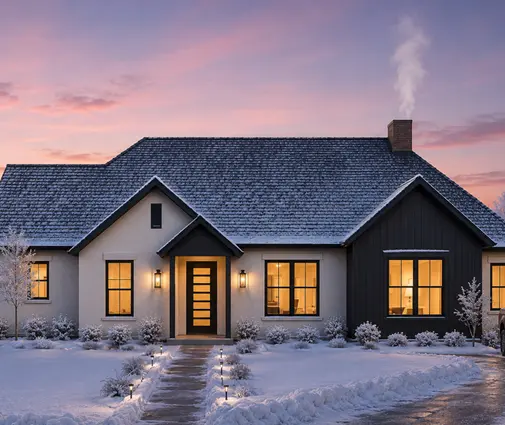
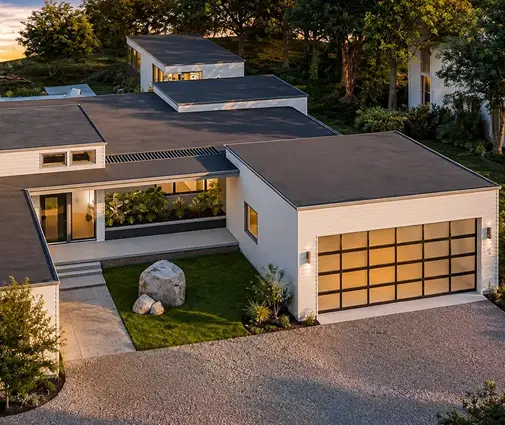
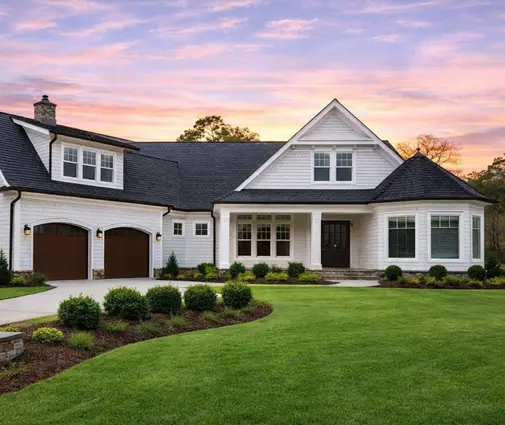
In a spread-out home like the 2,600 sq ft Modern Farmhouse ranch with 4 bedrooms, the primary suite often sits at the opposite end from the garage. The same is true of the 3,730 sq ft one-story contemporary with 5.5 baths, and our one-story house plans in general. There are three fixes, best done on paper:
- Place the heater centrally near the bathrooms.
- Use a recirculation loop with a timer or on-demand pump.
- In very wide homes, use two smaller heaters.
Two-story plans with stacked bathrooms are easier. In the 2,665 sq ft Craftsman farmhouse with 3 bedrooms and 2.5 baths, a heater in the garage wall below the upstairs baths keeps runs short.
Myth 7: More bathrooms simply means a bigger tank
Fact: Size for how many showers and tubs run at the same time, not for the number of bathrooms on the plan. For tanks and heat pump units, look at the first-hour rating (gallons of hot water in one busy hour). For tankless units, look at the flow rate at your winter inlet temperature. Heat pump units recover more slowly than gas, so size them a step larger. Typical starting points:
| Bathrooms | Heat pump | Electric tank | Tankless gas |
|---|---|---|---|
| 2 | 50 gal | 50 gal | One unit, 6–8 gpm |
| 3 | 65 gal | 50–80 gal | One large unit, 8–10 gpm (South); check winter output in the North |
| 4+ | 80 gal, or two units | 80 gal, or two tanks | Often two cascaded units in the North |
A large soaking tub changes the math. Filling a 60–80 gallon tub can empty a 50-gallon heat pump unit in one go, so size for the tub. Large homes like these deserve a real hot water design, often two systems serving two zones:
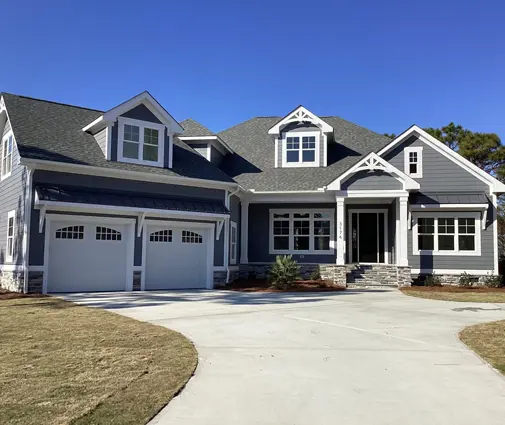


Examples include the 3,251 sq ft Modern Craftsman with 4 bedrooms and a 2-car garage and the 3,908 sq ft and 5,180 sq ft homes above. Ask the plumber or energy rater for a sizing worksheet based on your fixtures, not a rule of thumb.
The short version
In a basement in the North or a garage in the South, a heat pump water heater is usually the lowest-cost option to run, and utility rebates can narrow the upfront gap. Tankless gas makes sense where gas is cheap and an exterior wall is close to the mechanical space, as long as it is sized for your winter water temperature. An electric tank is the budget fallback, best kept for small homes or tight closets. Whatever you choose, settle it while the plan is still being adapted. Ask your drafter or engineer to show the heater location, the vent or air path, the electrical circuit, and the longest hot water run. Running a 240-volt circuit and a drain to the space costs little during construction, and it keeps every option open for the next replacement.