Are solar panels worth leasing in 2026? For many new homes, yes. Since the homeowner tax credit ended, a lease or a power purchase agreement (PPA) with no escalator, or with a low one, often comes close to what buying saves you, and you put no cash down. A cash purchase still wins over 20 to 30 years if you can pay for it and plan to stay. A lease with a 2.9% yearly escalator often saves little, and it can complicate selling the house and refinancing. The contract terms matter more than the panels.
Why the math changed in 2026
Until the end of 2025, a homeowner who bought a system could take a federal credit worth 30% of its cost. That credit is gone for systems installed from 2026 on. Companies that own systems on your roof under a lease or a PPA can, for now, still claim the commercial clean energy credits. Many pass part of that value on through lower monthly prices. Those commercial credits also face deadlines, set by when construction starts and when the system goes into service, that tighten through 2026 and 2027. Ask any installer how their credit is secured, and treat any price quote as valid only for a short window. State rebates and net metering rules vary a lot, so check them with your utility and your state energy office.
What solar on a new house costs, item by item
The figures below are typical 2026 ranges for a 7 to 8 kW rooftop system on a new single-family home. Your local quotes will differ.
| Cost item | Typical range (USD, 2026) | Who pays under a lease or PPA |
|---|---|---|
| Panels, inverter, racking and installation (7–8 kW) | $19,000–$27,000 | The solar company |
| Permit, plan review and utility interconnection | $300–$1,500 | Usually the company |
| Solar-ready prep during construction (conduit, roof blocking, panel space) | $500–$2,000 | You or your builder |
| 200 A service or panel upgrade, if not already planned | $1,500–$4,000 | Usually you |
| Battery storage, 10–15 kWh (optional) | $10,000–$18,000 | Depends on the contract |
| Inverter replacement, once in 20 years | $2,000–$4,000 | The company |
| Removing and reinstalling panels for a reroof | $2,500–$5,000 | Often you, so read the contract |
The biggest item: the size of the system
The system is sized to your yearly electricity use, so the cheapest kilowatt is the one the house never needs. A home built to the current IECC energy code is already reasonably tight. Homes built toward ENERGY STAR, the DOE Zero Energy Ready Home program or Passive House go further: more insulation in walls and attic, better windows, and a tested low air-leakage rate. Add a heat pump for heating and cooling, a heat pump water heater, and balanced ventilation with heat recovery that brings in fresh air without dumping the heat. Together these can cut a house's load by a quarter to a half. The system then shrinks to match, along with the lease payment or the purchase price.
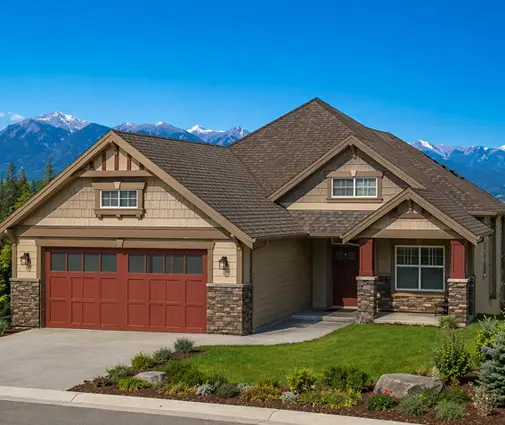
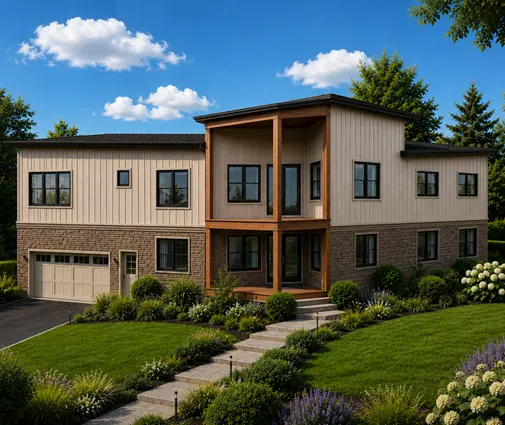
The roof matters just as much. A simple roof with long, unbroken planes facing south or west holds more panels, and the work goes faster. Plans from the gable roof house plans collection are an easy starting point. On the lot, orient the main ridge east to west if you can. A one-story home like this 1,862 sq ft mid-century modern plan has a large roof for its size and a modest load. That is the ideal ratio for solar. For a sunny lot, a single-level contemporary of 3,765 sq ft gives you a broad roof to work with, though four bedrooms and five-plus baths mean a bigger load.


Are solar panels worth leasing? The 20-year numbers
Assumptions for this table: a 2,400 sq ft all-electric new home with a heat pump, using about 12,000 kWh a year. Retail power costs about 17 cents per kWh in 2026 and rises 2.5–3.5% a year. A 7.5 kW system produces about 10,000–11,000 kWh a year and covers 75–90% of the bill. The rest, plus fixed utility charges, costs $300–$500 a year. All figures are rough ranges and depend heavily on your state's rates and net metering rules.
| Option | Extra cost at build | Year-one energy cost | Savings over 10 years | Savings over 20 years | Payback |
|---|---|---|---|---|---|
| No solar | $0 | $1,900–$2,200 | None | None (about $51,000–$54,000 paid to the utility) | Not applicable |
| Cash purchase | $21,000–$27,000 | $300–$500 | About break-even, up to $4,000 behind | $12,000–$22,000 ahead | 11–16 years |
| Solar loan, 20 years at 7–9% | $0 down | $2,500–$2,900 (loan plus bill) | $3,000–$7,000 behind | From $3,000 behind to $5,000 ahead; full savings start once the loan is paid off | Around year 20 |
| Lease or PPA, 0% escalator | $0 | $1,500–$1,900 | $4,000–$7,000 | $11,000–$16,000 | Immediate |
| Lease or PPA, 2.9% escalator | $0 | $1,300–$1,700 | $3,000–$5,000 | $2,000–$8,000 | Immediate, but savings shrink each year |
Three things stand out. First, the escalator decides whether a lease is a good deal. A 2.9% yearly increase can cost more than the expected rise in utility rates, so most of the savings disappear in the second decade. Second, a cash system keeps producing after year 20, so the owner's real gain is larger than the table shows. Third, a solar loan at today's rates needs most of its term to pay off. The math looks better if you can add the panels to the construction loan or the mortgage at a lower rate. Ask your lender before you assume you can.
Lease or PPA: what is the difference?
With a lease, you pay a fixed monthly amount for the equipment, whatever it produces. With a PPA, you pay a set price for each kWh the panels make, often 12–15 cents in 2026. Under both, the company owns, insures and maintains the system, and usually guarantees a minimum output. If you own the system, you cover repairs after the installer's warranty runs out. The usual big cost is one inverter replacement, plus a monitoring app you will need to check yourself.
Selling, refinancing and appraisal with leased panels
This is where leases cost people money. Most solar companies record a fixture filing against the property to show that they own the equipment. Title companies and refinance lenders will flag it, and you may have to get it lifted temporarily. Mortgage underwriters count a lease payment as monthly debt for the buyer, and a buyer must qualify with the solar company before the lease can transfer. If they do not qualify, you may have to buy the system out or prepay the remaining payments at closing.
Appraisers generally give no value to leased panels, because you do not own them. Owned systems can add value. The appraiser needs data on size, age and production, plus local sales of comparable homes with solar. Lenders and appraisers handle this differently from one area to the next. If resale within ten years is likely, ownership or a lease with a clear buyout schedule is the safer path.
How to save on solar for a new build
- Prewire during framing. Running conduit from the attic to the electrical panel costs far less with the walls open than after the drywall goes up.
- Size the main panel once. If you plan a heat pump, an EV charger, an induction range or a future battery, a 200 A service avoids a second upgrade.
- Keep the solar side of the roof clear. Put plumbing vents, skylights and dormers on the north side, or group them together.
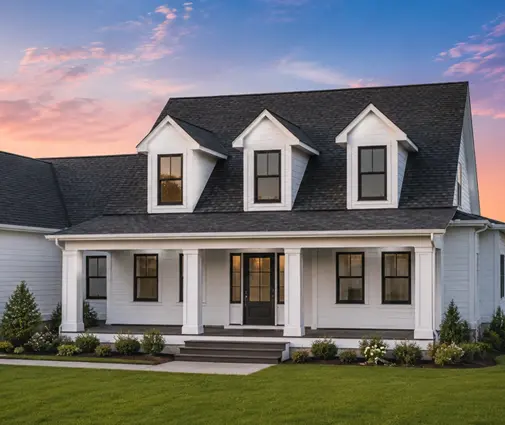
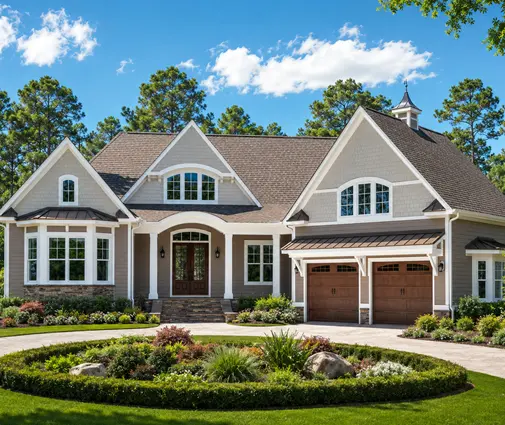
- Choose a simple roof form. A two-story house like this 2,243 sq ft Cape Cod with three bedrooms or a compact Georgian-style Colonial has a smaller footprint and long roof planes. For larger families, a four-bedroom Craftsman of 3,605 sq ft or a Modern Farmhouse with a wide main gable can carry a bigger array.
- Get at least three quotes for each structure (cash, loan, lease and PPA) and compare them over 20 years, not by month-one savings.
- Check local rules early. HOA guidelines, fire setbacks on the roof, and wind or seismic attachment rules can limit panel layout. California already requires solar on most new single-family homes. Your building department or architect can confirm what applies where you build.
Summary and checklist before you sign
- Cash purchase gives the largest long-term savings. A lease or PPA with a 0% escalator is the strongest no-money-down option in 2026.
- Read the escalator rate, and model the full 20 or 25 years, not year one.
- Look for a production guarantee: how is a shortfall paid back?
- Find out who pays for removing and reinstalling the panels when you reroof, and who repairs roof leaks around the mounts.
- Get the transfer terms in writing: buyer credit rules, fees, and the buyout price for each year.
- Check the end-of-term options: renewal, purchase at fair market value, or free removal.
- Ask whether the company records a fixture filing on your property, and how fast it is lifted for a refinance.
- Make sure the contract covers insurance, monitoring and inverter replacement.
- Cut the load first with insulation, airtightness, good windows and a heat pump, and design a roof that suits solar. The gable roof plans in the catalog are a good place to start.