Roughly a fifth to a quarter of a typical 2x6 wall is solid wood: studs, plates, headers, corners and the extra framing around windows. Wood insulates at only about R-1 per inch, so every one of those members is a thermal bridge running straight through your R-20 batts. Once the framing is counted, a wall labeled R-20 often performs closer to the mid-teens. Continuous insulation, or ci in code language, is a layer that wraps the outside of the framing without interruption, and it is the most direct fix for that problem.
Three products cover most American new builds: rigid foam board (polyiso, XPS or EPS), mineral wool board, and insulated structural sheathing such as ZIP System R-sheathing, which bonds foam to OSB with an integrated water-resistive barrier. They are not interchangeable. Each one changes how your windows are installed, how the siding is fastened and where the water goes. The table below gives the overview; the sections after it go criterion by criterion.
| Criterion | Rigid foam board | Mineral wool board | ZIP-R sheathing |
|---|---|---|---|
| R-value per inch (approx.) | EPS 3.6–4.2, XPS about 5, polyiso 5.6–6.5 (less in deep cold) | About 4 to 4.2 | Panels from about R-3 to R-12 depending on foam thickness |
| Installed cost (2025–2026, rough) | Lowest of the three | Middle to high | Highest per panel, but replaces separate sheathing and WRB |
| Separate sheathing needed? | Yes, OSB or plywood behind it | Yes, OSB or plywood behind it | No, the OSB layer is the structural sheathing |
| Drainage plane | Taped foam can serve as WRB if listed; usually housewrap is used | Vapor-open; WRB goes on the sheathing behind it | Integrated WRB with taped seams |
| Vapor behavior | Mostly vapor-closed (foil-faced polyiso fully) | Very vapor-open; walls dry outward | Foam side closed; wall dries mainly to the interior |
| Fire and pests | Combustible; can attract insects near grade | Noncombustible; no food value for pests | Combustible foam layer |
| Window and siding details | Furring or longer fasteners above about 1 inch | Furring almost always; board is soft | Thinner panels allow simpler details; thicker ones need the same planning |
When the code requires continuous insulation
The IRC energy chapter, based on the IECC, sets wall insulation by climate zone. Under the 2021 edition, the hot zones (roughly the Gulf Coast, Florida and the desert Southwest) can meet the prescriptive wall requirement with cavity insulation alone. In zones 3 and 4, a 2x6 wall with R-20 batts typically passes without ci, though R-13 plus R-5 ci is an alternative. From zone 5 north, and in marine zone 4 along the Pacific Northwest coast, the prescriptive path generally calls for R-20 cavity plus R-5 continuous, or R-13 plus R-10.
Two caveats matter. First, states and counties adopt code editions on their own schedule, and many still enforce the 2015 or 2018 version with local amendments, so the number your building department checks may differ. Second, the performance and U-factor paths let a designer trade wall ci against better windows, more attic insulation or tighter air sealing. Ask your plan reviewer or energy rater which edition applies before you choose a product.
Verdict: in zones 5 to 8, plan for ci from day one; in zones 3 and 4 it is an upgrade, not a requirement; in zones 1 and 2 the money usually does more in the attic and windows.
Cost
Prices swing with region and supplier, so treat these as 2025–2026 ballpark figures for material only. One inch of polyiso, about R-6, often runs around $0.80 to $1.50 per square foot of wall. Mineral wool board at 1.5 inches, also about R-6, is commonly $1.50 to $2.50. ZIP-R panels generally land around $2 to $4 per square foot, but that price includes the OSB and the WRB you would otherwise buy separately, which narrows the gap considerably.
Labor shifts the picture. Foam and mineral wool are a second trip around the house: sheathing and wrap first, then boards, then furring. ZIP-R goes up in one pass, which framers like. For a two-story home of about 2,500 square feet with roughly 3,000 square feet of net exterior wall, the difference between the cheapest and the most expensive option often totals a few thousand dollars installed. Get a line-item quote from your builder rather than relying on per-panel prices.
Verdict: foam board is cheapest on paper; ZIP-R often closes the gap once labor and the skipped housewrap are counted; mineral wool costs the most.
R-value and real-world performance
Inch for inch, polyiso is the strongest on the label, but its R-value drops noticeably when the board itself gets cold. In zones 6 and 7 some builders pair it with a layer of EPS or choose mineral wool for that reason. XPS holds about R-5 but uses blowing agents with a higher climate impact, and its long-term value drifts down slightly. Mineral wool is steady across temperatures but needs more thickness for the same rating. ZIP-R is limited by panel options: the thinnest versions add little, while the thicker ones reach the R-10 range.
Thickness also sets the dew-point question. When you skip an interior vapor retarder, the code links the minimum ci R-value to the climate zone so the back of the sheathing stays warm enough to avoid condensation. Too little foam in a cold zone is worse than none. Have your designer check this before going thin.
Verdict: polyiso for maximum R per inch in mild-cold zones; mineral wool for the coldest climates; ZIP-R when R-6 to R-12 is enough.
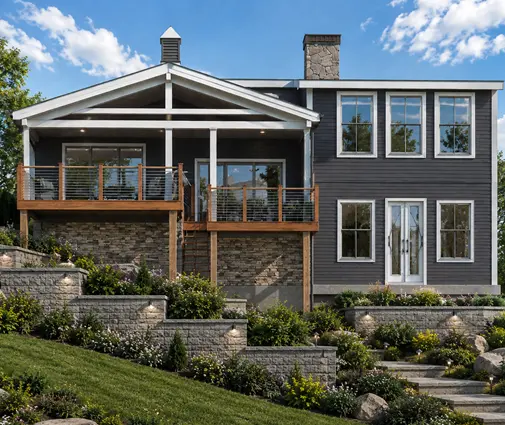
Basement and slab foundations in the North pair naturally with an exterior ci wall. A Craftsman layout like this four-bedroom single-story plan with a full basement (2109 sq ft) is a typical zone 5 or 6 candidate. You can browse more house plans with a basement built for cold-climate lots.

Windows and doors
Every inch you add outside the sheathing pushes the siding plane outward, and the window has to follow or be carefully flashed back to it. With an "innie" install, the window stays at the sheathing and you build a flashed return through the foam. With an "outie," the window sits in a plywood buck flush with the face of the insulation. Both work, but they must be drawn on the plans and agreed with the framer, window installer and siding crew before rough-in.
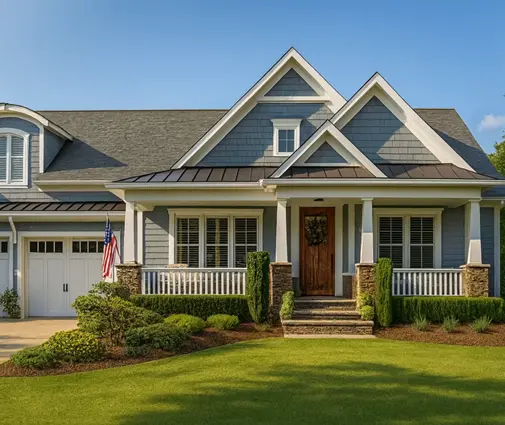
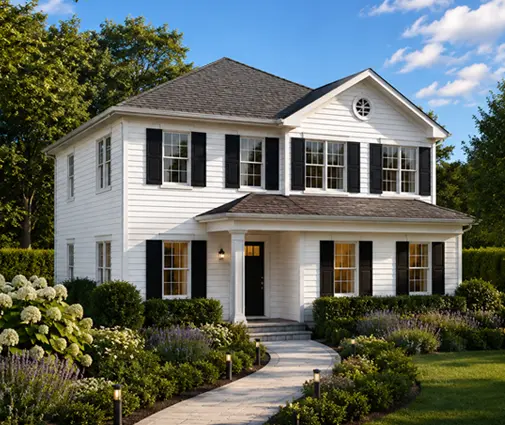
ZIP-R simplifies this a bit because the WRB and the nailing base sit in the same panel, and the manufacturer publishes flashing details. Mineral wool is the hardest; it is too soft to support anything, so bucks and furring do all the work. Window-heavy designs like this three-bedroom Modern Craftsman with 2663 sq ft or the more traditional three-story Colonial with 2261 sq ft have many openings, and each one is a detail to get right.
Verdict: ZIP-R is the least fussy around openings; foam is manageable; mineral wool takes the most planning.
Siding attachment
Up to about 1 inch of foam, many siding manufacturers allow nailing through to the studs with longer fasteners. Beyond that, or with any mineral wool, the usual answer is 1x4 furring strips screwed through the insulation into the framing, with the siding fastened to the furring. Fiber cement and heavy stone veneer have their own limits, and the IRC defers to the siding manufacturer for fastener length and spacing, so check those instructions for your product. Furring has a bonus: the gap creates a rainscreen that lets water drain and the back of the siding dry.
Verdict: ZIP-R and thin foam keep siding simple; thick foam and mineral wool need furring, which is also a rainscreen.
Drainage plane and moisture
This is where the three products really differ. Mineral wool lets the wall dry outward and handles a wet season forgivingly, but the WRB must sit behind it on the sheathing. Foam board is nearly vapor-closed, so the wall dries to the inside; the drainage plane is either housewrap behind the foam or the foam itself, taped and listed as a WRB. ZIP-R combines both functions; its taped seams are the WRB, and the quality of that taping decides how well it works. In humid zones 3 and 4, and in hurricane-prone coastal areas, a continuous, inspected WRB matters more than the exact R-value.
Verdict: mineral wool is the most forgiving; ZIP-R is the cleanest system when taping is done right; foam depends most on careful detailing.

Who should choose what
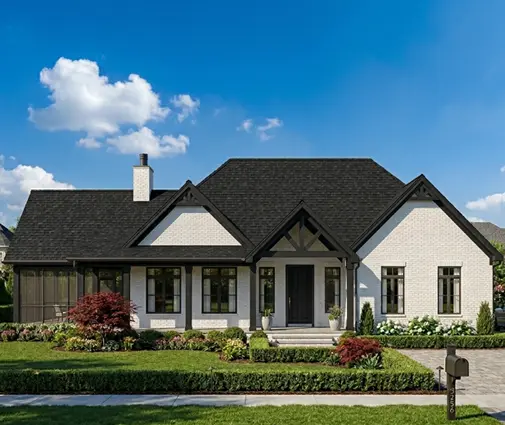
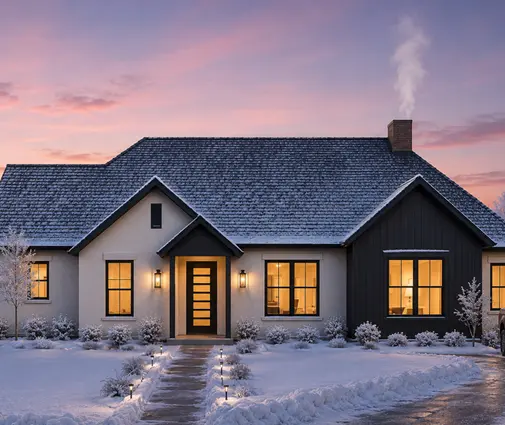
- Rigid foam board: budget-focused builds in zones 4 and 5, where an inch of polyiso or a bit more of EPS meets the code and the siding can be fastened through or onto simple furring. It suits the long walls of a single-story ranch such as this three-bedroom Modern Ranch with 2250 sq ft. More options are in the ranch house plans.
- Mineral wool board: zones 6 to 8, homes near wildfire-prone areas, and owners who want a vapor-open wall that dries outward. Expect the highest cost and plan furring and window bucks from the start.
- ZIP-R sheathing: builders who want one-pass installation, an integrated WRB and modest ci between about R-6 and R-12. It is a common choice for two-story Modern Farmhouse plans like this four-bedroom, 2449 sq ft design, and for wide one-story homes such as this four-bedroom Modern Farmhouse ranch with 2600 sq ft.
- No ci at all: zones 1 to 3, where a well-sealed 2x6 wall with R-20 batts already passes. For a Southern design like this three-bedroom Acadian ranch with 1879 sq ft, the money is better spent on the attic, windows and air sealing.
Whatever you choose, show the ci layer, window details and siding attachment on the construction drawings, and confirm the code edition and your climate zone with the local building department before the plan goes to the engineer or drafter.