Most families spend months choosing a floor plan and about an evening reading the construction contract. That is backwards. The plan decides how your home will live. The contract decides who pays when lumber prices jump, when the excavator hits rock, or when you decide in month four that the bonus room needs a full bath.
Custom and semi-custom builders in the US mostly use three contract types. In a fixed-price (lump-sum) contract, the builder quotes one number for the whole job. In a cost-plus contract, you pay actual costs plus a fee, either a percentage or a flat amount. A cost-plus with a guaranteed maximum price (GMP) adds a ceiling to the second type. Each one moves risk differently, and each comes with myths that get homeowners into trouble.
Myth 1: A fixed-price contract means the price cannot change
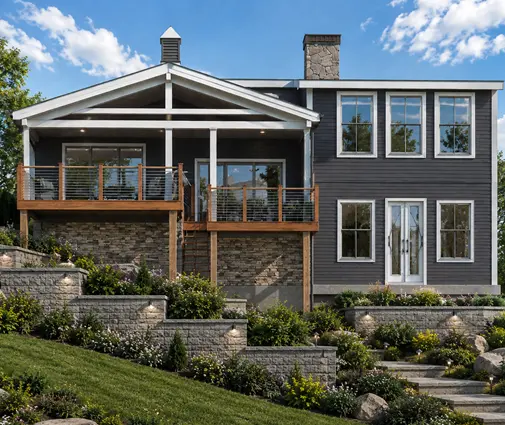
Fact: The base price is fixed, but most fixed-price contracts include allowances for items not yet chosen, such as cabinets, flooring, lighting and tile. If your selections cost more than the allowance, you pay the difference. Low allowances are an old trick for making a bid look cheaper than the competition. Compare them line by line against real showroom prices in your area. A fixed price also works best when the drawings are complete: a finished stock plan like this 3-bedroom, 2,665 sq ft Modern Farmhouse with a 2-car garage, adapted by a local engineer or drafter before bidding, leaves far fewer gaps for the builder to price as "extras" later.
Myth 2: Cost-plus is always the more expensive option
Fact: A fixed bid has to include a contingency for everything the builder cannot predict, and you pay it whether those risks appear or not. Under cost-plus, you pay only what the job actually costs, plus a fee that in recent years has often fallen somewhere around 10 to 20 percent, depending on region and project size. The catch is that the risk is open-ended: every overrun is yours. Cost-plus can be a fair deal with a builder you trust and full access to invoices, receipts and subcontractor bids. Without that transparency, it is a blank check.


Myth 3: A guaranteed maximum price caps everything
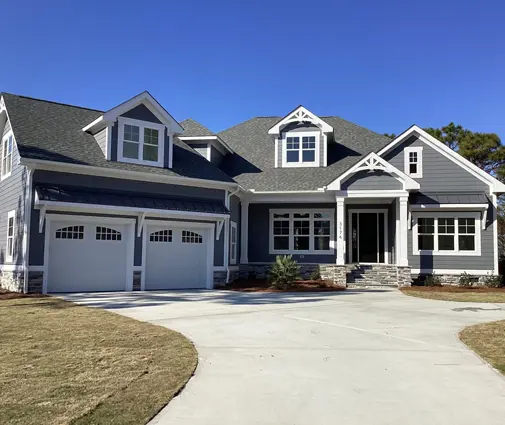
Fact: A GMP caps the costs that are in the defined scope. Owner-requested changes, allowance overages and "unforeseen site conditions" usually sit outside it. Read those exclusions carefully. A home on a deep basement, such as this 4,907 sq ft four-bedroom French Country plan with a basement, carries real excavation risk, and a broad exclusion for subsurface conditions can push you well past the "maximum." Ask also how savings are split if the job comes in under the GMP; many contracts share them between owner and builder.
Myth 4: Lumber price swings are the builder's problem
Fact: After the lumber spikes of 2021 and 2022, many builders added escalation clauses to fixed-price contracts, letting them pass on material increases above a set threshold. That is not unreasonable for a 2x6 framing package that may be bought months after signing, but the clause should name the materials, the index or proof used, the threshold, and whether it works both ways if prices drop. An uncapped escalation clause quietly turns a fixed price into something closer to cost-plus.
Myth 5: Small changes can be agreed on site
Fact: Verbal changes are the single most common source of billing disputes. A good contract requires every change order in writing, with the price, the builder's markup and the effect on the schedule, signed by both of you before the work is done. Expect changes even on a well-chosen plan: moving a wall in a single-story 2,600 sq ft Modern Ranch with four bedrooms may seem minor, but it can touch framing, HVAC, electrical and the engineer's sign-off. The markup on change orders should be stated up front, not invented later.
Myth 6: You pay the builder on the builder's schedule
Fact: With a construction-to-permanent loan, the lender releases money in draws after an inspector confirms each stage: foundation, framing, dry-in, rough mechanicals, drywall, final. Your contract's payment schedule should match those draws, so you never pay ahead of completed work. A large upfront deposit beyond what is needed for permits and mobilization is a warning sign. Many contracts also hold back retainage, often 5 to 10 percent, until the punch list is done and the certificate of occupancy is issued; check what your lender and state allow.
Myth 7: If you paid the builder, the subs and suppliers are paid
Fact: Not necessarily. If the builder fails to pay the framer or the lumber yard, they can file a mechanic's lien against your property, and you may end up paying twice. Protect yourself with lien waivers at every draw: conditional waivers when payment is made, unconditional ones once it has cleared, from the general contractor and major subs and suppliers. Lien rules and waiver forms differ by state, and some states require statutory forms, so confirm the details with your lender, title company or a construction attorney.


Myth 8: The completion date is just an estimate
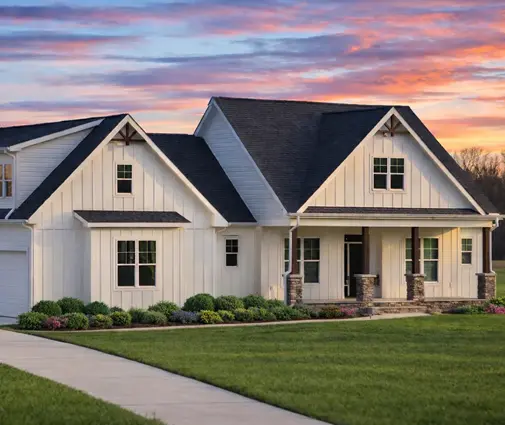
Fact: It should be a defined commitment. The contract should state the start date, a completion date or number of working days, what counts as "substantial completion," which delays are excused (weather, permits, owner changes) and what happens otherwise, such as liquidated damages per day. This matters for your money too: construction loans have terms and interest rate locks can expire. Complex sites stretch timelines, and a four-story, 3,835 sq ft coastal home with a 4-car garage built in a hurricane zone may need pilings, special inspections and wind-rated windows that add weeks. Build that reality into the date instead of discovering it later.
Myth 9: Every new home comes with the same warranty
Fact: Warranties vary widely. A common structure in the industry is the "1-2-10": one year on workmanship and materials, two years on plumbing, electrical and HVAC systems, ten years on major structural defects, sometimes backed by a third-party warranty company. Some builders offer far less. Get the warranty in writing, attached to the contract, with what is covered, how to file a claim, response times and any exclusions. Implied warranties under state law differ, so do not assume the law fills the gaps.
Before you sign: a red-flag checklist
Whichever contract type you choose, and whether you are building a compact two-bedroom, 1,928 sq ft Modern Farmhouse or a large one-story 4,304 sq ft Craftsman from our single-story plans, walk away or negotiate if you see any of these:
- A deposit far larger than the cost of permits and mobilization.
- Allowances that do not match real local prices for your finishes.
- An escalation clause with no threshold, no cap or no index.
- Cost-plus with no right to see invoices, receipts and sub bids.
- A GMP with vague exclusions for "unforeseen conditions."
- No written change-order process or no stated markup.
- A payment schedule that does not follow the lender's draw inspections.
- No lien waivers required with each draw.
- No completion date, no definition of substantial completion, no delay terms.
- A warranty that is verbal, vague or not attached to the contract.
- No proof of license and liability insurance, or a builder unwilling to show them.
No contract type is safe on its own. Fixed price protects your budget when the plan is complete and the builder is honest about allowances. Cost-plus rewards trust and transparency. A GMP is a useful middle ground if its exclusions are tight. Finish your plan first, whether it is a farmhouse or a home on a full basement, then have a construction attorney in your state review the contract before you sign. It costs a fraction of one bad change order.