Ten feet below your future lawn, the ground stays at about the same temperature all year: roughly 45 to 55°F across the northern states and closer to 65 to 75°F in the Deep South. A geothermal heat pump (also called a ground-source heat pump) uses that steady temperature instead of outdoor air to heat and cool the house. Its running costs are lower than almost any other system, but its installed cost is higher than almost any other system. Whether it makes sense for your build comes down to three things: the size of the house, the size and soil of the lot, and the climate.
This breakdown covers what each part of a geothermal system costs in a new home in 2025–2026, how much land each loop type needs, and how long payback realistically takes. The figures are typical ranges. Local drilling conditions and labor rates move them a lot, so get at least two quotes from installers who work in your county.
What a geothermal system costs, item by item
The table assumes a new, well-insulated 2x6 house of about 2,500 to 4,500 sq ft that needs roughly 3 to 6 tons of capacity. Your HVAC designer should confirm the actual size with a Manual J load calculation. Do not size the system with a rule of thumb.
| Cost item | Typical range (2025–2026) | Notes |
|---|---|---|
| Indoor heat pump unit (water-to-air) | $6,000 – $15,000 | Two-stage or variable-speed units cost more |
| Horizontal ground loop | $8,000 – $20,000 | Trenching with an excavator; needs open land |
| Vertical ground loop | $15,000 – $45,000+ | Drilled boreholes, often $15 – $40 per foot of bore |
| Pond or lake loop | $6,000 – $15,000 | Only with a suitable, deep enough body of water |
| Ductwork and distribution | $8,000 – $20,000 | Needed for air-source too, so not an extra |
| Desuperheater or hot water tie-in | $500 – $2,000 | Preheats domestic hot water from waste heat |
| Design, load calculation, permits | $500 – $3,000 | Some counties require a separate well or bore permit |
| Site restoration and regrading | $1,000 – $5,000 | Higher if loops run under finished landscaping |
| Total geothermal, installed | $25,000 – $70,000+ | Larger homes and vertical loops at the top end |
| For comparison: ducted air-source heat pump | $12,000 – $30,000 | Including ductwork; cold-climate models cost more |
The real comparison is the difference between the two systems. The ductwork and thermostats cost about the same either way, so the premium for geothermal over a good air-source heat pump in new construction is usually $12,000 to $40,000. Most of that premium is the ground loop.
The ground loop: where most of the money goes
Horizontal loops: cheapest, but they need land
Horizontal loops are pipes laid in trenches about 4 to 6 feet deep, either straight or coiled in a "slinky" pattern. When there is room, they are the least expensive option. A common planning figure is about 1,500 to 3,000 sq ft of open ground per ton, so a 4-ton system can take a quarter to half an acre. The land has to be free of the septic drain field, the well, large trees and future buildings. That limits horizontal loops to rural and acreage lots.
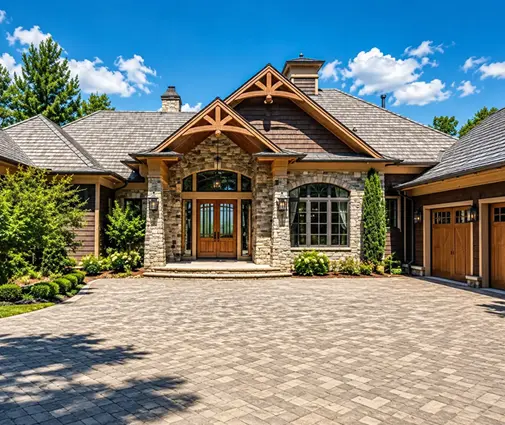
A big single-level house on open land is the classic case. The 4,571 sq ft Craftsman mountain ranch with a full basement is the kind of home where the load justifies the loop and the lot usually has room for it. The basement also gives an easy, protected spot for the indoor unit and the loop header.
Vertical loops: small footprint, big drilling bill
Vertical loops run through boreholes, usually 150 to 400 feet deep. Installers often plan around 150 to 250 feet of bore per ton. A 5-ton system might need three to five holes spaced about 15 to 20 feet apart. The loop field fits under a side yard or the driveway, so vertical loops are the option for suburban lots and for rocky or shallow soils where trenching is impractical. The cost depends heavily on geology: drilling through clay and sand is much cheaper than drilling through granite.
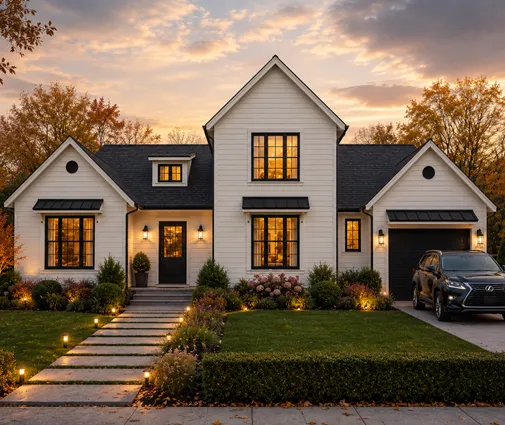
For a large two-story home on a 1-acre lot, such as the 4,579 sq ft farmhouse with 4 bedrooms and a 3-car garage, a vertical field often fits more easily than trenches once you account for the driveway, septic and outdoor living areas.
Pond loops: the bargain, if you have the pond
If the property has a pond, coils of pipe can be sunk to the bottom. A common guideline is a pond of at least half an acre and at least 8 feet deep, so the coils stay submerged in a drought and below the ice in winter. Pond loops are the cheapest loop type. They depend on water rights, the pond owner's permission if it is shared, and a pond that will not be drained or filled in later.
Open loops
Some regions also allow open-loop systems, which pump well water through the unit and discharge it. These depend heavily on water quality, well yield and state rules. Many counties restrict them, so ask before planning around one.
House size: why geothermal favors larger homes
Geothermal saves a percentage of your heating and cooling bill, and the loop costs roughly the same per ton. A larger house with a larger load therefore saves more dollars each year on a premium that grows more slowly. The 5,013 sq ft Modern Farmhouse with 5 bedrooms and a basement or the 6,261 sq ft luxury home with a 4-car garage sits in the range where the annual savings can be large. For homes of this size, browse the house plans with a basement, where the mechanical room fits naturally.

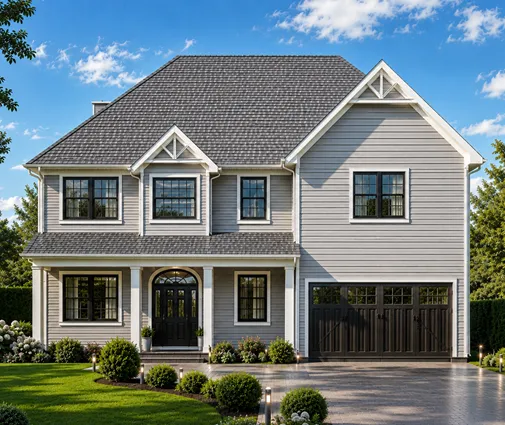
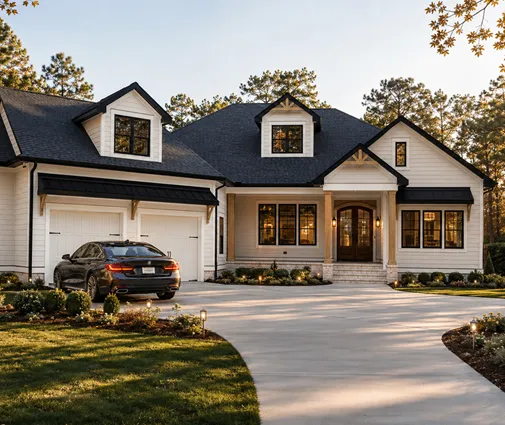
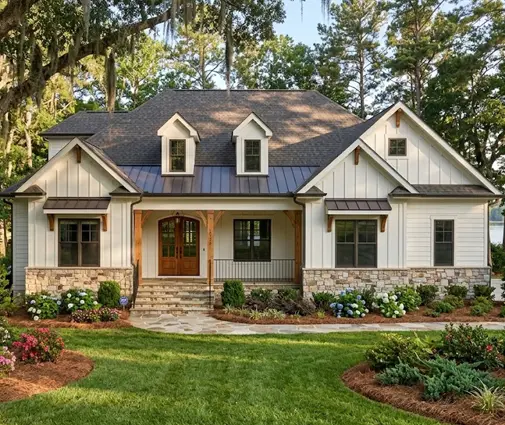
A well-insulated 2,700 to 3,000 sq ft house has a smaller load, and the math gets tighter. A home like the 2,742 sq ft single-story Modern Farmhouse or the 2,905 sq ft Modern Craftsman with 3 bedrooms can still pay back on acreage in a cold region heated with propane. On a suburban lot with natural gas and mild winters, a high-efficiency air-source heat pump usually wins on total cost.

Tax credits and rebates: what applies in 2026
For years the 30% federal residential clean energy credit (Section 25D) covered geothermal heat pumps, including the loop, in new homes. Owners claimed it for the year the system was placed in service, which for a new build usually meant the year they moved in. Under the 2025 federal budget law, that credit ended for expenditures made after December 31, 2025. If your system goes in during 2026, budget without it unless Congress changes the rules. Confirm your situation with a tax professional, especially if part of the work was paid for in 2025.
Other incentives still matter:
- Utility rebates. Many electric cooperatives and utilities pay per ton or offer lower rates for geothermal, especially in rural areas. Amounts vary widely, so call your utility before you design the system.
- State programs. Some states offer their own rebates, tax credits or low-interest loans for ground-source systems. Check with your state energy office.
- Third-party loop ownership. In some markets, companies install and own the loop field and charge a monthly fee. Have an accountant and a lawyer review the terms before signing.
- Mortgage and appraisal. Energy-efficient mortgages and a documented energy rating can help an appraiser credit the system. Ask your lender early.
Real payback in cold and hot climates
Payback depends on what you would otherwise use for heating and on what electricity costs. These are rough 2025–2026 estimates without the federal credit:
- Cold climates (Upper Midwest, Northeast, mountain states), replacing propane or heating oil: often 6 to 12 years. Geothermal shows its biggest advantage here, because air-source units lose efficiency in deep cold and need backup heat.
- Cold climates, compared with a cold-climate air-source heat pump: often 12 to 20 years, depending on electric rates and winter severity.
- Hot climates (Gulf Coast, Southwest): often 15 to 25 years or more. Ground temperatures are warm, so the cooling advantage is smaller, and a modern air-source heat pump is already efficient. A desuperheater that makes hot water nearly free in summer helps.
- Mixed climates (Mid-Atlantic, Ozarks, Tennessee Valley): somewhere in between, and better with utility rebates.
Two factors improve the math. Buried loops commonly last 50 years or more, and the indoor unit typically lasts 20 to 25 years. Air-source outdoor units are often replaced after about 15 years. Over the life of the house, geothermal can come out ahead even when the simple payback looks long.
Decide before the site plan is final
Many owners finalize the site plan and then try to add geothermal. By that point the septic field, well, driveway and outdoor spaces often occupy the best ground for the loop. Make the decision early, while these points can still shape the plan:
- Reserve the loop field and keep the separation your county requires from the well and septic system.
- Leave access for a drill rig or excavator before the driveway, retaining walls and landscaping go in.
- Place the mechanical room on the side of the house that faces the loop field, so the supply lines run short and straight.
- Schedule trenching or drilling before final grading, which saves a second round of restoration.
- Get the HVAC designer, the installer and your engineer or drafter working from the same plan when they adapt the stock design.
How to save on a geothermal system
- Build the envelope first. Every ton of load you avoid with insulation, air sealing and good windows removes several hundred feet of drilling or trench from the bill.
- Choose horizontal loops when the land allows. On acreage they often cost half as much as vertical loops.
- Combine excavation. Use the same excavator for the basement, the utilities and the loop trenches.
- Use simple ductwork. A compact layout with the mechanical room near the center shortens the duct runs. Many plans in the farmhouse collection have this kind of straightforward layout.
- Ask about rebates before you sign. Some utilities require pre-approval.
Summary
- A geothermal system in a new home typically costs $25,000 to $70,000+ installed, about $12,000 to $40,000 more than a good air-source heat pump.
- Horizontal loops are cheapest but need roughly a quarter to half an acre. Vertical loops fit small lots but drilling is expensive. Pond loops are the bargain when a suitable pond exists.
- Geothermal favors larger homes, rural lots, cold winters and propane or oil as the alternative.
- The 30% federal credit ended for expenditures after 2025. Look for utility and state incentives, and check the current rules.
- Realistic payback is about 6 to 12 years in cold, propane-heated areas and 15 years or more in hot climates.
- Decide on geothermal before the site plan is final, so the loop, septic, well and driveway each get their own space.