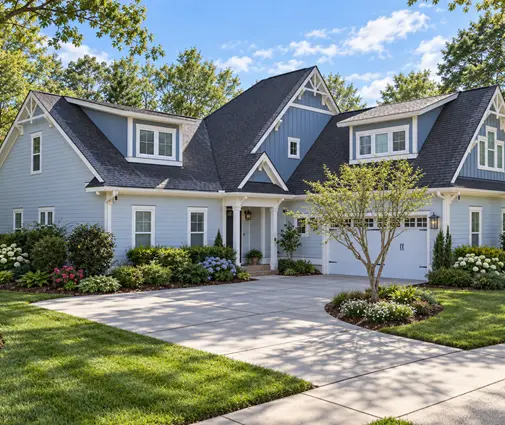
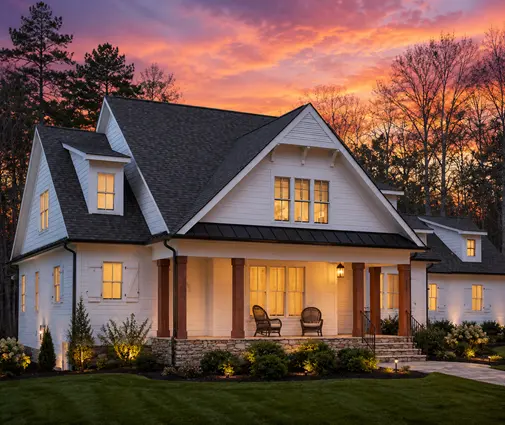
Two guests per bedroom, plus two. That short formula, used in some form by many counties and beach towns, can decide what a vacation rental house earns before the foundation is poured. Owners who build for Airbnb or VRBO often start with the plan and the view. The ones who do well start with the short-term rental (STR) ordinance, the parking rule, the septic permit and the HOA covenants, and then pick the plan that fits them.
The biggest decision is the bedroom count, and in practice it usually comes down to two options: a compact 3-bedroom house that is easy to permit and fill, or a 5-bedroom house that sleeps big groups and commands a higher nightly rate. Below, the two go head to head on the points that matter most.
| Criterion | 3-bedroom rental | 5-bedroom rental |
|---|---|---|
| STR permit and occupancy cap | Easier; typical cap of about 6 to 8 guests | More scrutiny; cap of about 10 to 12 guests, some towns cap lower |
| Parking minimums | Often 2 to 3 spaces, fits a standard driveway | Often 3 to 5 spaces, may need a wider lot or garage |
| Septic and water | Smaller system, more lots qualify | Larger drain field, some lots cannot support it |
| HOA and neighbors | Less friction | Group stays draw more complaints and rules |
| Build cost | Lower total budget, easier financing | Higher budget, but more revenue per square foot of land |
| Booking demand | Couples, small families, steady year-round | Reunions, multi-family trips, strong peaks, weaker off-season |
| Turnover and wear | Quick cleans, lower supplies | Longer cleans, more linens, more wear |
STR permits and occupancy limits
Before buying a lot, read the short-term rental ordinance of the city or county, not just the zoning map. Many jurisdictions now require an STR permit or registration, a local business license, a lodging or occupancy tax account and sometimes an inspection. Some limit rentals to certain zones, cap the number of permits, or allow only owner-occupied rentals. Rules change often, so check the current version with the planning department, ideally in writing.
Occupancy caps are usually tied to bedrooms, sometimes to square footage or septic capacity. That makes the bedroom definition important: in many places a room only counts if it has a closet, an egress window and meets the minimum size under the IRC and local amendments. A bunk room in a loft that does not qualify may not raise your legal guest count, however many beds you fit into it.
Verdict: the 3-bedroom house wins on simplicity. A 5-bedroom house only pays off if the ordinance actually allows 10 or more guests.
Parking minimums
Parking is the rule that surprises owners most. STR ordinances often require one off-street space per bedroom or per two bedrooms, and some ban street parking for guests entirely. Five bedrooms can mean four or five cars on a group trip, and a narrow beach lot may not hold them.
Tall coastal plans solve this by putting parking under the living space. The four-story coastal plan with 4 bedrooms and a 2-car garage in 2342 sq ft keeps the footprint small while leaving room for cars, while a plan like the 5-bedroom, 3-story beach house of 2356 sq ft has no garage, so the driveway and lot have to carry all the parking.
Verdict: the 3-bedroom house fits standard lots; the 5-bedroom house needs a lot planned around parking from day one.
Septic size and water supply
Outside city sewer, the septic permit often sets the real bedroom limit. Many state and county health codes size the system by bedroom count, commonly somewhere around 110 to 150 gallons per day per bedroom, and some counties set rental occupancy by the permitted septic capacity. A soil or perc test comes first; poor soil or a high water table can push you to an engineered or mound system.
As a rough 2025 range, a conventional system often runs about $5,000 to $15,000, while engineered systems can reach $20,000 to $40,000 or more. Each extra bedroom also needs more drain field area and setbacks from the well and property lines, which a small lot may not have. Ask the health department what the lot can support before you fall in love with a plan.
Verdict: the 3-bedroom house qualifies on far more lots. Order the perc test before choosing five bedrooms.
HOA rules and neighbors
An HOA can ban rentals under 30 days, set minimum stays, limit vehicles or require registration, and covenants can be amended after you build. Read the CC&Rs and recent board minutes, and ask whether a rental restriction vote is pending. Large group houses generate more noise and trash complaints, and in many towns complaints lead to stricter rules for everyone.
Verdict: the 3-bedroom house draws less attention. A 5-bedroom rental belongs on a lot with some distance from neighbors and in a community that welcomes rentals.
Build cost and financing
In 2025, many custom wood frame houses landed somewhere around $150 to $300 per square foot for construction, and much more in high-cost coastal and resort areas. Going from three to five bedrooms usually adds 800 to 1,500 sq ft, two bathrooms and a bigger septic system. Lenders generally treat a house built to rent as an investment property, which often means a larger down payment, and appraisers may look at rental comparables, so ask your lender early how they will underwrite it.
A good middle ground is the 4-bedroom, 3.5-bath cottage farmhouse of just 1945 sq ft, which fits a lot of sleeping space into a modest footprint.
Verdict: the 3-bedroom house is cheaper to build and finance; the 5-bedroom house earns more per lot if the rules allow it.


Booking demand and revenue
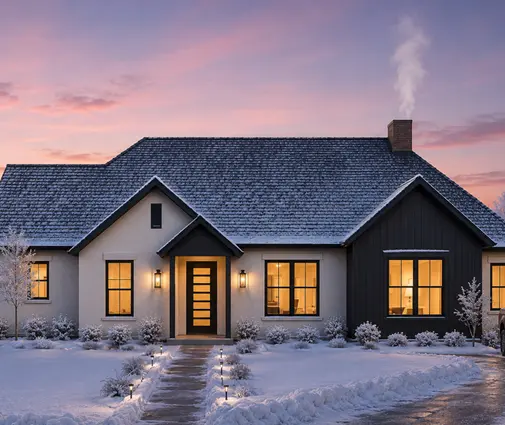
Larger houses usually earn a higher nightly rate and face fewer direct competitors, because most listings in a market are smaller. But big groups book around holidays, summer weeks and events, and the off-season can be thin. Smaller houses tend to fill more evenly with couples and families. Look at local listings of each size, their calendars and their reviews before deciding, rather than relying on a single revenue estimate.
Verdict: the 5-bedroom house wins on peak revenue, the 3-bedroom house on steady occupancy.
Layouts that earn
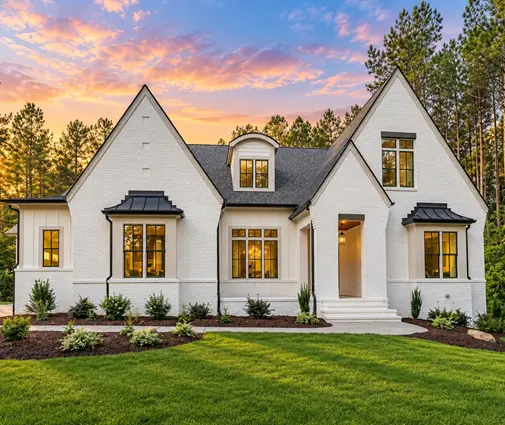
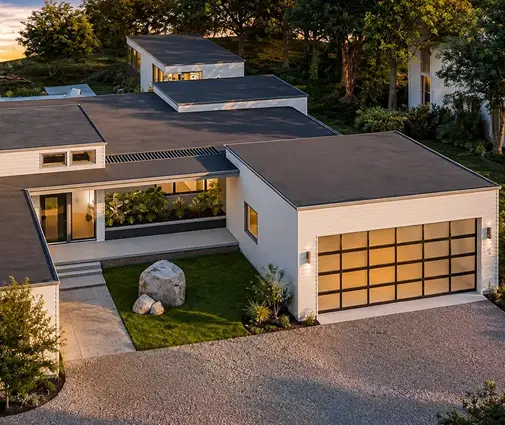
Whatever the count, a few features help a rental perform. The most important is an equal suite for every bedroom: groups splitting the cost do not want to argue over who gets the only good bathroom. The 5-bedroom, 5-bath Modern Farmhouse of 3157 sq ft and the 5-bedroom, 5.5-bath European plan of 3879 sq ft both give each bedroom its own bath. On one level, the 4-bedroom, 5.5-bath modern single-story plan works well for multigenerational groups. Plans with two master suites are a simpler version of the same idea.
Other features worth asking your drafter for:
- A lockable owner's closet for spare linens, supplies and personal items, ideally near the laundry.
- A durable mudroom entry with tile or LVP floors, hooks, a bench and a place to rinse sand or snow off gear.
- Outdoor living space such as a covered porch, deck or outdoor kitchen; listing photos sell the evening outdoors as much as the bedrooms.
- Laundry close to the bedrooms to speed up turnover.
- Sound separation between suites, with closets and baths placed between bedrooms.
A compact example on the smaller side is the 3-bedroom, 3.5-bath Low Country plan of 2384 sq ft, where each bedroom gets its own bath.
Verdict: a tie. Both sizes earn more with private baths, a tough entry and good outdoor space.
Turnover and wear
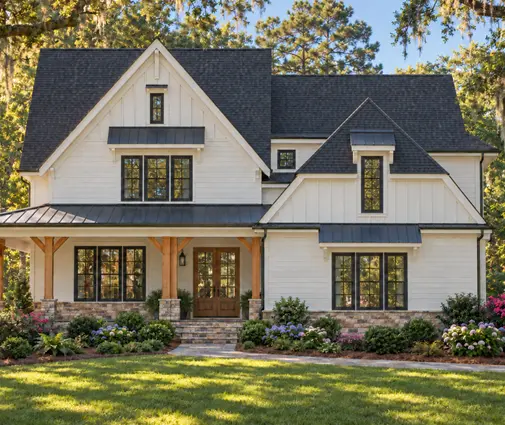
Cleaners charge by size, beds and bathrooms, and a 5-bedroom turnover can take a crew several hours, which limits same-day check-ins. Plan hard-wearing finishes, plenty of storage and an easy-to-clean kitchen in both cases, but expect higher operating costs for the larger house.
Verdict: the 3-bedroom house is cheaper and faster to run between stays.
Who should choose what
- Choose 3 bedrooms if the lot is small, on septic with average soil, in an HOA, or in a town with tight occupancy caps, or if you plan to use the house yourself part of the year.
- Choose 5 bedrooms if the ordinance allows 10 or more guests, the perc test supports a large system, the lot has room for 4 or more cars, and the market has real demand from groups. Start with the 5-bedroom house plans that give every bedroom its own bath.
- Consider 4 bedrooms if the rules are unclear or likely to tighten; it often keeps most of the upside with less permitting risk.
- Everyone should confirm the STR permit, parking, septic and HOA rules with the local authority and a local engineer or architect before buying the plan, then have it adapted to the lot and code.