Two bids for the same house plan land on your kitchen table. One builder adds 12% on top of cost, the other 20%. The math looks obvious, until you notice the 12% bid lists the superintendent, dumpsters and temporary power as separate line items, prices change orders at 25%, and has a cabinet allowance that wouldn't cover a basic kitchen. Builder markup is one of the most misunderstood numbers in residential construction. Most owners treat it as the builder's take-home pay, but a large share of it keeps the job running.
This checklist walks through what the markup covers, what ranges are normal in the U.S. right now, how it works in fixed-price and cost-plus contracts, and how to compare bids on the total cost of the house.
Stage 1: Separate overhead from profit
- Supervision: the superintendent or project manager who schedules trades, meets inspectors and walks the site. Some builders put this in overhead; others bill it as a job cost.
- Insurance and licensing: general liability, workers' comp for any in-house crews, state contractor licensing and bonding. Builder's risk insurance may sit in overhead or be billed to the job.
- Office and operations: estimating, accounting, scheduling software, trucks, tools, rent and the staff who answer your calls.
- Warranty reserve: money set aside for callbacks during the first year and longer structural coverage. Drywall cracks and sticky doors after the first heating season get fixed out of this pool.
- Profit: what's left after all of the above. It pays the owner of the business and covers the risk that an estimate turns out wrong.
Ask every builder to explain, in one sentence each, which of these items are in the markup and which are billed as general conditions, the site-specific costs like the portable toilet, dumpster, temporary power, permits and cleanup. Two builders with the same 18% can be charging very different amounts, depending on where those costs land. As a rough rule, overhead often eats half or more of the markup. Net profit for a home builder is usually single digits, not 20%.
Stage 2: Know the normal range for your type of builder
- Production builders: you rarely see a markup at all. It's built into the base price of the plan and the options sheet. Gross margins in the high teens to mid-20s percent are commonly reported, with the real profit coming from upgrades and lot premiums.
- Semi-custom builders: they build their own or stock plans on your lot with limited changes. Markups of roughly 12% to 20% on cost are common in 2025–2026 quotes.
- Custom builders: fully custom work with more coordination and more risk. 15% to 25% is typical, and higher in expensive coastal or resort markets.
- Cost-plus fees: often 10% to 20% of cost, or a fixed dollar fee agreed upfront.
- Markup vs. margin: a 20% markup on cost is about a 16.7% margin on the selling price. Make sure you and the builder mean the same number.
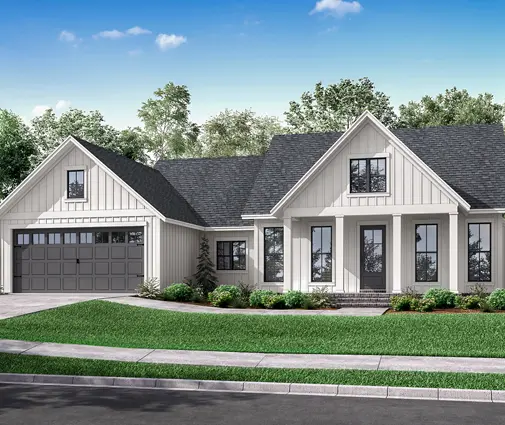
Complexity moves the number more than the builder's ego does. A one-story layout like this 2,701 sq ft farmhouse ranch with 3 bedrooms and a 2-car garage is simple to frame, roof and inspect. A four-story coastal home of 3,606 sq ft with 5 bedrooms means elevated foundations, wind-rated assemblies, more inspections and more supervision hours, so a higher markup there is often justified. These ranges are general. Ask local builders and your lender's appraiser what's normal in your county.
Stage 3: Run the numbers on a $450,000 build
- Direct cost: labor, materials and subcontractors add up to $375,000.
- Markup: 20% of $375,000 is $75,000, so the contract price is $450,000.
- Overhead share: if about 11 points go to overhead, that's roughly $41,250 for supervision, insurance, office and warranty reserve.
- Profit share: the remaining 9 points, about $33,750, is profit before taxes, before surprises and before any warranty claims that exceed the reserve.
- Effective margin: $75,000 out of $450,000 is 16.7% of the price, not 20%.
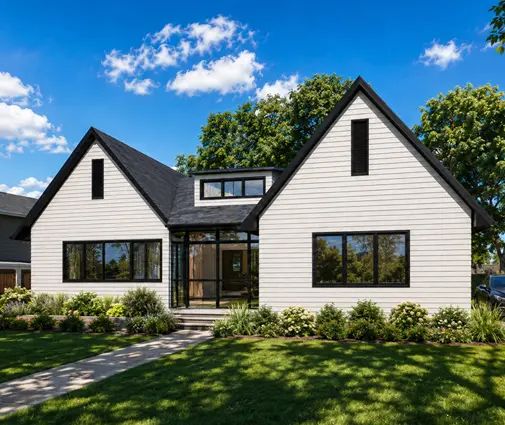
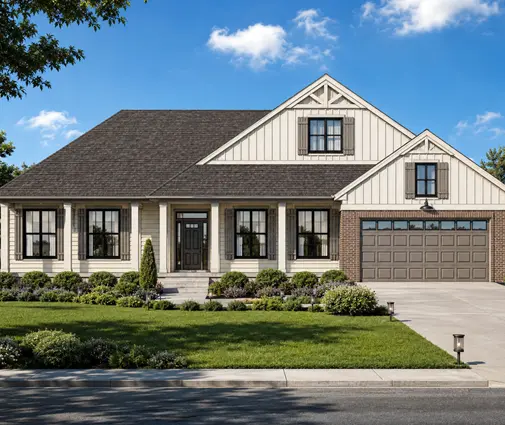
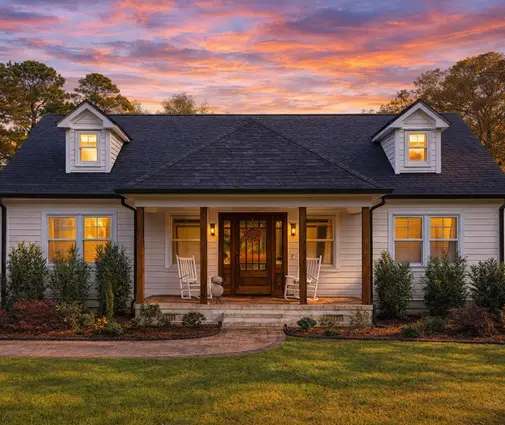
Seen this way, cutting the markup from 20% to 15% saves $18,750. That's real money, but it comes almost entirely out of the builder's profit, which is the cushion that keeps them motivated when something goes wrong in month seven. A plan in this price range, say a 2,557 sq ft Modern Farmhouse with 4 bedrooms and a 3-car garage or a 2,410 sq ft Cape Cod with 4 bedrooms, will see larger swings from lot costs, foundation type and finishes than from a few points of markup.

Stage 4: Check how the markup is applied in your contract
- Fixed-price (lump sum): the markup is built into one number and usually isn't disclosed. The builder carries the risk of overruns, which is why fixed bids often include a contingency.
- Cost-plus: you pay actual costs plus a fee. You get open books, but you carry the risk of overruns. Ask for a guaranteed maximum price or a fee cap.
- Percentage vs. fixed fee: a percentage fee grows when costs grow. A fixed fee removes the incentive to let costs creep.
- Change orders: confirm in writing the markup on changes. It's often the same as the base markup, sometimes higher, plus an admin charge.
- Allowances: check whether the markup applies to overages on cabinets, flooring and lighting allowances, and whether low allowances are making the bid look cheaper than it is.
- Owner-supplied items: many builders charge a handling fee or refuse to warranty fixtures you buy yourself.
Can you negotiate? Sometimes, and the best leverage isn't the percentage. Builders respond better to a clean plan set, fast decisions and a complete selections list before groundbreaking, because those reduce their real overhead. A ready-to-build stock plan that a local engineer has already adapted to your lot and code requirements, such as a one-story Craftsman of 3,237 sq ft with 4 bedrooms or a two-story Modern Farmhouse of 3,590 sq ft with a full basement, gives builders fewer unknowns to price in. If you want to start from simpler footprints, browse ranch house plans or plans between 2,500 and 3,000 sq ft.
Stage 5: Compare the total house, not the percentage
- Line-by-line scope: put the bids side by side and check that site work, utilities, driveway, landscaping, appliances and permit fees are in both or neither.
- Schedule: a builder who finishes two months sooner can save you more in construction loan interest and rent than a few points of markup.
- Supervision time: ask how often the superintendent is on site and how many jobs they run at once.
- Warranty terms: written coverage, response times and who handles callbacks.
- References and appraisal: talk to recent clients, and remember that the appraisal has to support the final price for your mortgage to close.
The lowest markup often moves cost somewhere else: into general conditions, change orders, thin allowances or rework from a stretched crew. Ask each builder for an all-in projected cost with realistic allowances, and judge them on that number and on how confidently they explain it. For popular styles that many local crews build often, like the plans in the farmhouse collection, you'll usually get tighter and more comparable bids.
The most common mistakes
- Treating the whole markup as profit and squeezing it until the builder cuts supervision.
- Comparing a fixed-price bid with a cost-plus estimate as if both were guaranteed numbers.
- Ignoring the markup on change orders, then making dozens of changes mid-build.
- Accepting low allowances that make one bid look $30,000 cheaper on paper.
- Confusing markup with margin when checking the builder's math.
- Skipping a written contract review. Have a construction attorney or an experienced advisor in your state read the payment, change order and warranty terms before you sign.