The closing papers are signed and the keys are in your hand. The backyard is bare dirt, the windows have no blinds, and the kitchen has an empty slot where the refrigerator should be. This happens to many new-construction buyers. The house is finished by the contract's definition, but the home you planned to live in is not. Below are the questions buyers ask most often about these costs, with realistic 2025–2026 price ranges for a typical single-family house. Prices vary widely by region, so get local quotes before you set your budget.
Why aren't landscaping, blinds and appliances in my builder's price?
They are left out because a lower base price sells more houses. Production builders advertise a base price that covers the structure, the mechanical systems and a defined list of standard finishes. Anything not on that list is an upgrade or the owner's responsibility. Custom builders work from a line-item budget, so landscaping and appliances usually appear only if you or your architect put them there.
The fix is simple but tedious. Read the "included features" sheet and the specifications attached to the contract line by line. If an item is not written there, assume you will be paying for it yourself.
How much does landscaping cost for a new house?
For a typical quarter-acre suburban lot, a basic front-yard package with sod, a few shrubs, mulch beds and one or two trees usually runs $3,000 to $10,000. Finishing the whole yard often costs $10,000 to $30,000 or more. In 2025, installed sod generally ran about $1 to $2.50 per square foot, and many new lots need topsoil and fine grading first, because construction traffic leaves the ground compacted and full of debris.
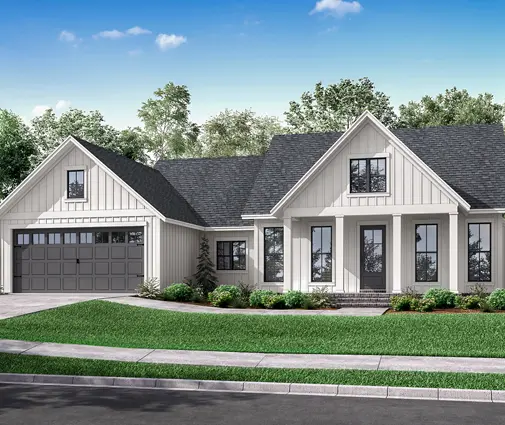
Irrigation is a separate line. An in-ground sprinkler system for a typical lot is commonly $2,500 to $6,000, depending on the number of zones and on whether drip lines go into the beds. In hot, dry regions such as Texas, Florida and the Southwest, new sod without irrigation can fail in its first summer. A sprawling single-story plan such as this 4-bedroom Florida-style home of 3061 sq ft has a large footprint and long foundation beds that need watering.
Will my mortgage pay for the fence, the yard or the appliances?
Usually not, unless these items are written into the purchase contract before closing. Your loan finances the contract price, and the appraisal has to support that price. Anything you buy after closing is paid in cash, on a credit card or with a separate loan. With a construction loan for a custom home, you can include landscaping and a fence in the approved budget, but only if you list them before the loan closes.
Some lenders and loan programs allow an escrow holdback when exterior work such as landscaping cannot be finished because of weather. The rules differ by lender, so ask your loan officer early rather than at the closing table.
Does my HOA require landscaping or a fence within a deadline?
Often it does. Many HOAs require front-yard landscaping within a set period after move-in, commonly somewhere between 90 days and a year. Some also require a specific number of trees, a sod lawn instead of seed, or a particular mailbox. Fences almost always need architectural review approval, and the CC&Rs may set the material, the height, the color and how far the fence must sit behind the front facade.
Ask for the CC&Rs and the design guidelines before you sign, not after. Missing an HOA deadline can lead to fines, and a fence you build before approval may have to come down.
How much does a fence cost?
For a typical backyard needing 150 to 250 linear feet, expect roughly $4,000 to $12,000. Installed prices in 2025 ran approximately:
- Chain link: $15 to $30 per linear foot
- Wood privacy, 6 feet tall: $25 to $50 per linear foot
- Vinyl privacy: $30 to $60 per linear foot
- Aluminum or ornamental steel: $30 to $70 per linear foot
Each gate adds a few hundred dollars, and a double drive gate costs more. Many cities require a fence permit, and you should call 811 to have utilities marked before anyone digs post holes. Corner lots and pool yards often have extra height and setback rules, so confirm them with your city or county.
What do blinds and window treatments cost for a whole house?
Basic blinds for a whole house typically cost $2,000 to $8,000, and custom shades can easily double that. In 2025, faux-wood blinds generally ran $40 to $150 per window installed, cellular shades $100 to $300, and motorized shades $300 to $1,000 or more per window. A 2,500 sq ft house often has 20 to 30 windows.
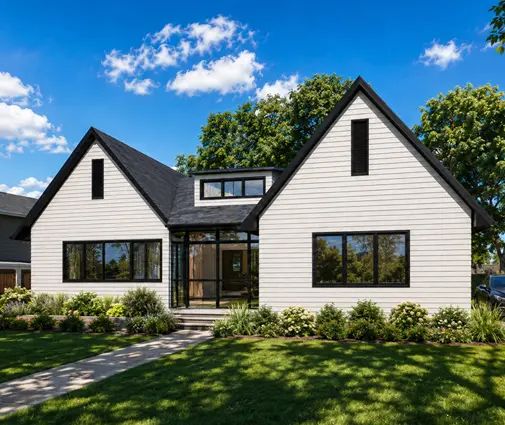
Sliding doors, transoms and tall great-room windows cost the most. If you love plans from the large windows collection, budget for treatments early. The same applies to a vaulted farmhouse plan like this 3-bedroom Modern Farmhouse of 2243 sq ft, whose upper windows are hard to reach without motorized shades.
Which appliances does the builder usually include, and what will the rest cost?
Most builders include the cooking appliances and the dishwasher, but they often leave out the refrigerator, the washer and the dryer. That typically means a range or cooktop with a wall oven, a dishwasher, a microwave or vent hood, and sometimes a disposal.
In 2025–2026, a good freestanding refrigerator costs about $1,200 to $3,500, and a built-in model can exceed $5,000. A washer and dryer pair runs about $1,200 to $3,000. Altogether, plan on $2,500 to $7,000. Measure the refrigerator opening on the plans, because counter-depth and built-in slots limit your choices.


What does it cost to finish the garage and storage?
Basic garage shelving costs $300 to $1,500. A full cabinet system with an epoxy or polyaspartic floor for a two-car garage can run $5,000 to $15,000. Builders usually deliver bare drywall, which is sometimes only fire-taped, and a plain concrete slab. Closet organizers are another common surprise: wire shelving is often standard, and a custom system for a primary walk-in can cost $1,500 to $5,000.
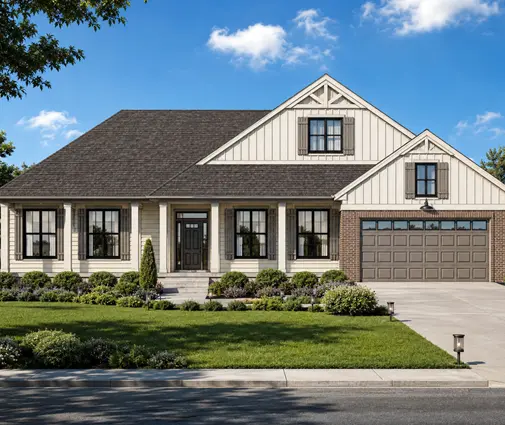
Plans from the 3-car garage collection leave room for a workbench or a storage wall without crowding the cars. A good example is this single-story Modern Ranch of 2951 sq ft with 3 bedrooms and a three-car garage. More garage means more floor to coat and more wall to fit out, so scale the budget to the plan.
What other costs do buyers forget?
Gutters, window screens, a patio extension and utility deposits are the usual ones. Some builders in the South leave gutters out entirely. Installed gutters with downspouts typically cost $1,500 to $4,000. Screens may cost extra on some windows, and many buyers want the small builder patio extended or covered, which can run $5,000 to $25,000 depending on size and materials.
Add utility deposits, internet installation, a mailbox if the HOA specifies one, and the first year of HOA dues and assessments, which are sometimes collected at closing.
How much should I set aside for all of this?
For a typical 2,500 to 3,000 sq ft house on a suburban lot, a realistic cushion is $15,000 to $45,000. The range depends on how finished you want the house in its first year.
| Item | Typical range, 2025–2026 (USD) |
|---|---|
| Sod, grading, front beds | $3,000 – $10,000 |
| Irrigation system | $2,500 – $6,000 |
| Backyard fence | $4,000 – $12,000 |
| Window treatments | $2,000 – $8,000 |
| Refrigerator, washer, dryer | $2,500 – $7,000 |
| Garage shelving and closets | $500 – $5,000 |
| Gutters | $1,500 – $4,000 |
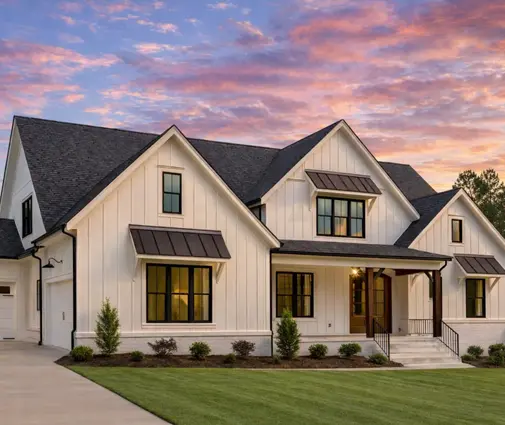
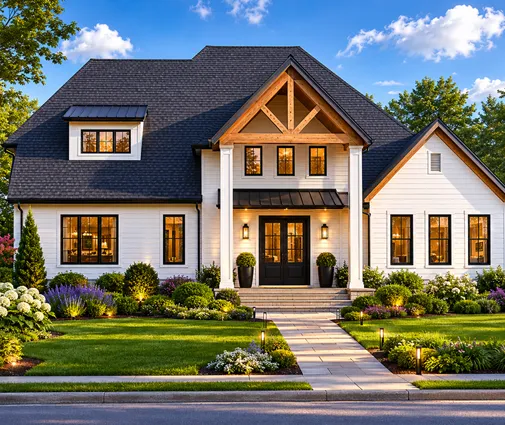
Larger homes push every line up. A plan like this 4-bedroom Modern Farmhouse of 4160 sq ft or this 4,000-class home with a basement, 3590 sq ft has more windows, a bigger lot and longer fence lines.
Can I roll these items into the contract instead?
Often you can, and it is worth weighing carefully. Builders may offer design-center credits or incentives that cover blinds, a refrigerator or a fence. Adding items to the contract price lets you finance them, but you then pay interest on a refrigerator for 30 years. The appraisal must also still support the higher price. Items that add value and are hard to install later, such as irrigation sleeves under the driveway or extra outlets in the garage, are the best candidates. Appliances are usually cheaper to buy yourself during a holiday sale.
What should I ask the builder before signing?
Get written answers to these questions before you sign:
- Which appliances are included, by model, and is a refrigerator, washer or dryer part of the price?
- Are blinds, screens and gutters included on every window and roof edge?
- What exactly is the landscaping allowance: sod or seed, front only or full yard, irrigation or none?
- Who handles final grading and drainage, and is topsoil added?
- What do the HOA's CC&Rs require, and by what deadline after move-in?
- Can irrigation sleeves, fence post locations or garage outlets be added during construction?
- What finish do the garage walls and floor get?
- Which credits or incentives can be applied to these items, and does the lender allow it?
If you are still choosing a plan, compare the footprint, the window count and the garage size with your post-closing budget, not only with the construction price. Browsing ranch-style plans next to two-story options is a quick way to see how the footprint changes landscaping and fencing costs.