Six months after move-in, the oak floor in the great room starts to cup. The edges of each board rise, and a few weeks later the glue-down LVP in the kitchen begins to lift at the seams. The flooring installer blames the slab and the builder blames the installer. In most cases the cause is moisture that was already in the concrete, or that comes up through it from the ground, before anyone opened the first box of flooring.
Slab-on-grade is the normal foundation across the South, the Southwest and much of the West Coast. It is common for good reasons: it costs less than a basement or crawlspace and suits a single-level layout. But concrete never stops interacting with the ground beneath it. This guide covers what happens under the slab, how long new concrete really takes to dry, which tests flooring manufacturers require, and what to ask your builder while there is still time to act.
Why Flooring Fails on a New Concrete Slab
A freshly poured slab holds a lot of water. Some of it is used up as the cement cures. The rest has to leave through the top surface, because the bottom sits on the vapor retarder and the ground. The ground adds more moisture of its own, pushed upward by vapor drive and by capillary action through fine soils. Covering the slab with a floor that traps or reacts to that moisture is what causes the trouble.
What moisture does to each type of floor
- Solid and engineered hardwood: wood absorbs moisture from below, and the bottom of each board swells more than the top. The result is cupping, gaps at the edges, and in bad cases boards buckling off the floor.
- Glue-down LVP and tile adhesives: high moisture and the alkalinity it carries break down many adhesives. The glue turns soft or "bleeds," and planks lift, shift or bubble.
- Floating LVP and laminate: the planks may be labeled waterproof, but moisture trapped under them can lead to odor, mold on the underlayment and joints that open up. Manufacturers still publish slab moisture limits for these products.
- Carpet: the pad and the tack strip hold dampness, which shows up as a musty smell first.
A common detail in failure claims: the flooring warranty is void if the slab was not tested, or if the readings exceeded the maker's limits. When nobody tested, the homeowner usually pays for the repair.
The Vapor Retarder Under the Slab: 6, 10 or 15 Mil
The first line of defense goes in before the concrete truck arrives. The sheet of plastic under the slab slows moisture coming up from the soil. Under the IRC the usual minimum is 6-mil polyethylene with lapped joints, though local amendments vary. Many concrete specialists, and a growing number of flooring makers, recommend a heavier product rated to ASTM E1745 instead, usually 10 or 15 mil.
| Retarder | Typical use | Main weakness |
|---|---|---|
| 6-mil polyethylene | Code minimum in many jurisdictions, common on production homes | Tears easily under rebar, boots and wheelbarrows; permeance rises with damage |
| 10-mil (ASTM E1745 rated) | Common recommendation under moisture-sensitive floors | Still needs sealed seams and penetrations |
| 15-mil (ASTM E1745 Class A) | Wet soils, high water tables, Gulf Coast lots, premium flooring | Costs more; must be installed carefully to be worth it |
For a slab of about 2,000 square feet, upgrading from 6-mil poly to a 15-mil product typically added somewhere in the range of a few hundred to around a thousand dollars in material in 2025. Prices vary by region and supplier. That is a small number compared with replacing a floor.
Installation matters more than thickness
A 15-mil sheet full of holes performs worse than an intact 10-mil sheet. Things to look for before the pour:
- Seams lapped and taped with the manufacturer's tape, not just overlapped.
- Plumbing pipes, conduits and other penetrations sealed with pipe boots or tape.
- The retarder turned up at the edges against the forms or grade beams.
- Tears from rebar chairs and foot traffic patched before concrete is placed.
- A compacted gravel or stone base under the retarder to act as a capillary break, as the local code and engineer require.
Current industry guidance generally favors placing the retarder directly under the concrete, with no sand layer on top, when moisture-sensitive flooring will be used. A wet sand layer above the plastic can feed water back into the slab for months.
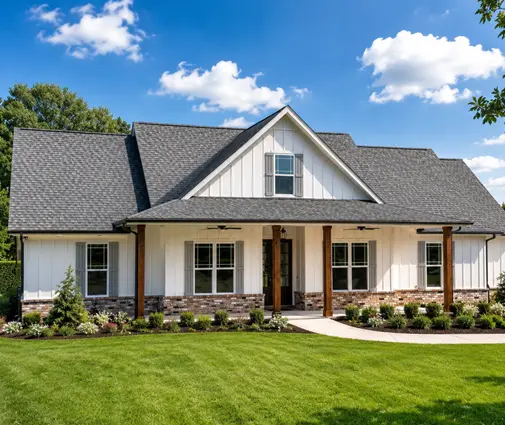
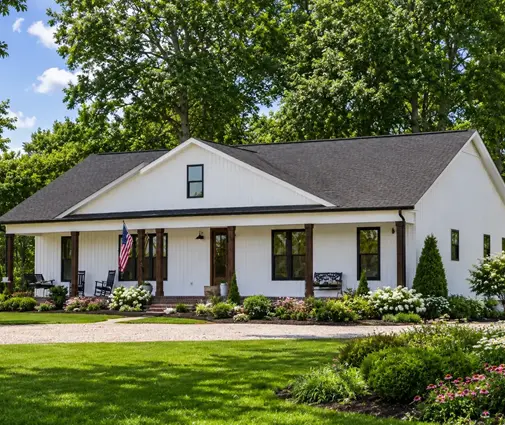
Single-story homes put the largest share of the floor on the slab. That is true of a plan like this 1,706 sq ft Modern Farmhouse ranch with 3 bedrooms and a 2-car garage. It is also true of the wider 2,250 sq ft Modern Craftsman ranch, where an open living area means one continuous run of flooring with no doorways to break up movement. If you are browsing one-story house plans, the vapor retarder spec deserves a line in your construction contract.

How Long Does a New Slab Take to Dry?
The old rule of thumb is about one month of drying per inch of slab thickness. That would put a typical 4-inch residential slab at about four months. Treat that rule as optimistic. It assumes good air movement, moderate temperature and humidity, and a slab that dries freely from the top. Real conditions often slow things down:
- No HVAC yet: a closed-up house with no conditioning, or one that is open to humid outside air, dries far slower.
- Wet weather during framing: rain on an unroofed slab resets part of the clock.
- Curing compounds and sealers: some slow the escape of moisture from the surface.
- Thicker areas: grade beams, thickened edges and interior footings hold water longer.
- Climate: a slab in a humid Gulf Coast summer behaves very differently from one in a dry Arizona spring.
Production schedules often call for flooring three to four months after the pour, sometimes sooner. A slab may be dry enough by then, or it may not. The only way to know is to test it, because the calendar cannot tell you.
Humid regions deserve extra caution. A home like this 1,879 sq ft Acadian-style plan with 3 bedrooms and 3 baths is a classic Louisiana and Low Country design, and it is often built on lots where the soil stays damp much of the year. There, the vapor retarder, the site drainage and the drying time all carry more weight.
Moisture Testing: Calcium Chloride vs. RH Probes
Flooring manufacturers specify how the slab must be tested and what readings are acceptable. The installation instructions for your product are the document that counts. The two standard methods are:
| Calcium chloride (ASTM F1869) | In-situ RH (ASTM F2170) | |
|---|---|---|
| What it measures | Moisture vapor emission rate from the surface, in pounds per 1,000 sq ft per 24 hours | Relative humidity inside the slab, in holes drilled to a set depth |
| Typical limits | Often 3 to 5 lbs, depending on the product | Often 75 to 85 percent; some adhesives allow higher |
| Strength | Long history, inexpensive kits | Reflects conditions deeper in the slab and is less affected by surface conditions |
| Weakness | Only reads the top layer; sensitive to room conditions | Requires drilling and an equilibration period before reading |
The RH method has become the preferred test for many manufacturers, and some no longer accept calcium chloride results. Both standards call for testing with the building at its normal service temperature and humidity, which means the HVAC has to be running. For both methods, the standards specify a minimum of three tests for the first 1,000 square feet and one more for each additional 1,000 square feet. Independent testing for a typical house generally runs a few hundred dollars. Expect a different figure in your area, but it is still the cheapest insurance in the whole flooring budget.
Hardwood needs one more check
For wood floors, the installer should also measure the moisture content of the boards and compare it with the slab conditions and the expected indoor humidity. Wood that acclimates in a damp, unconditioned house is not acclimated at all.
When a Moisture-Mitigation Primer Is Worth the Cost
Sometimes the readings come in high and the move-in date will not move. In that case the usual fix is a moisture-mitigation system. This is typically a two-part epoxy coating rolled onto a prepared, ground or shot-blasted slab, and it is rated to hold back moisture up to a stated RH or emission level. Many flooring adhesive makers sell their own systems and will back the floor when their system is used as directed.
In 2025, professionally installed mitigation commonly cost in the range of $3 to $7 per square foot including surface preparation. For a 2,000 square foot floor area, that is roughly $6,000 to $14,000. It is worth it when:
- Tests exceed the flooring maker's limits and waiting months is not an option.
- The house sits on a high water table or poorly drained soil, so the slab may never dry below the limits.
- The vapor retarder is missing, damaged, or of unknown quality.
- You are installing glue-down hardwood or premium LVP over a large area.
It is usually not worth it when the readings are only slightly high and the schedule allows more conditioned drying time, or when the chosen floor has its own approved moisture-tolerant adhesive. Be wary of cheap spray-on "sealers" offered as an alternative. Unless the flooring manufacturer names the product as acceptable, it may not protect the warranty.
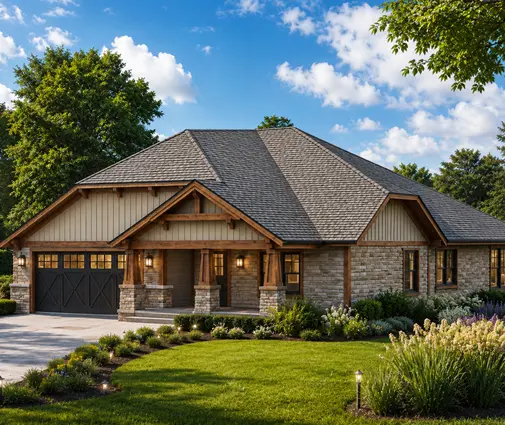
Planning for this cost is easier in the early budget than at the end of the build. For a modest plan like this 1,290 sq ft modern bungalow with 2 bedrooms, the cost is contained. On a larger open-concept home with continuous flooring through the kitchen, dining and living areas, it adds up quickly.


Questions to Ask Your Builder Before Flooring Goes Down
Ask these questions in writing, ideally before the pour and again before flooring starts:
- What vapor retarder will go under the slab: thickness, brand, and ASTM E1745 class?
- Will seams and pipe penetrations be taped and booted, and can I see it or get photos before the pour?
- Will the retarder sit directly under the concrete, or under a sand layer?
- What is the base material under the retarder, and how is the lot graded to drain away from the slab?
- When will the HVAC run full time, and how long will the slab dry under conditioned air before flooring?
- Who will test the slab, which method (ASTM F2170 or F1869), how many tests, and will I get the written results?
- What limits does my specific flooring product require, and do the results meet them?
- If readings are high, what is the plan: more drying time, a mitigation system, or a different adhesive, and who pays?
- For hardwood: what are the wood moisture readings, and how long was it acclimated in a conditioned house?
A builder who answers these comfortably is usually a builder who has dealt with slab moisture before. The questions apply to any slab home, whether you choose a ranch-style plan or a two-story design. Have the local engineer or drafter who adapts your plan confirm the slab and retarder details against your city or county requirements.
FAQ
Is 6-mil plastic under the slab enough?
It often meets the code minimum, but it tears easily during construction. Under moisture-sensitive flooring, a 10- or 15-mil retarder rated to ASTM E1745, with taped seams, is the safer choice. Check your local code and your flooring maker's requirements.
Can I install "waterproof" LVP on a new slab without testing?
Waterproof refers to the plank surface, not to moisture from below. Most LVP makers still publish slab moisture limits, and skipping the test can void the warranty.
How soon after the pour can flooring go down?
There is no safe fixed date. Many slabs need three months or more of drying with the HVAC running, and some take longer. Install when the tests meet the product limits.
Does a sealer from the home center fix a wet slab?
Usually not for warranty purposes. Unless your flooring manufacturer approves the specific product, use a mitigation system they accept, or give the slab more drying time.