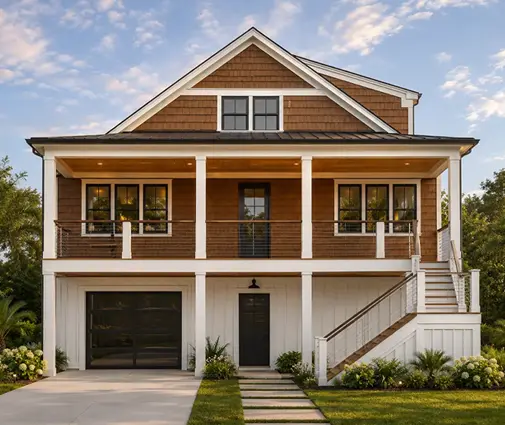
A builder hands you a number for a 2,400 sq ft house, the lender approves it, and you start picking finishes. Six months later you are writing checks for a water tap, a gravel driveway, a soil report and an engineer's revisions that nobody mentioned. This is the most common budgeting mistake first-time builders make. It isn't only an American problem, though. Looking at how Canada, Germany and Poland handle the same bills shows which US costs are unusual and which ones every builder in the world has to plan for.
What does a builder's construction quote usually leave out?
Most quotes cover the house from the foundation up and leave out the lot, the fees and the connections around it. Typical exclusions are utility hookups, site clearing and grading, soil and perc tests, surveys, permit and impact fees, engineering changes to the plan, driveways, fencing, landscaping and sometimes even the final cleanup. Some builders include a site work allowance, but it is often a placeholder rather than a real estimate.
The same gap exists abroad. A German Bauträger or a Polish general contractor typically prices the house itself and lists the site connections, survey work and permit paperwork as the owner's responsibility. Wherever you build, read the exclusions page before you compare two bids.
What are impact fees, and do other countries charge them?
Impact fees are one-time charges a city or county collects on new homes to pay for roads, schools, parks and utilities, and they are one of the largest surprises in the US. In 2025 they ranged from nothing in many rural counties to well over $20,000 per house in some fast-growing areas, especially parts of California, Florida and the Mountain West. They are usually due when the building permit is issued, so they have to be paid in cash or rolled into the construction loan.
Canada has a close cousin in development charges. In some Greater Toronto Area municipalities they have passed CAD 100,000 for a single detached house in recent years, though several cities have cut or deferred them since. Germany handles this differently. Its Erschließungskosten, the cost of building the street, sewer and lighting to a new subdivision, are either included in the lot price or billed to the owner by the municipality. Always ask the seller of a German lot whether it is erschlossen, meaning fully serviced. In the US, call the permit office and ask for the current fee schedule for your specific parcel before you buy it.
How much does it cost to connect water, sewer, power and gas?
When the utilities are already at the street, connections usually run from a few thousand dollars to around $20,000 in total. Water and sewer tap fees alone can be $1,000 to $15,000 or more depending on the utility district. Costs climb quickly when the electric line or water main has to be extended. A utility may charge by the foot for a line extension, and on a rural lot several hundred feet from the nearest pole that can reach tens of thousands of dollars.
Germany bundles these as Hausanschlusskosten, and the combined bill for water, sewer, power and telecom often lands in the €10,000 to €20,000 range, roughly $11,000 to $23,000 in 2025. In Poland the przyłącza (connections) are cheaper in absolute terms, but they require separate applications and conditions from each utility, which can add months. The lesson for a US lot is to get written connection quotes from each utility before closing, not after.
When do I need a well and septic system, and what do they cost?
You need them whenever public water or sewer doesn't reach your lot, which is the norm for rural and many exurban parcels. In 2025 a conventional septic system typically cost $5,000 to $15,000, and an engineered mound or aerobic system needed on poor soils could run $15,000 to $30,000 or more. A drilled well commonly costs $5,000 to $15,000 or more, depending on depth and geology.
Rural Canada has the same arrangement on its acreages, with similar or higher costs because wells there are often deep and the frost line is low. Poland's version is the szambo (holding tank) or a small home treatment plant. In every case the deciding factor is the soil, which is why the next question matters.
Why should I pay for soil tests and a survey before I buy the lot?
Because they decide what foundation and septic system you can use, and those choices can swing the budget by tens of thousands of dollars. A perc test for septic, a geotechnical report for the foundation and a boundary and topographic survey together often cost $2,000 to $7,000. That is far less than the surprise of discovering expansive clay, rock or a high water table after you have closed. Sloped parcels add retaining walls and extra foundation work, and house plans designed for sloped lots can reduce that cost.
The foundation type also drives site cost. A slab on grade is common in the South. A full basement, as in this 1,764 sq ft three-bedroom Craftsman with a basement, means more excavation and waterproofing, but the extra space is cheap per square foot in the North and Midwest. Germans also commission a Bodengutachten (soil report) as a matter of routine, and many lenders and builders there expect one.
Do I have to pay to adapt a stock house plan?
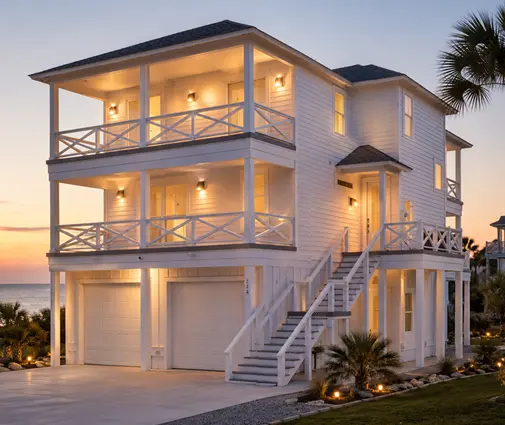
Usually yes. Expect to budget for a local engineer or drafter to adapt the plan to your lot, your code and your foundation. Depending on the work, that can mean a structural stamp, energy calculations, a site plan or wind and seismic details. In 2025 these services typically ranged from a few hundred dollars for a site plan to $5,000 or more for full engineering in hurricane or seismic zones. Coastal homes on pilings, such as this four-level coastal plan with four bedrooms on 2,342 sq ft, often need the most engineering.
Poland treats this as a formal, mandatory step called adaptacja projektu. A licensed local architect adapts a ready-made design to the plot and local zoning before the permit is filed, and it is budgeted as a line item from the start. American builders can borrow that habit and get the adaptation quote at the same time as the plan.
Is there a tax just for buying the land?
In the US it depends on the state. Many states charge little or no real estate transfer tax, but closing costs, title insurance and recording fees still add a few percent to the lot price. Germany is a useful contrast. Its Grunderwerbsteuer (land transfer tax) ranged from 3.5% to 6.5% of the land price depending on the state in 2025, and notary and land registry fees add roughly another 1.5% to 2%. Wherever you buy, ask your title company or attorney for an estimated closing statement before you make an offer.
What does an HOA add to the cost of building?
An HOA can add design review fees, a refundable construction deposit and requirements that raise the build cost itself. Architectural committees may require specific materials, roof pitches, minimum square footage or a side-entry garage, and they can take weeks to approve plans. There is little equivalent elsewhere. In Germany and Poland the local zoning plan sets the rules for roof shape, height and building line, and it plays a similar role through the public permit process. Read the HOA covenants before choosing a plan, not after.
How much do the driveway, fencing and landscaping cost?
Together they often add $10,000 to $40,000 or more, and many builders' quotes leave them out entirely. A concrete driveway commonly costs $6 to $15 per sq ft. A long rural drive in gravel is cheaper per foot, but the total adds up with distance. Fencing typically runs $20 to $60 per linear foot depending on material. Sod, irrigation and plantings are often required for a certificate of occupancy or by the HOA.
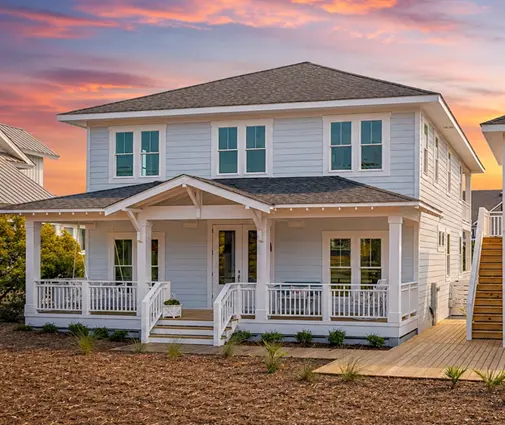
A wide one-story house has a bigger footprint and usually a larger lot to finish. This 2,600 sq ft Modern Ranch with four bedrooms on one level and this 3,730 sq ft contemporary one-story are good examples. A compact two-story such as this 1,945 sq ft four-bedroom farmhouse leaves more of the lot untouched.
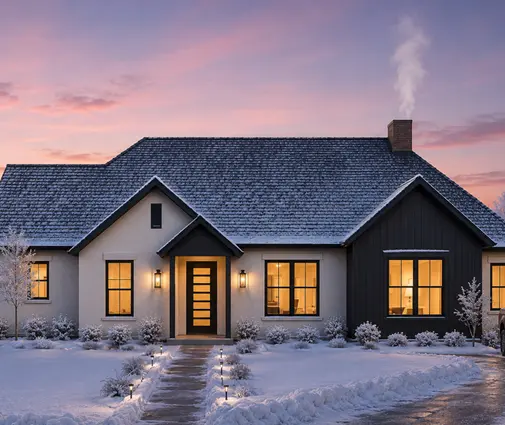
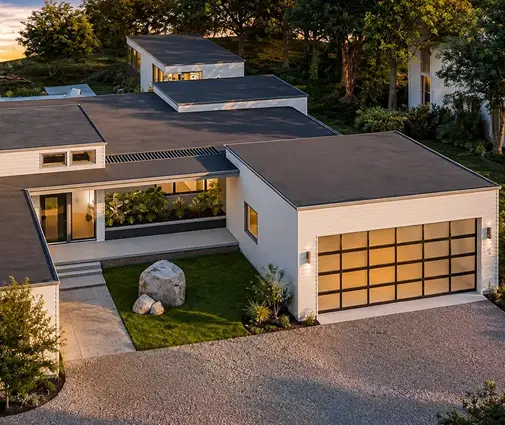

Do hidden costs hit small houses harder?
Yes. Most of these costs are fixed, so they take a larger share of the budget on a small home. A well, a septic system or a $15,000 impact fee costs the same for this 765 sq ft one-bedroom with a two-car garage as for a large family house. Polish and German builders see the same effect, which is one reason small houses there tend to go on already serviced lots. If you are building small, a lot with city water and sewer at the street is worth paying more for.
How much extra should I budget on top of the construction price?
On a serviced suburban lot, plan for roughly 15% to 25% above the builder's quote, and on a rural lot needing a well, septic and a long driveway, 25% to 40% is safer. These are planning ranges as of 2025, not rules. Germany and Poland run in a similar band once land tax and connections are counted. The difference is that the US surprises cluster around impact fees, HOAs and rural utilities, while European ones cluster around taxes and paperwork. Keep a separate contingency of 5% to 10% on top for changes during construction.
What should be on my checklist before signing a build contract?
Go through this list with your builder, lender and local permit office before you commit:
- Written quotes for water, sewer, electric and gas connections, including any line extension.
- Perc test, geotechnical report and boundary and topographic survey.
- The current permit, plan review and impact fee schedule for your parcel.
- Engineering and drafting costs to adapt your plan to local code, wind, snow and seismic requirements.
- HOA covenants, review fees and construction deposits.
- Clearing, grading, erosion control and any retaining walls.
- Driveway, walkways, fencing, landscaping and irrigation.
- Closing costs on the lot and construction loan fees.
- A 5% to 10% contingency.
Rules and fees change often, so confirm current figures with your city or county and with a local builder or architect. With these numbers in hand, the price of the house becomes what it should be: the biggest line in the budget, not the only one.